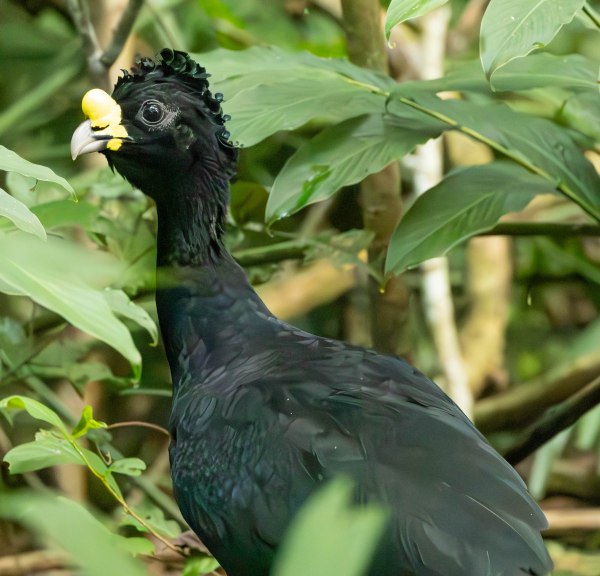
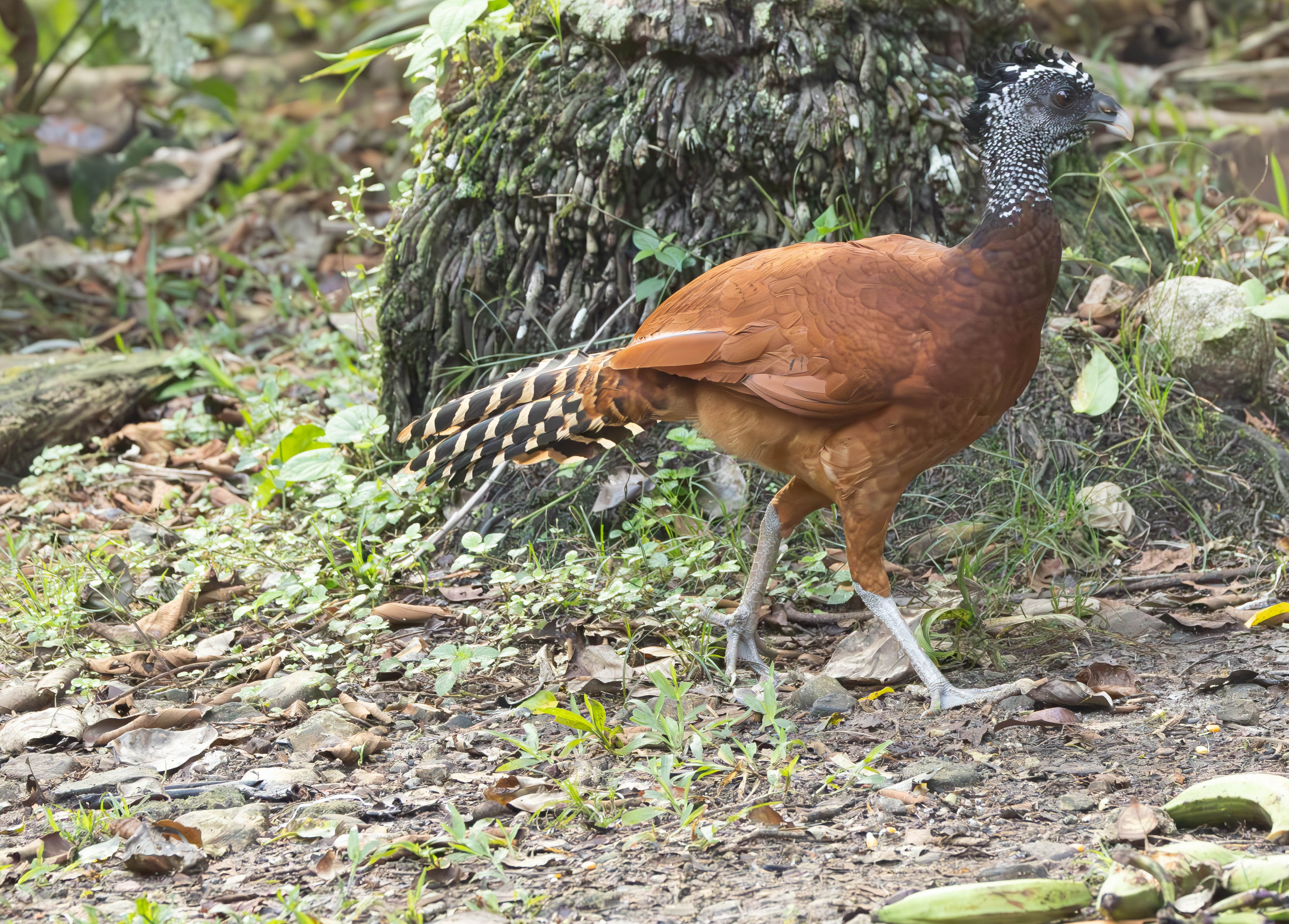
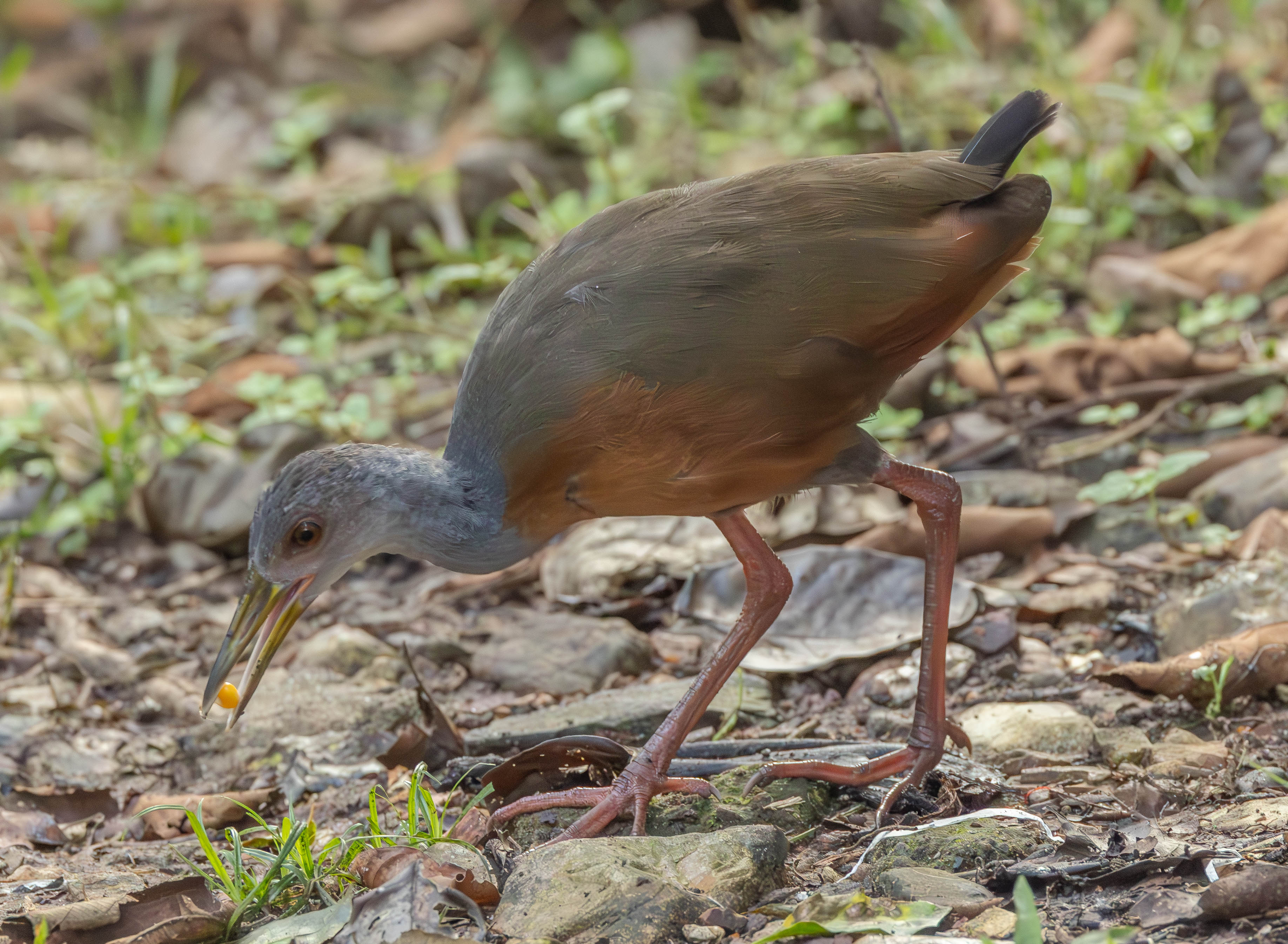
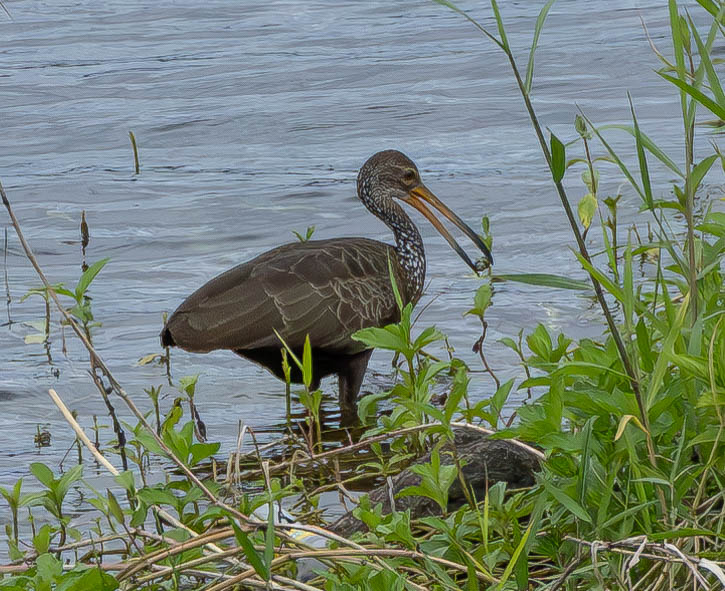
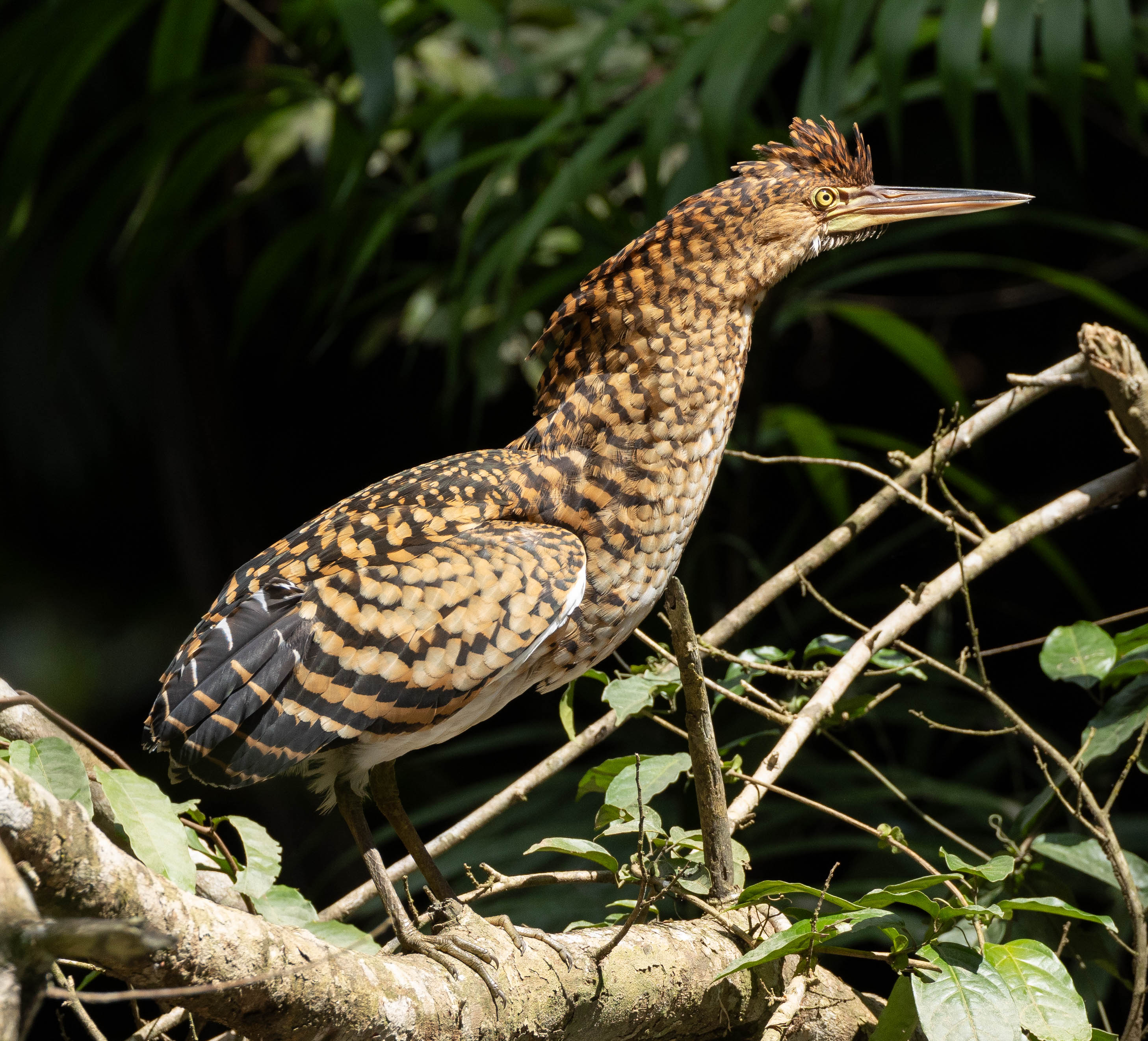
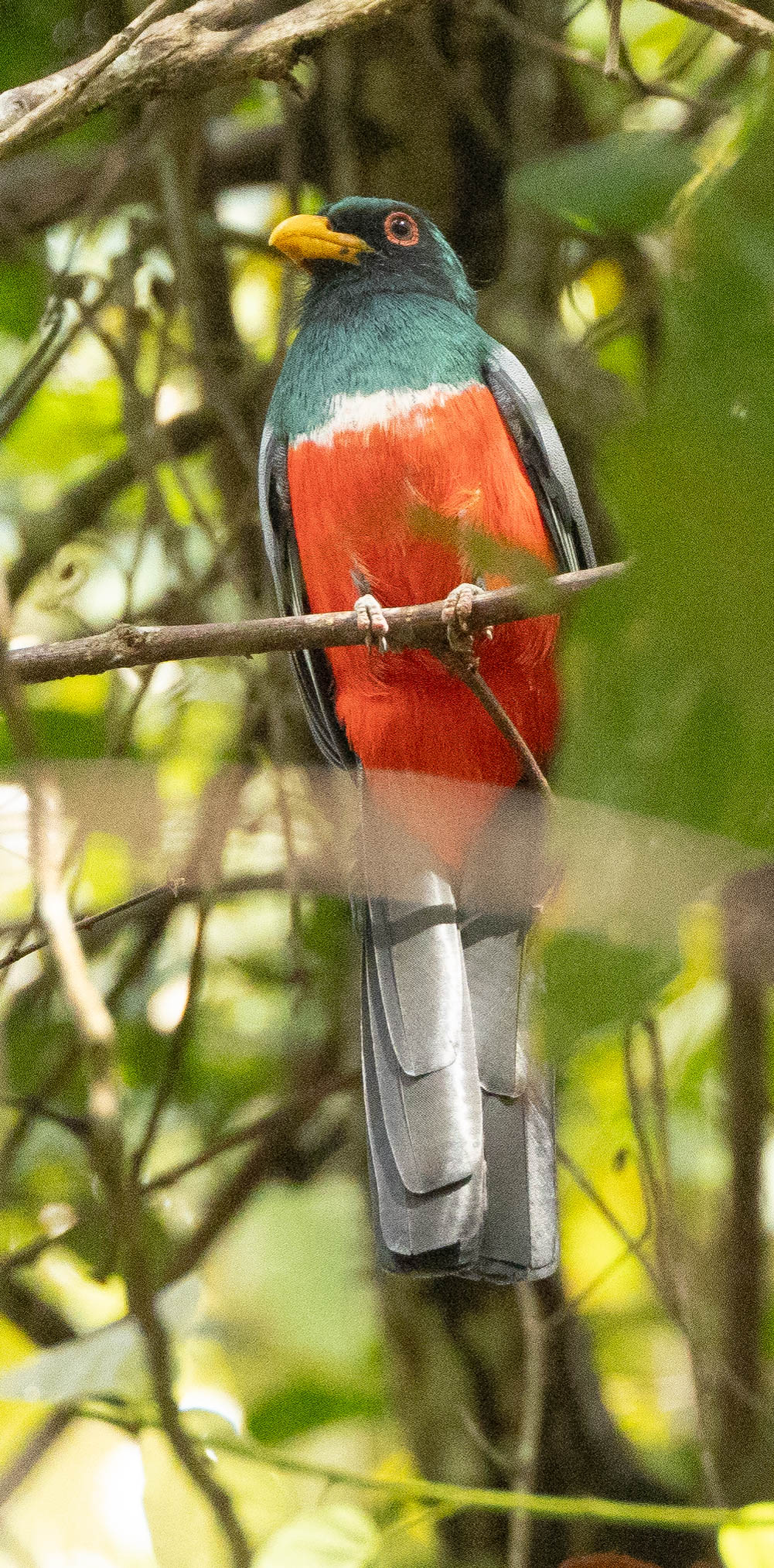
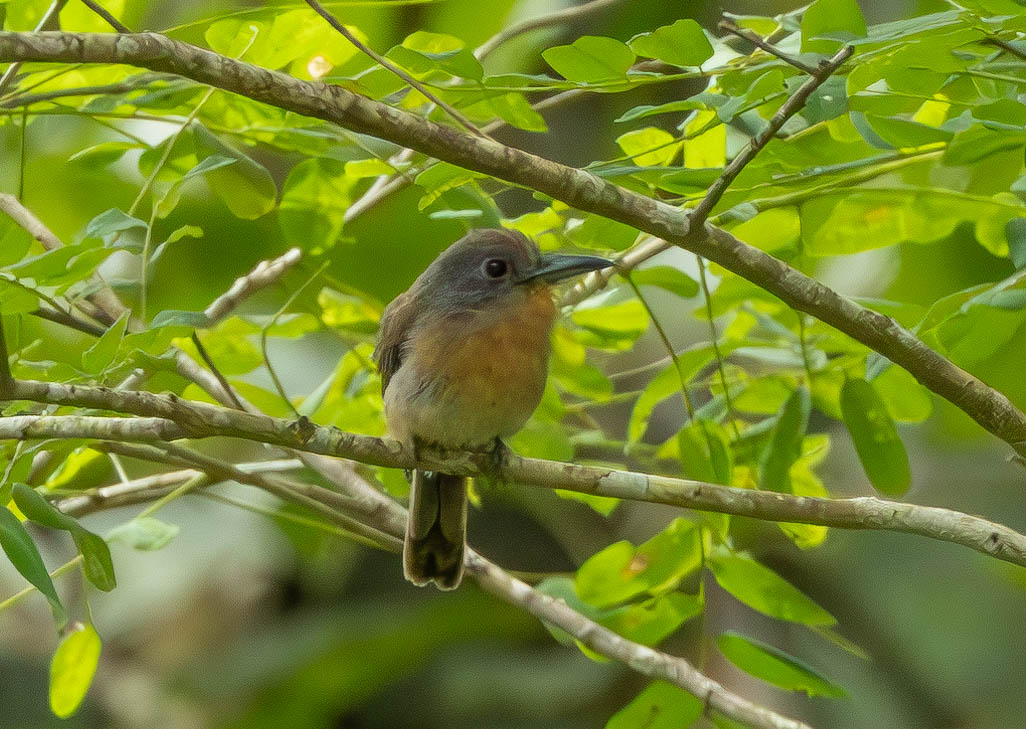
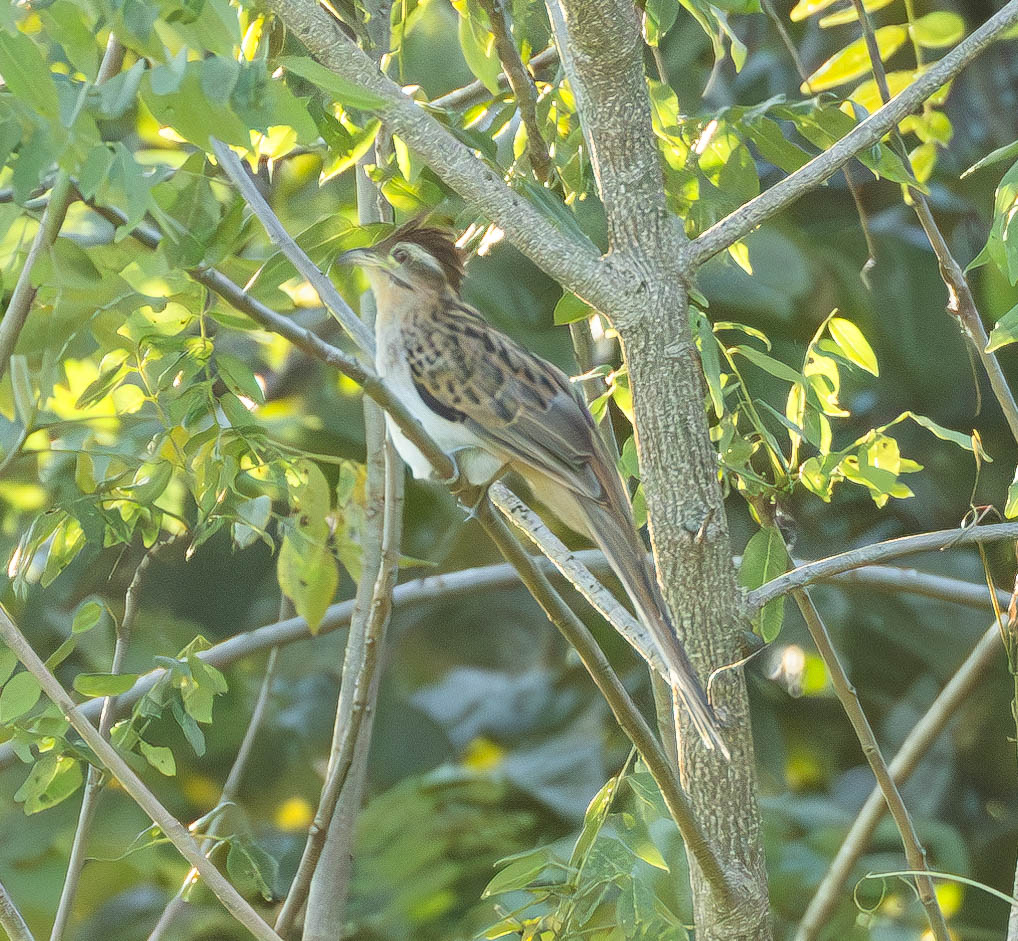
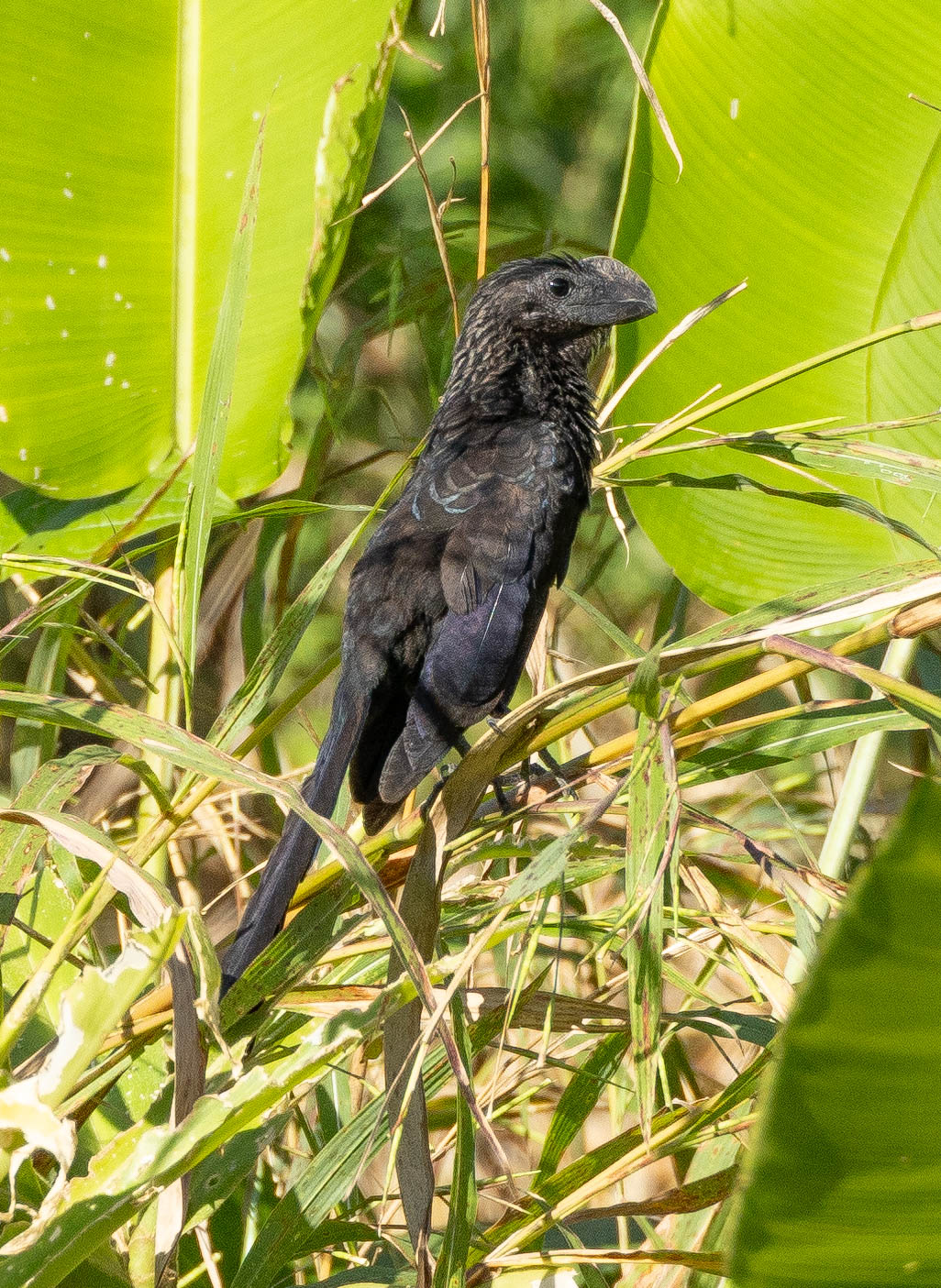
The final day included several stops along the trip back to Panama city, with yet more new species to be seen. The first stop was at a little house where a local woman had seen Great Currasows in her garden, and had started throwing out rice for them, so they now return regularly. They have recently also been joined by group of Wood-Rails. The header image is of the male Curassow.
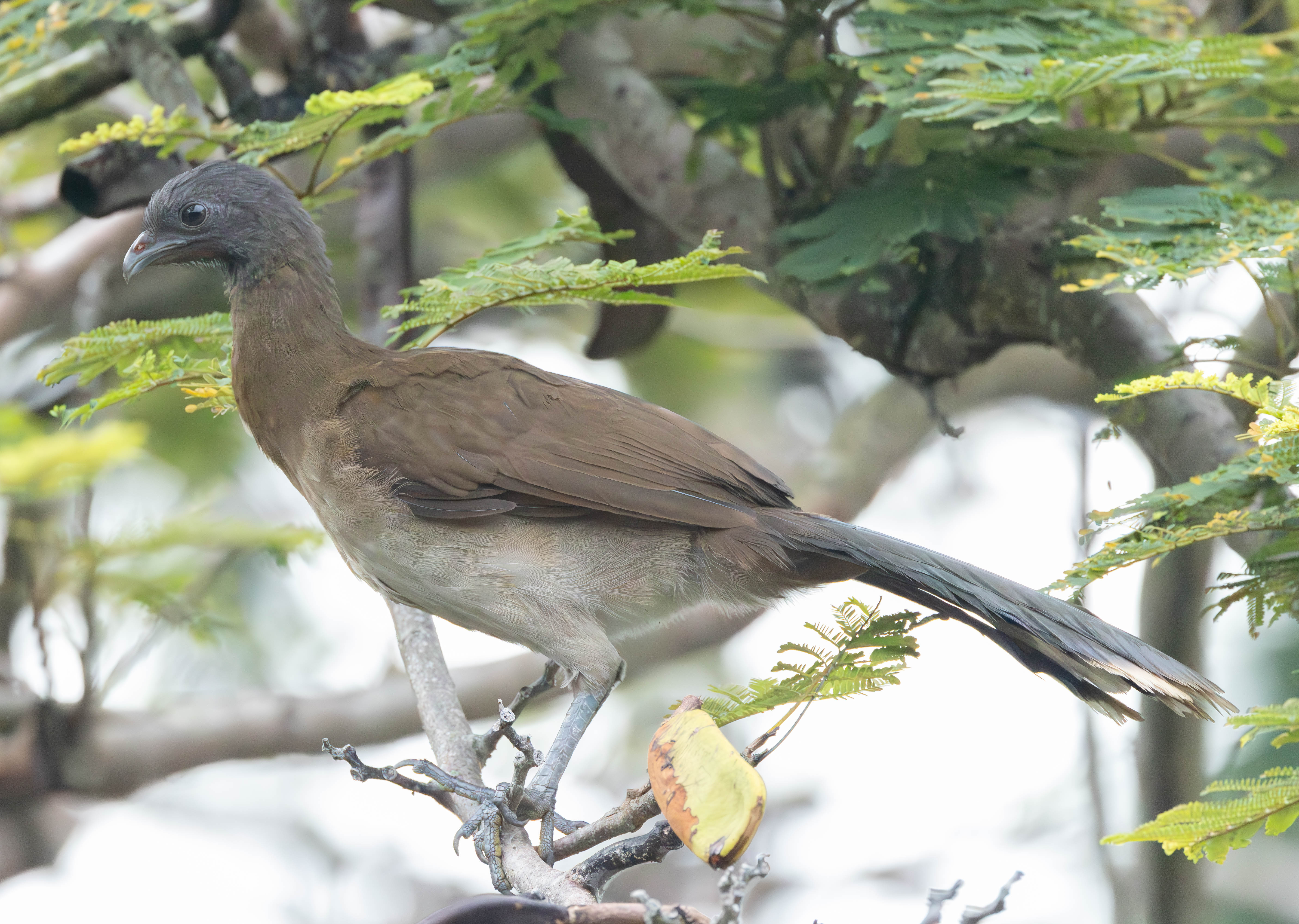
Great Curassow (f)Gray-cowled Wood-Rail
The on to a nature reserve on land that belonged to local priest, and is called Reserva San Francisco
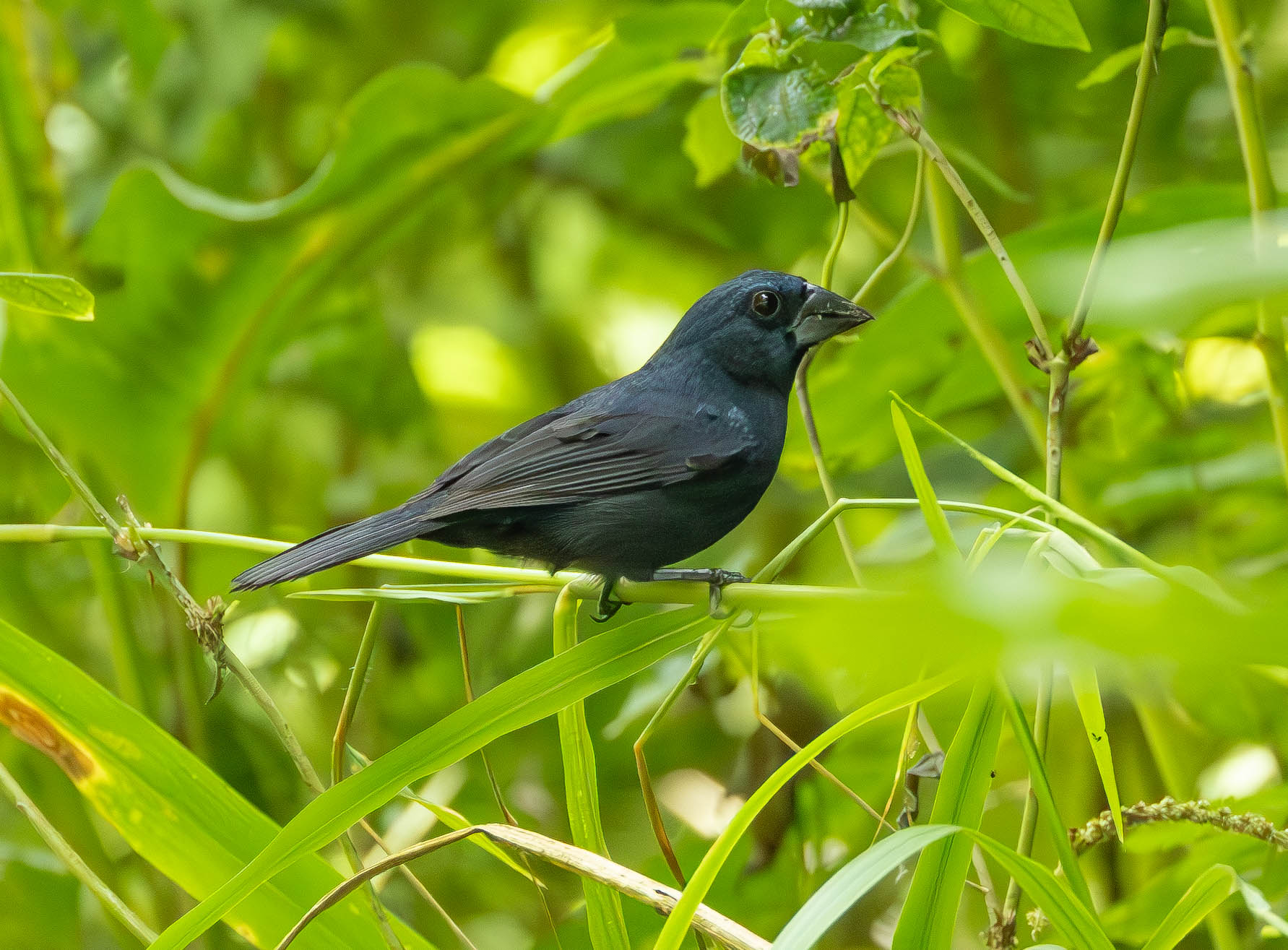
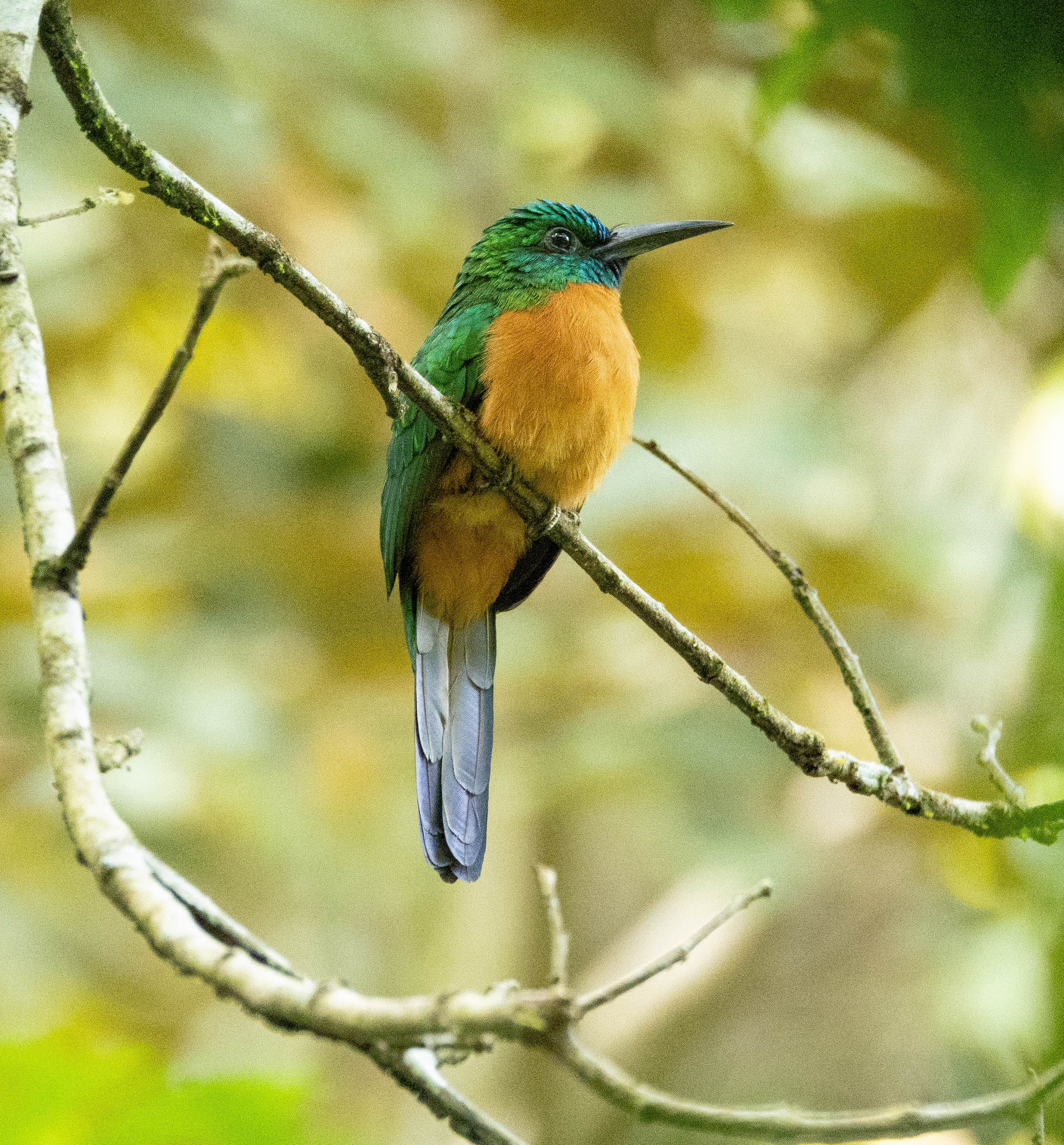
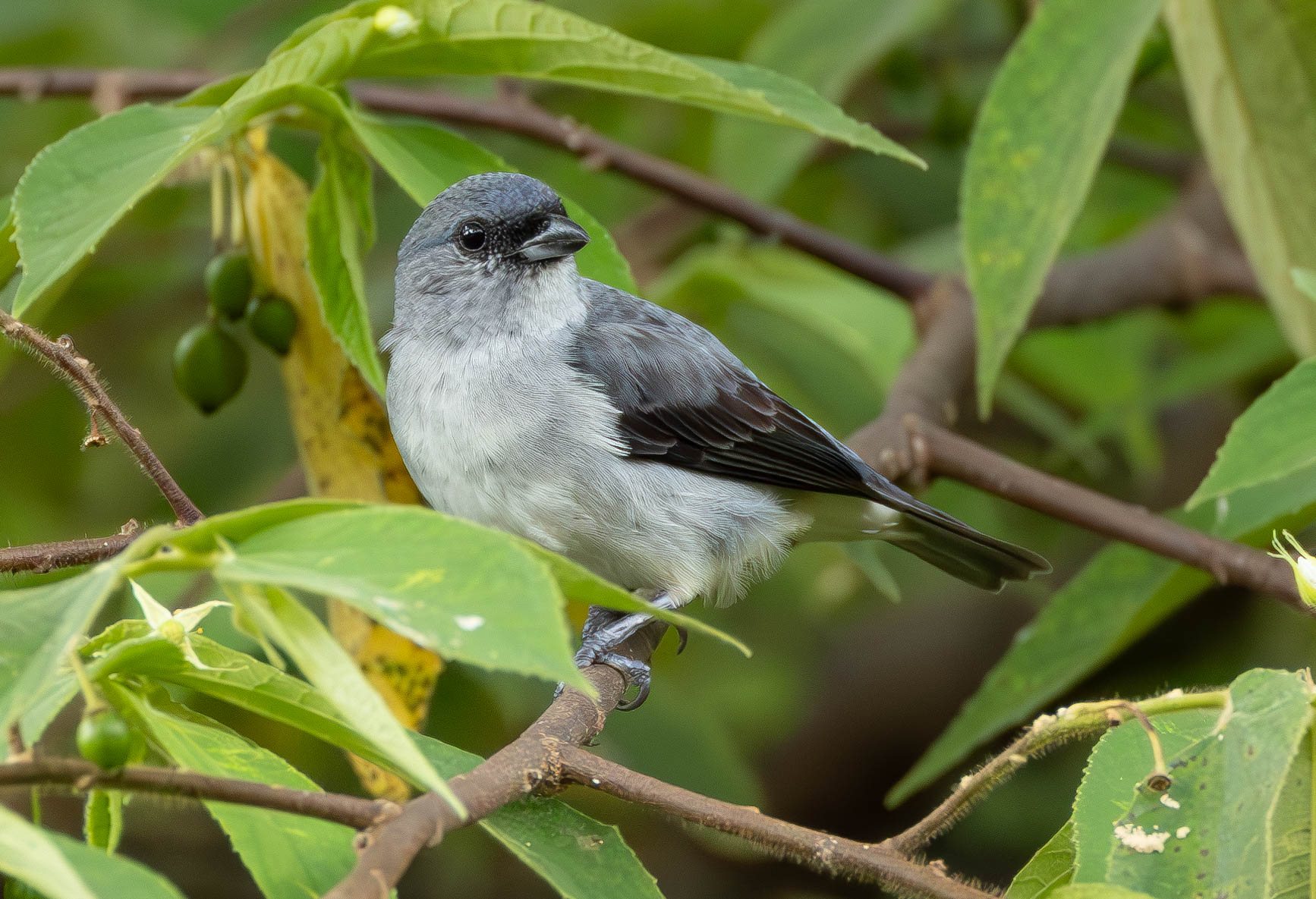
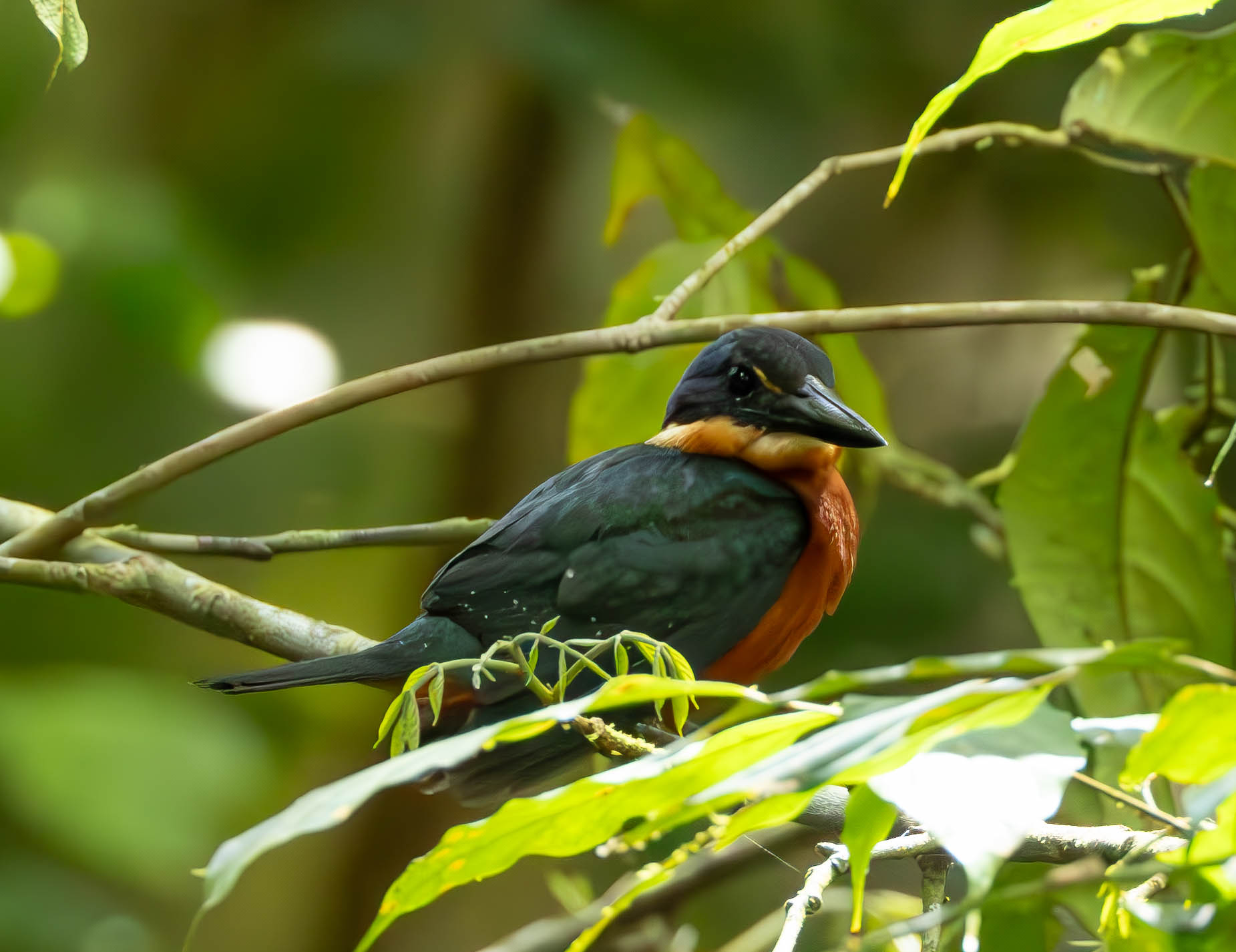
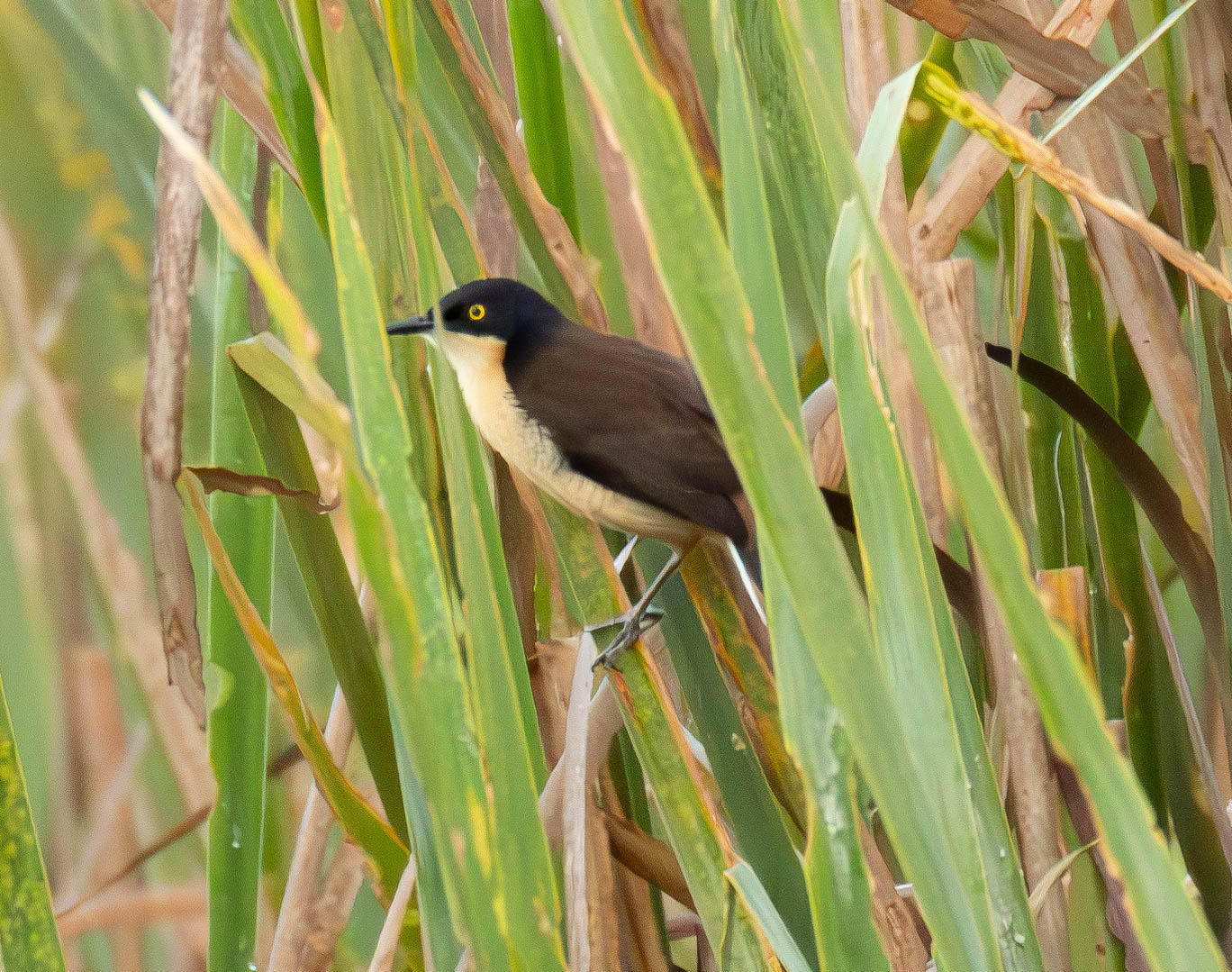
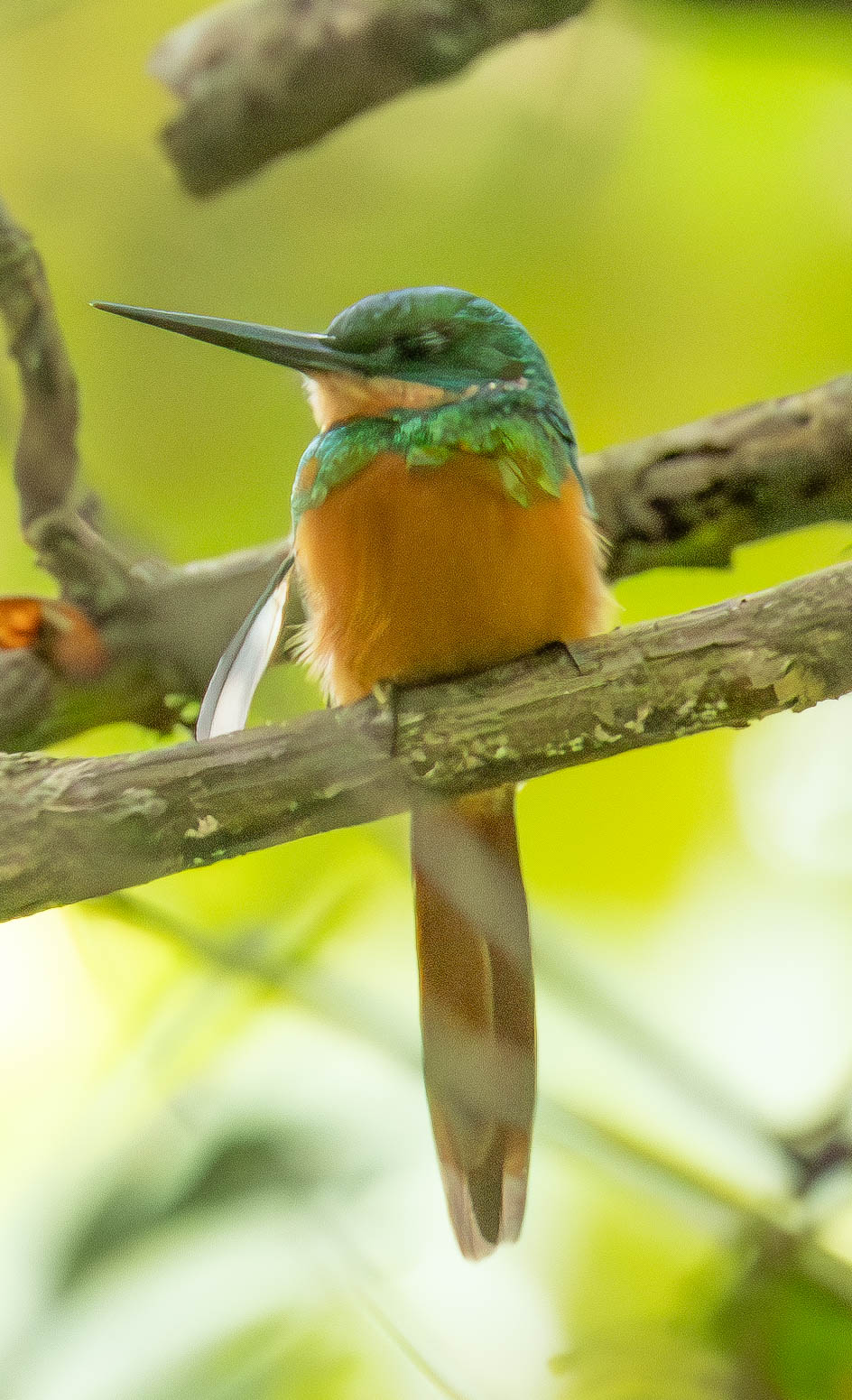
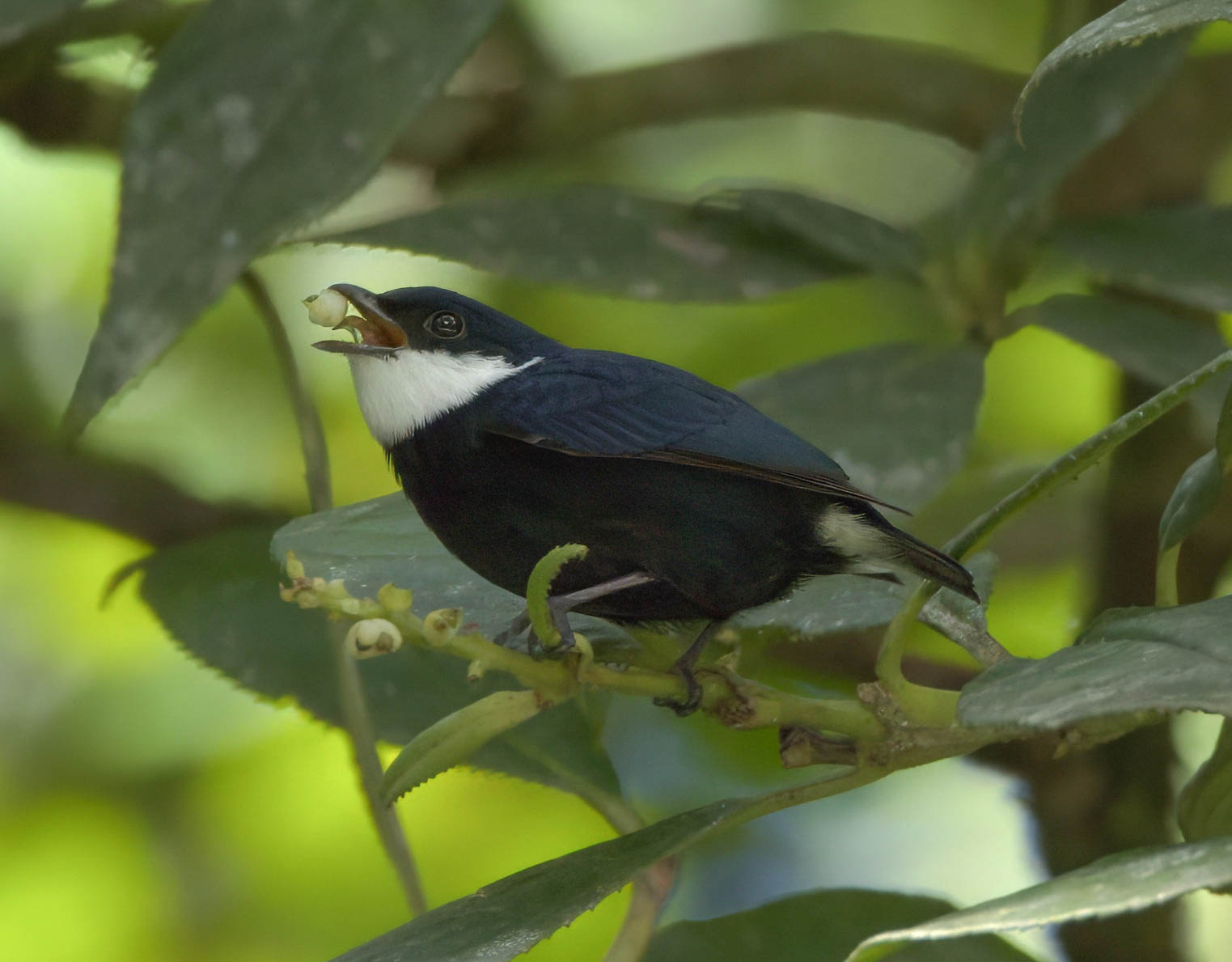
Panama FlycatcherBlue-black GrosbeakGreat JacamarGreat Jacamar dismembering a moth.
Then back to the restaurant where we had lunch the first day.
The final stops of the day were to areas just along the PanAmerica highway, south of the Canopy camp. The header image is the elegant Fork-tailed Flycatcher.
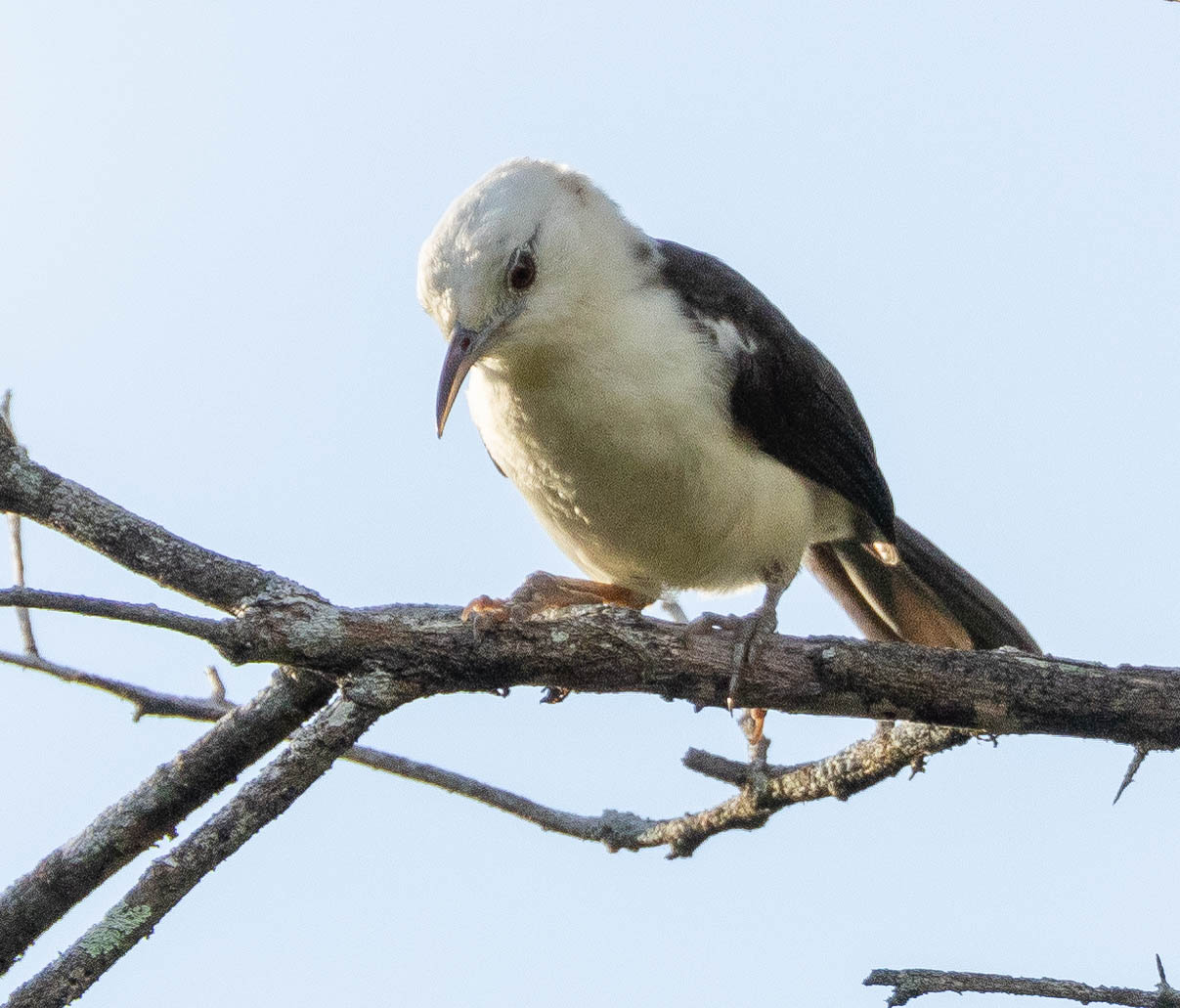
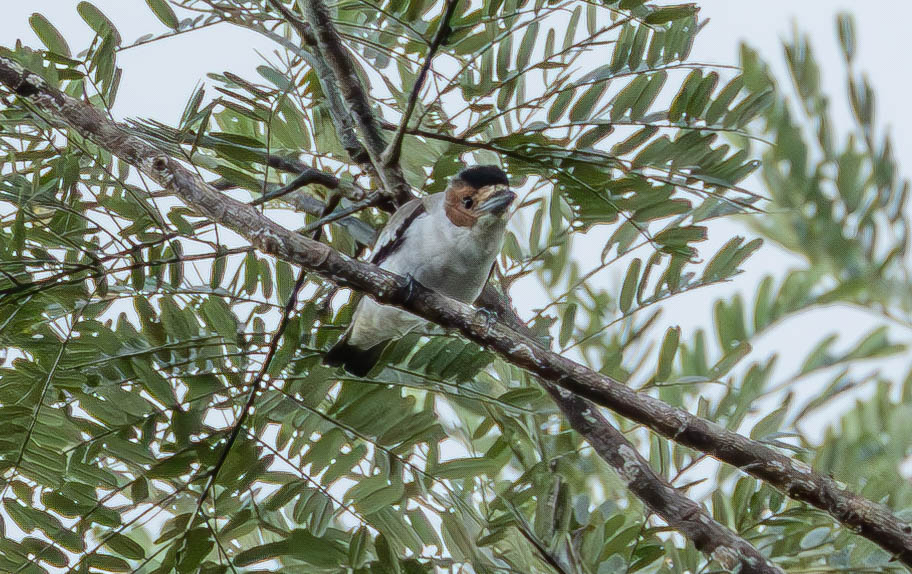
White-headed WrenVariable Seedeaters m&fBicolored WrenBlack-crowned TityraBlack-crowned Tityra, f.
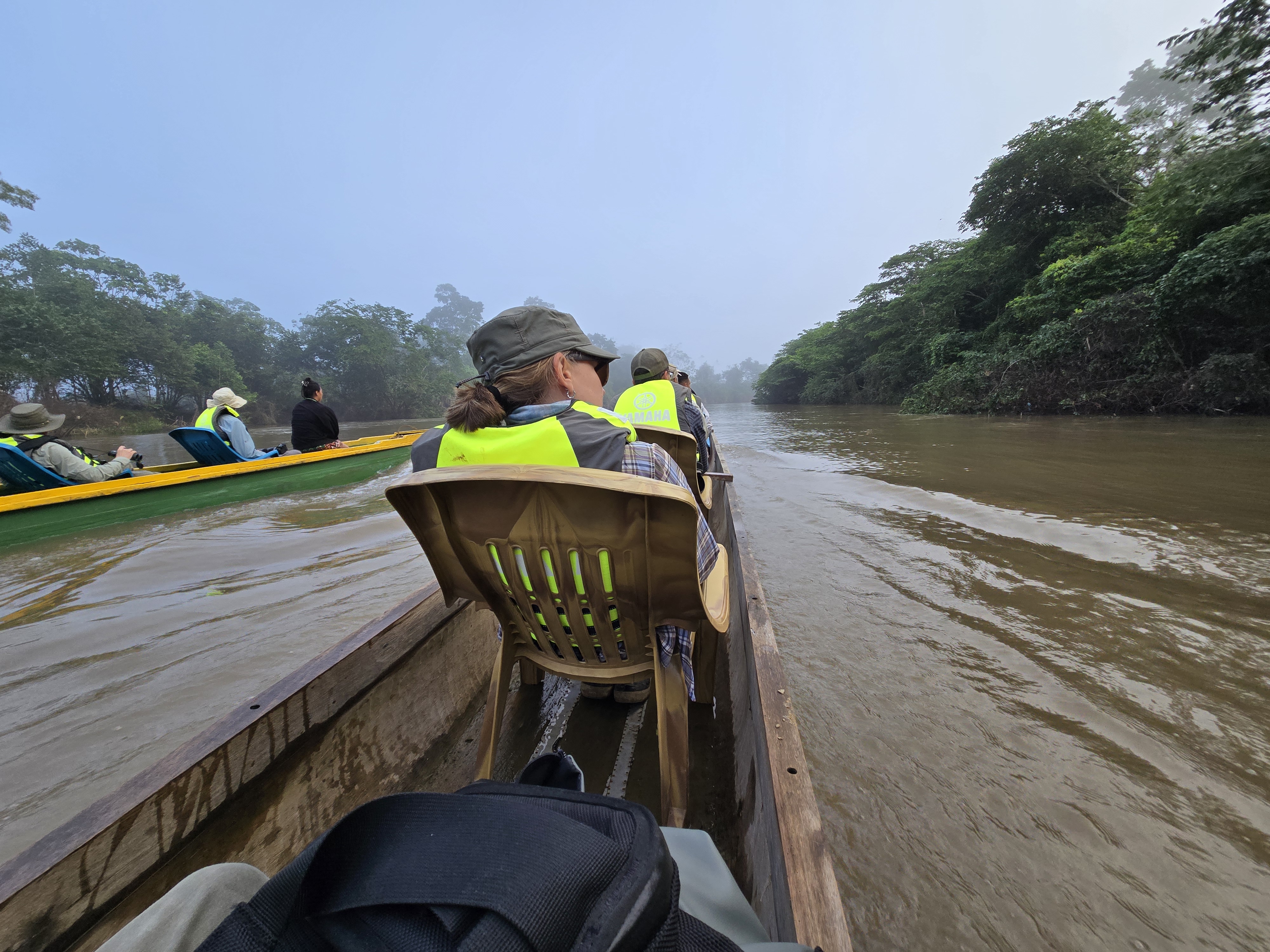
Another river trip, this time in smaller dug-out canoes (some were really dugouts, others looked similar but were made from separate pieces of wood). The seating was plastic garden chairs, with no attachments to the boat, we picked them up and moved them around in order to load the canoe. The tropical river, again the Chucunaque, was very calm, even when other boats passed in the other direction.
Most of them carried locals, who use the river as the main highway. In addition there were many canoes which were packed with adults wearing life-jackets, immigrant/refugees who had been processed further downstream, and were being transported for further processing. Apparently many of them were from Haiti, and in the short time we were on the river there were probably a couple of hundred. Probably thousands a day are arriving, on just one river.
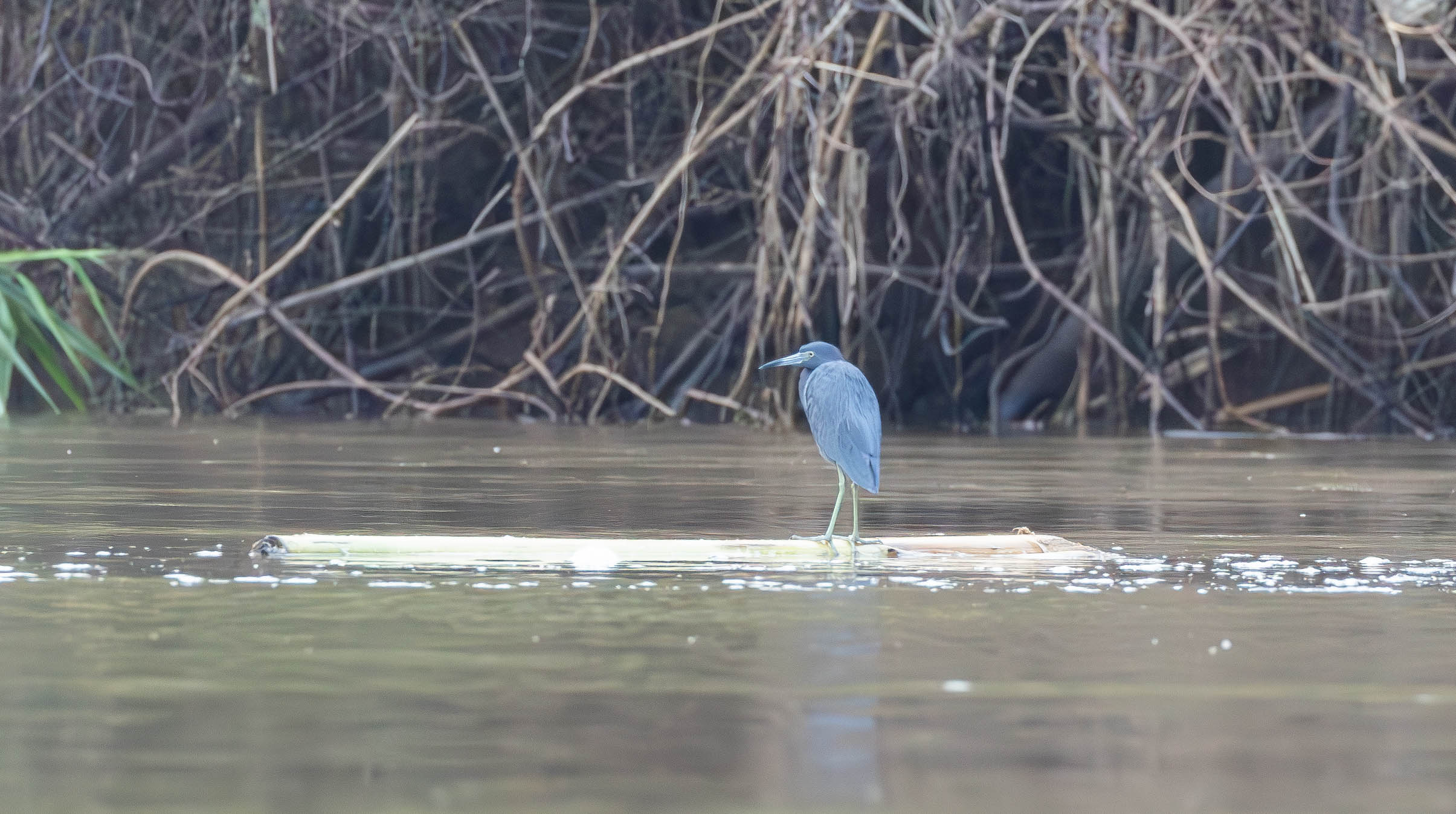
This innovative Little Blue Heron was using a floating log as his transport.
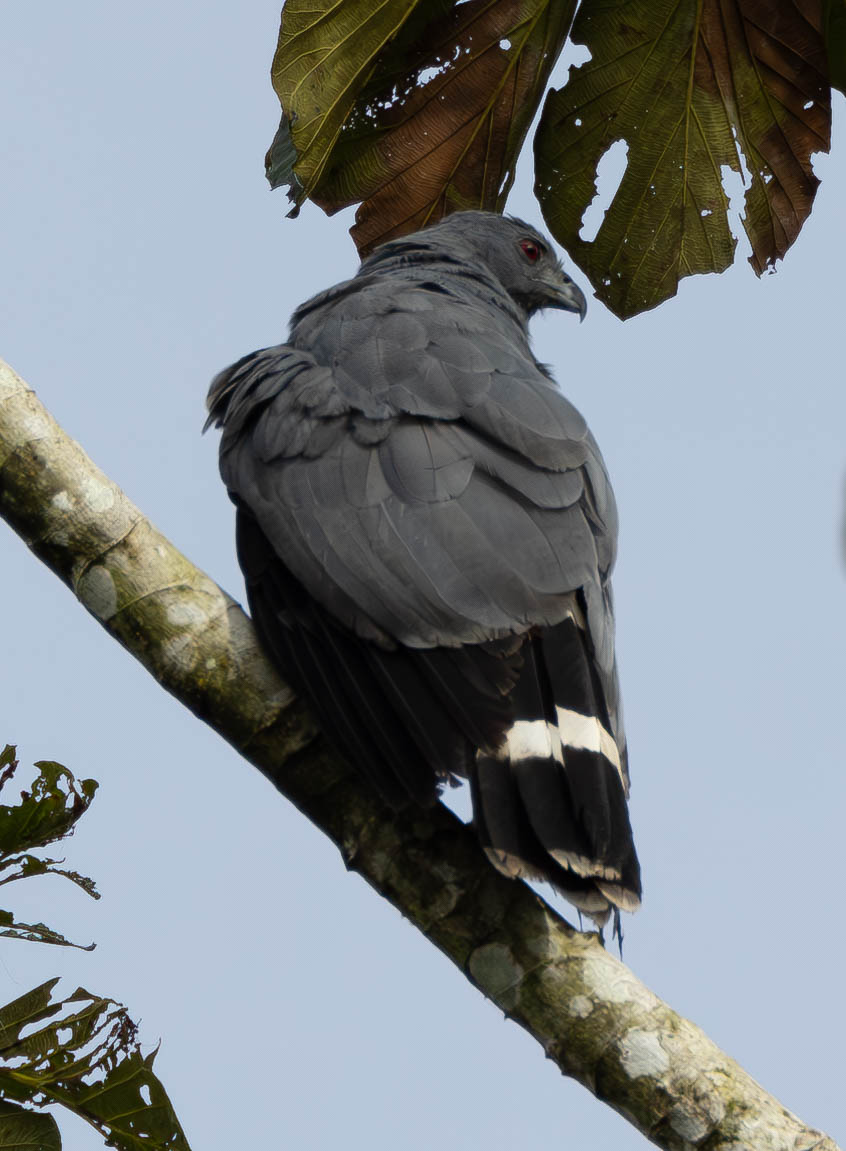
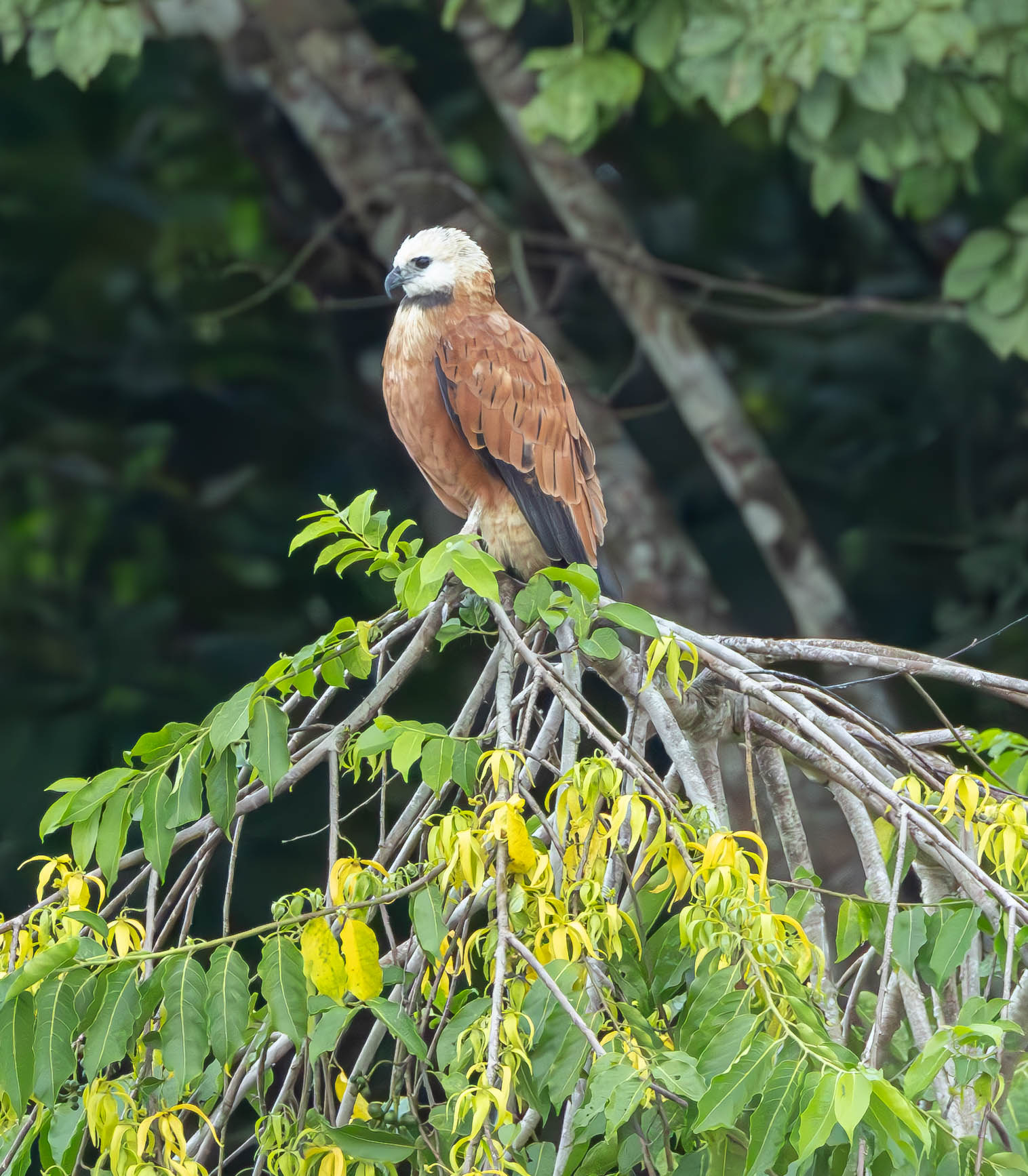
Little Blue HeronMangrove SwallowsCrane HawkThree-toed Sloth, aka Brown-throated Sloth
The first stop on the journey was to a site where the scarce Dusky-backed Jacamar had been seen. Expecting to have to search for a while, we disembarked and prepared for a walk, but the bird was waiting for us about 10 m from the landing spot!
Dusky-backed Jacamar
Then over to a village of the Embera People, Nuevo Vigia, and a walk to an Ox-bow lake.
Back to the village for lunch and a view of the “cutest” of all the birds we saw, the diminutive Spectacled Parrotlet, only 12 cm long from head to the end of the stumpy tail.
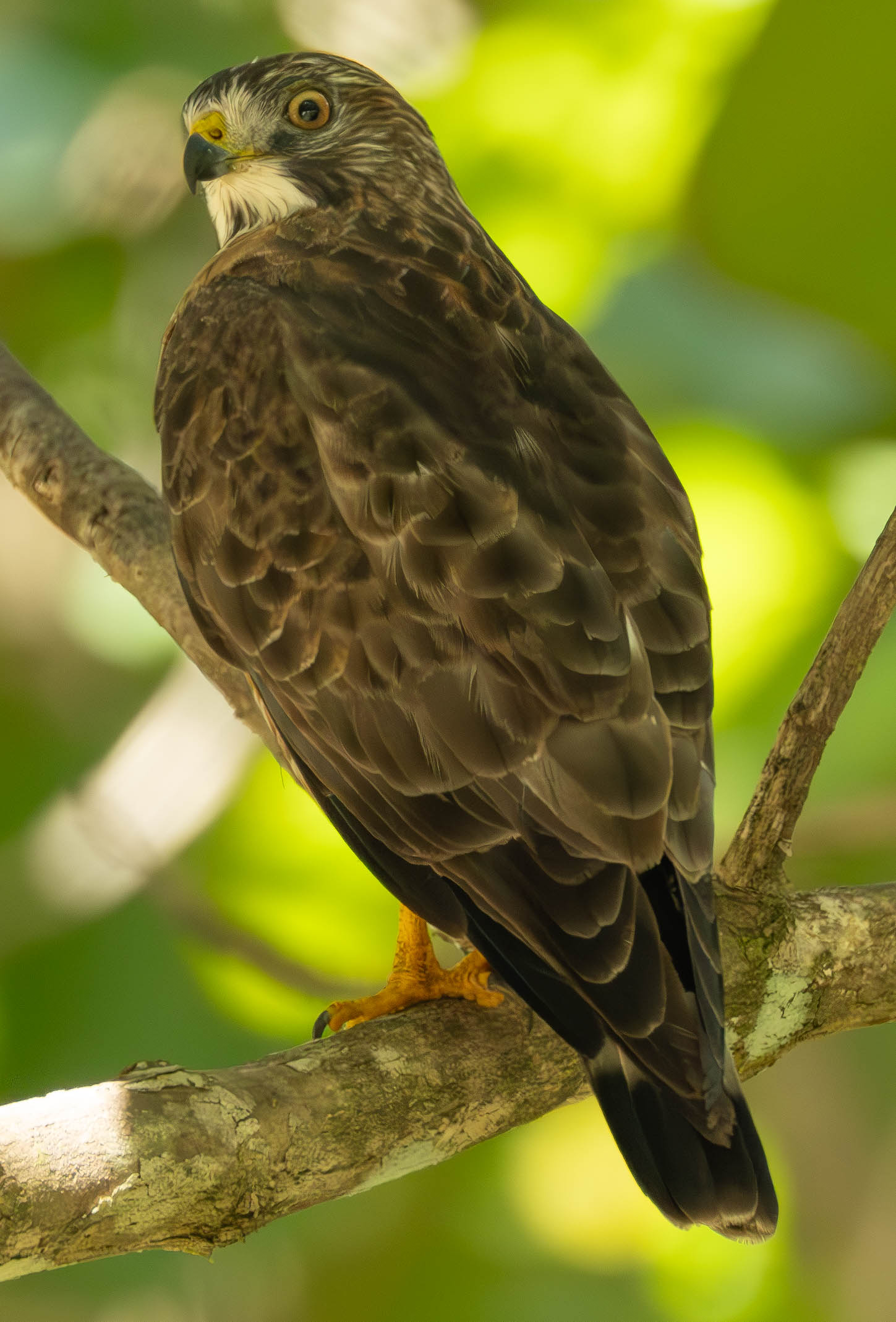
In the afternoon further on to a swampy area. Among the many raptors we saw, this one had the most vicious looking bill, which they use to extract snails from their shells.
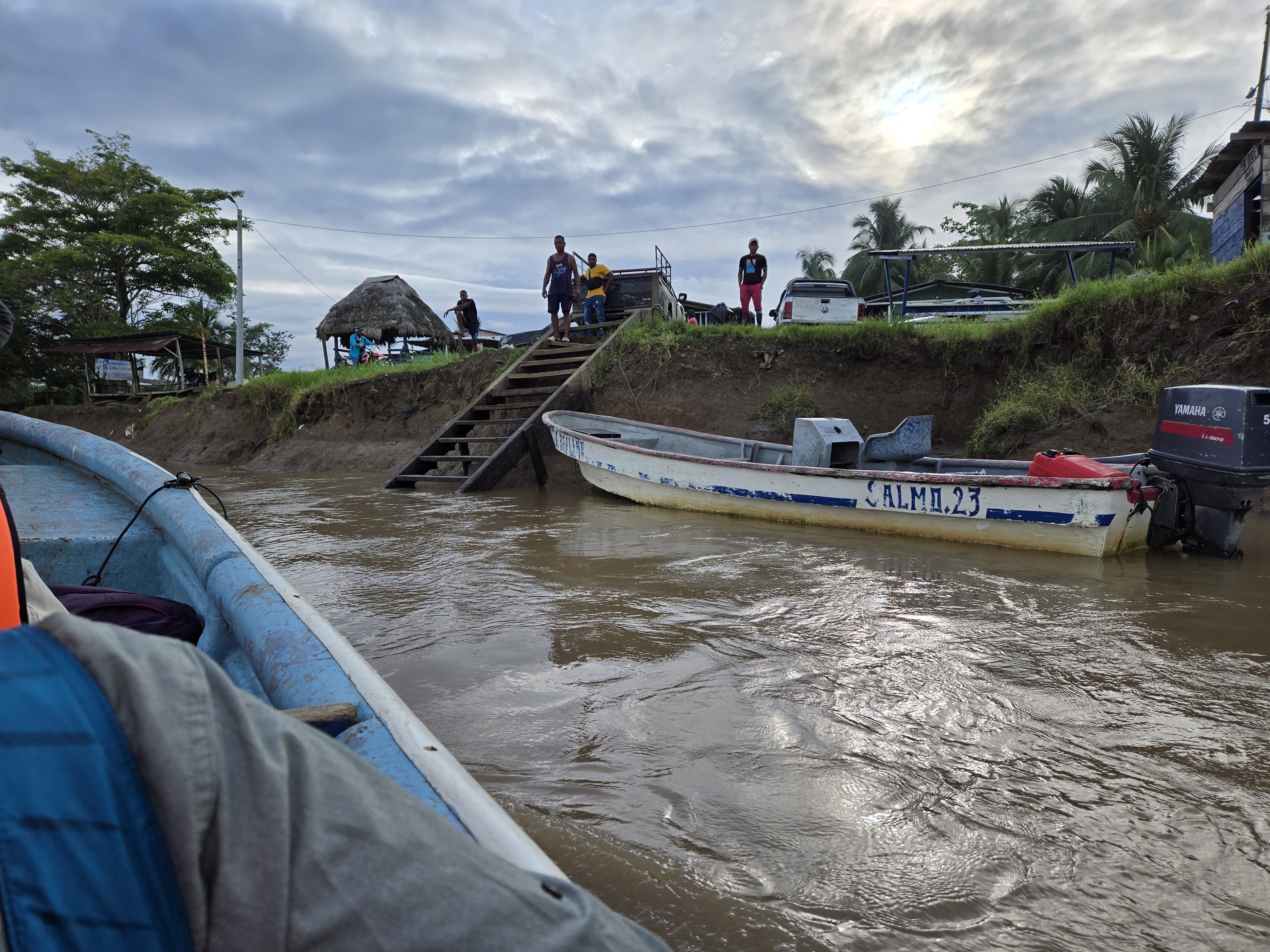
The group set off very early, breakfast at 4h30, to drive to the very end of the TransAmerica highway at Yaviza. From there we took a “lancha”, a motorized boat, travelling upstream on the Chucunaque river to a town called El Real.
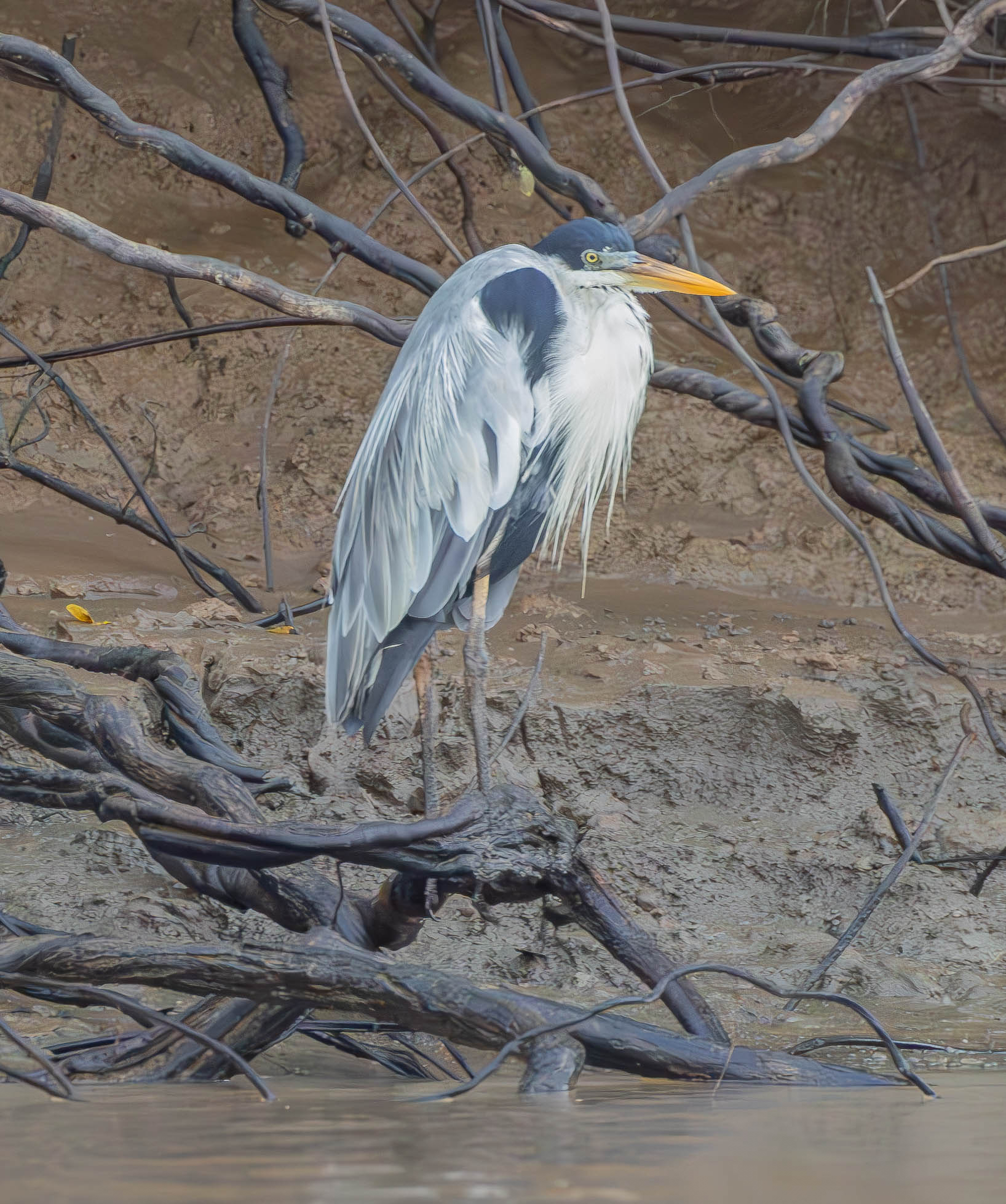
Start of river trip in YavizaCocoi HeronBlack-collared HawkArrival at El RealRed-and-Green Macaw
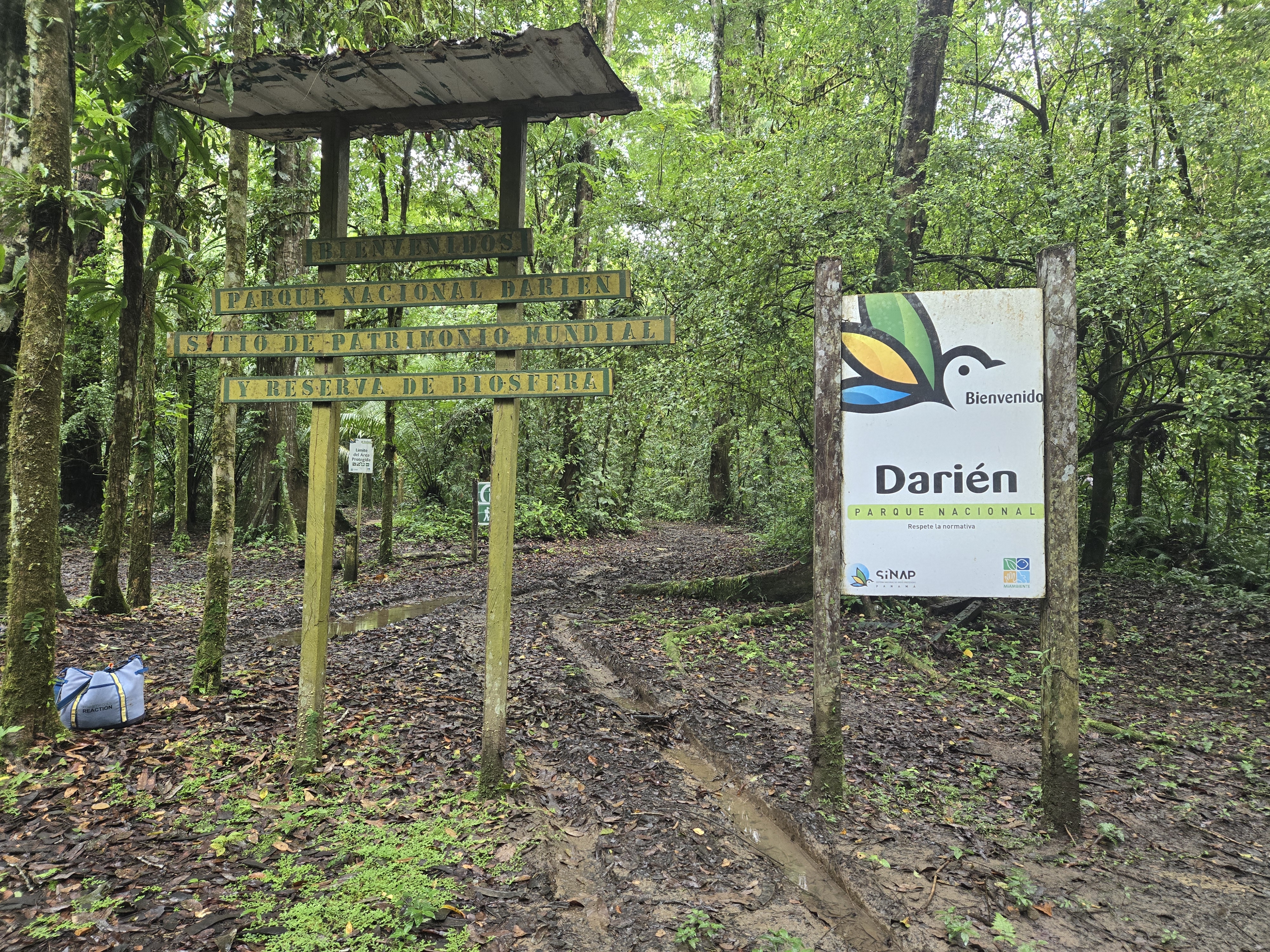
After the boat trip, there was a half hour or so in a 4-by-4, then another hour of walking, during which this magnificent Macaw was spotted, we entered the Darién national park, and finally arrived at the ironically named Rancho Frio.
Entrance to Darién national parkOffices of the Ministry of the Environment at Rancho Frio
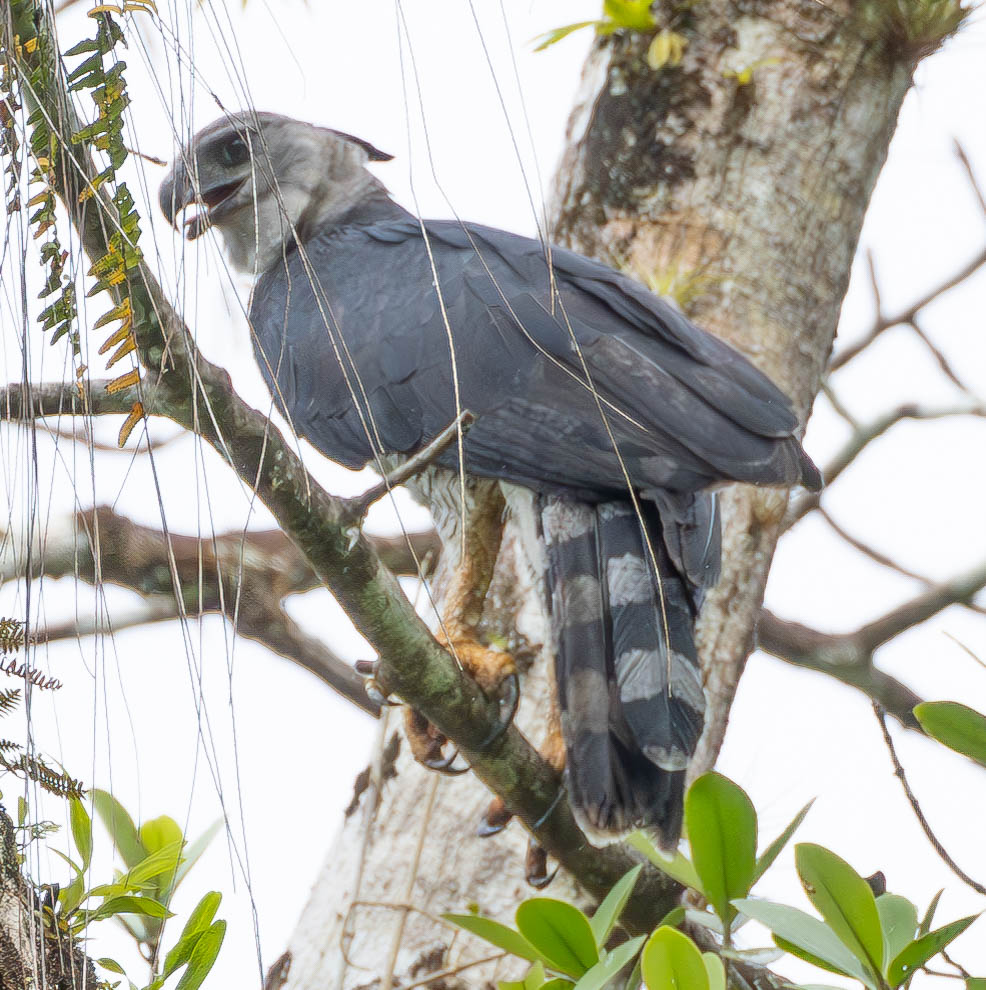
After lunch at Rancho Frio, the last 30 minutes walk took us to a nest of the Harpy Eagle, today’s goal. There was a female on the nest, with a chick of about 10 days of age (the top of whose head we occasionally glimpsed) and as we were watching, the male flew off in search of prey, which are mostly monkeys and sloths.
Harpy Eagle on nestHarpy Eagle
The Harpy Eagle has little sexual dimorphism, the identification by our guides was based on their activity, usually the female stays on the nest with the chick, while the male is out hunting.
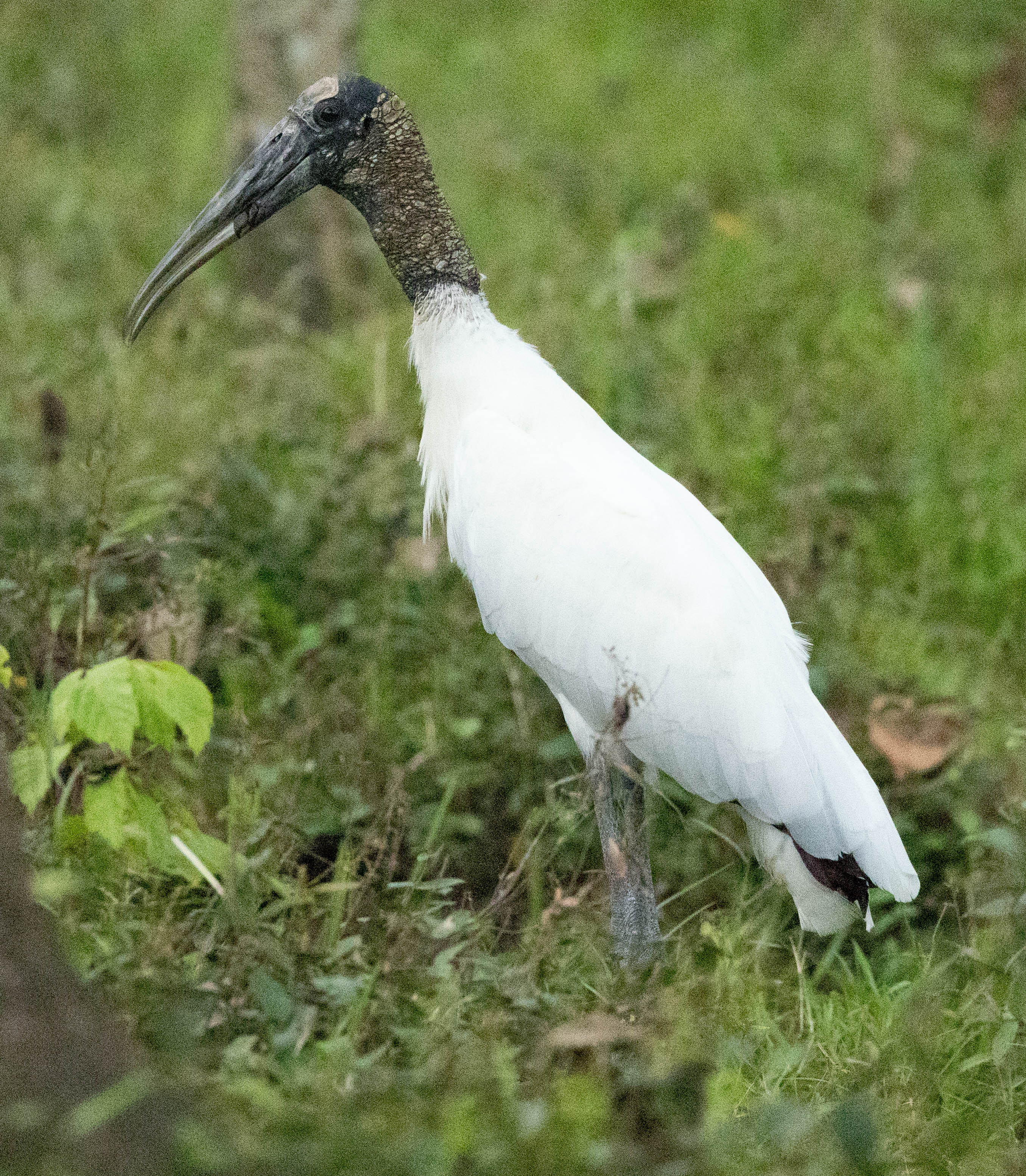
On the trip back there were very heavy showers; we were still able to see the Great Green Macaw, a real rarity, a Wood Stork (not rare at all), and a small flock of Brown-hooded Parrots. Despite arriving back soaked through, the day was a great success.
This was the first full day of the organised trip, mostly organised around the long drive down to Canopy Camp in Darien province, with a side trip to Nusagandi for a walk in a forested area on the Caribbean slope, and therefore a variety of birds somewhat different from the pacific slopes.
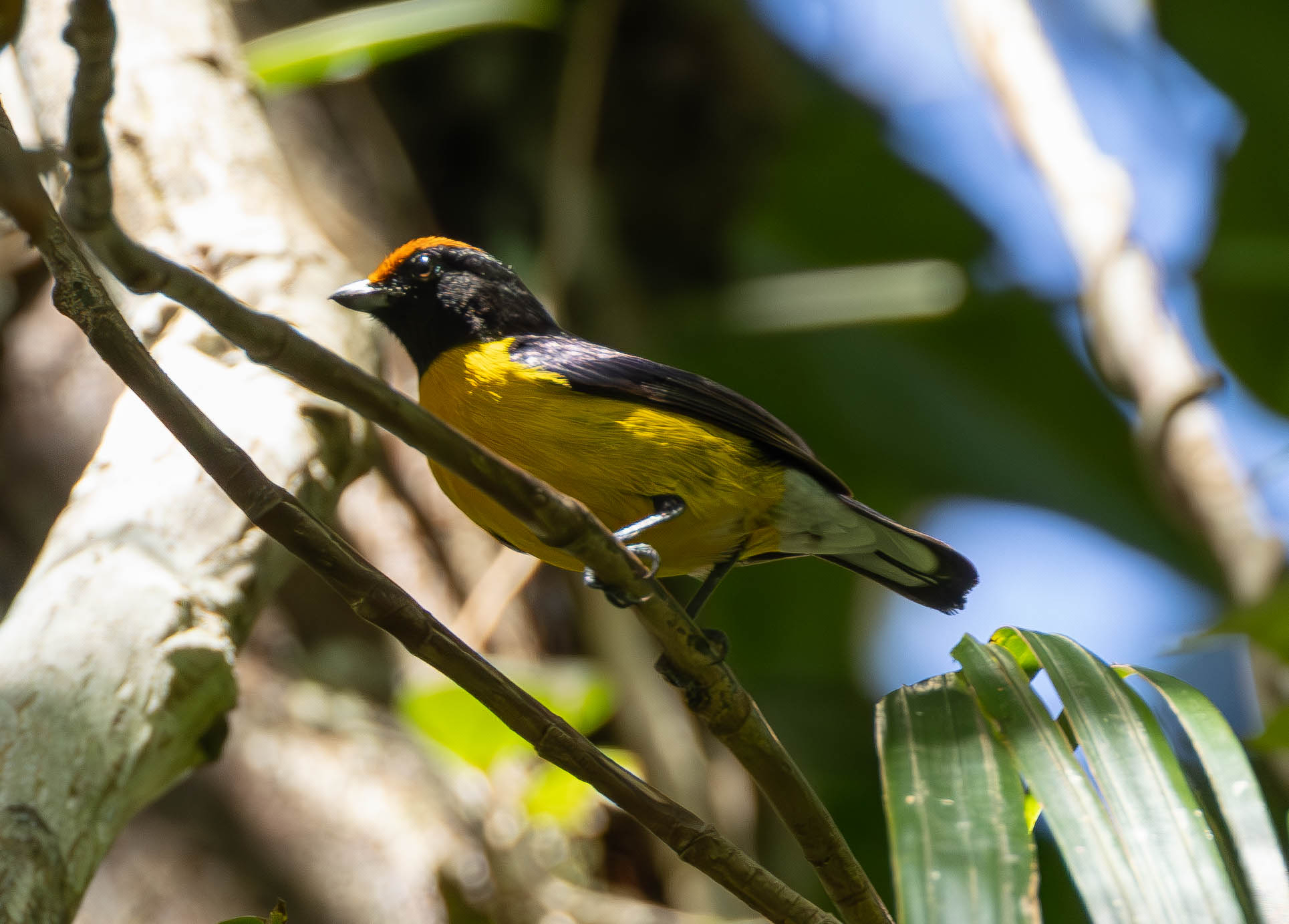
White-ruffed ManakinTawny-capped Euphonia
At lunch the restaurant had feeders set up for hummingbirds and fruit eaters.
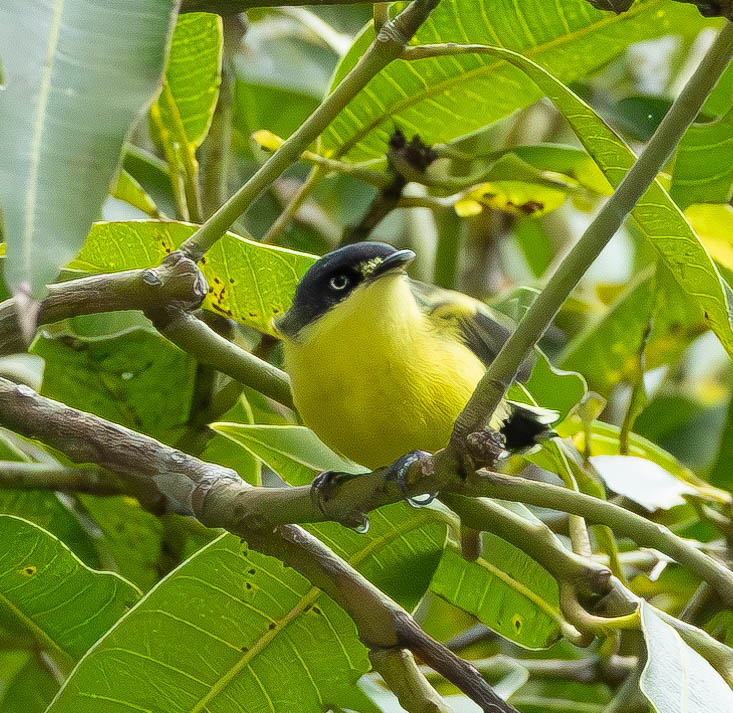
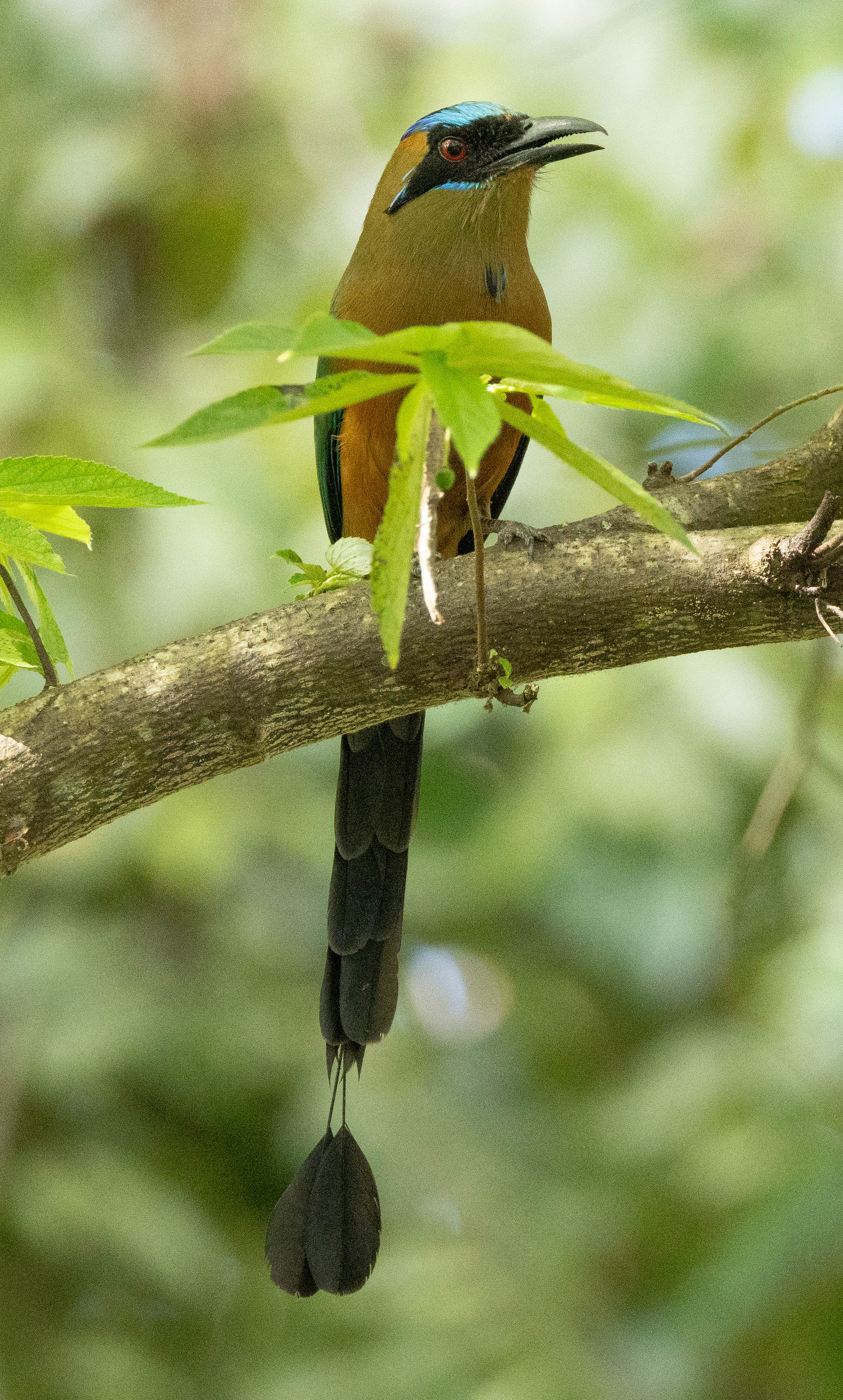
Blue Dacnis (male)Blue Dacnis (female)Whooping Motmot
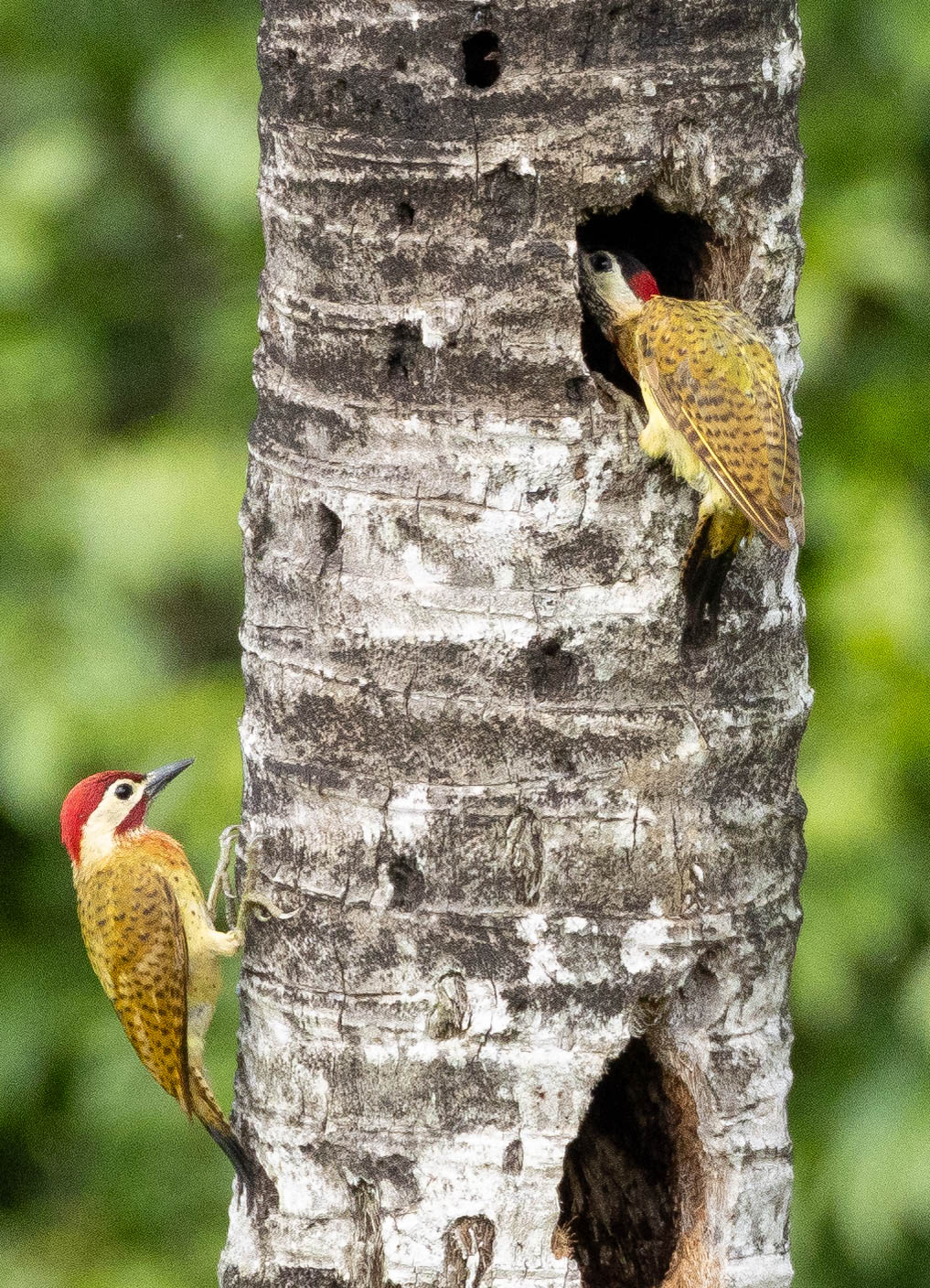
Then on to the Canopy Camp, with its grounds and feeders, and birds which included the Black-cheeked Woodpecker in the header image.
I was fortunate to take a 1 week trip to Panama, with “Wings“, going east to the Darien region. The guide, Gavin Bieber, was amazing, the accommodation, in fancy tents, was excellent, and the birding was exceptional.
The first night was an extra, staying in a hotel right next to the canal, although the flight was delayed, and I arrived at the start of rush hour, so it took nearly 2 hours of taxi to the hotel, traffic in Panama city is horrendous.
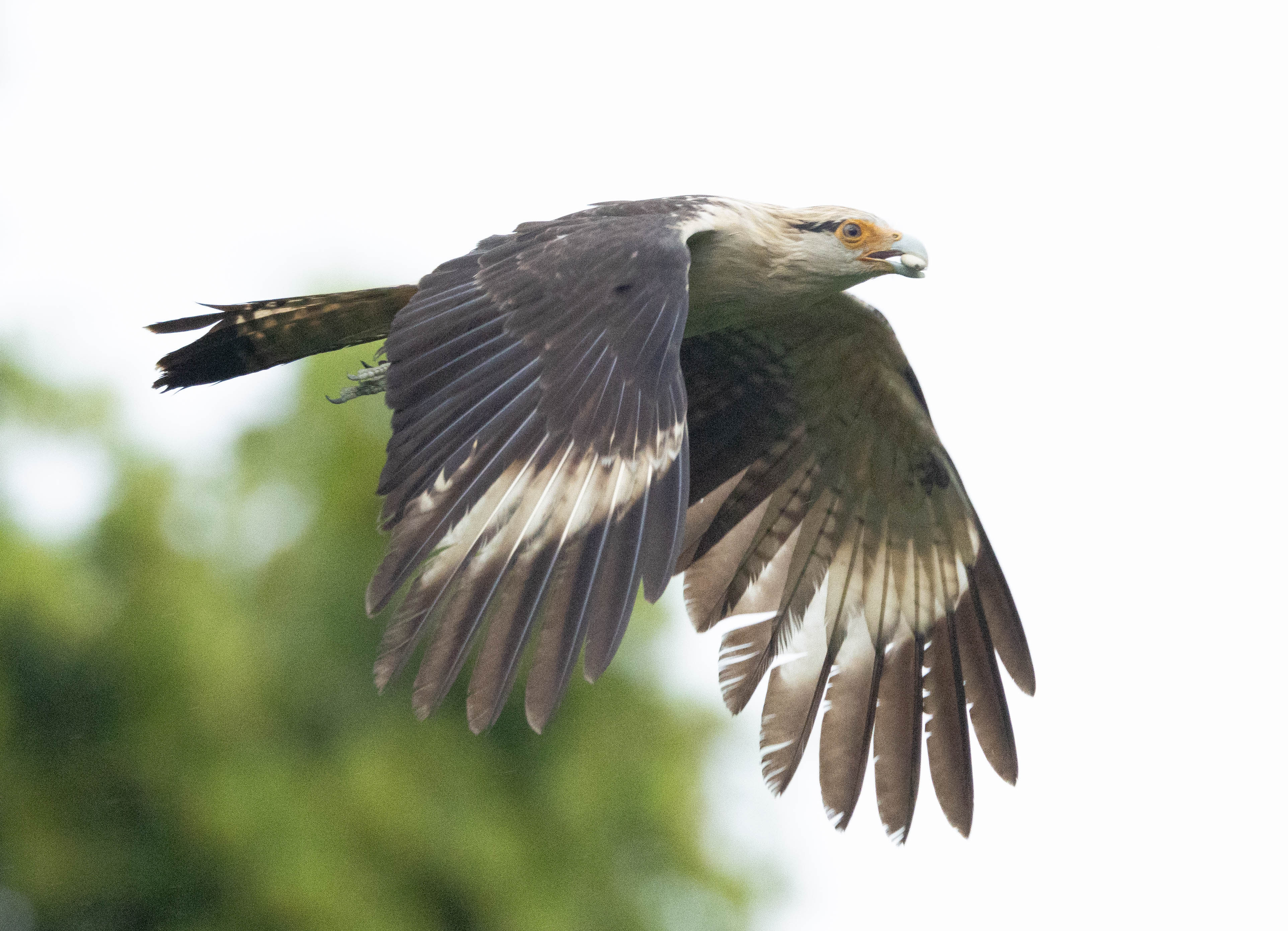
The next morning started well with several new birds before breakfast, including great views of the Yellow-headed Caracara
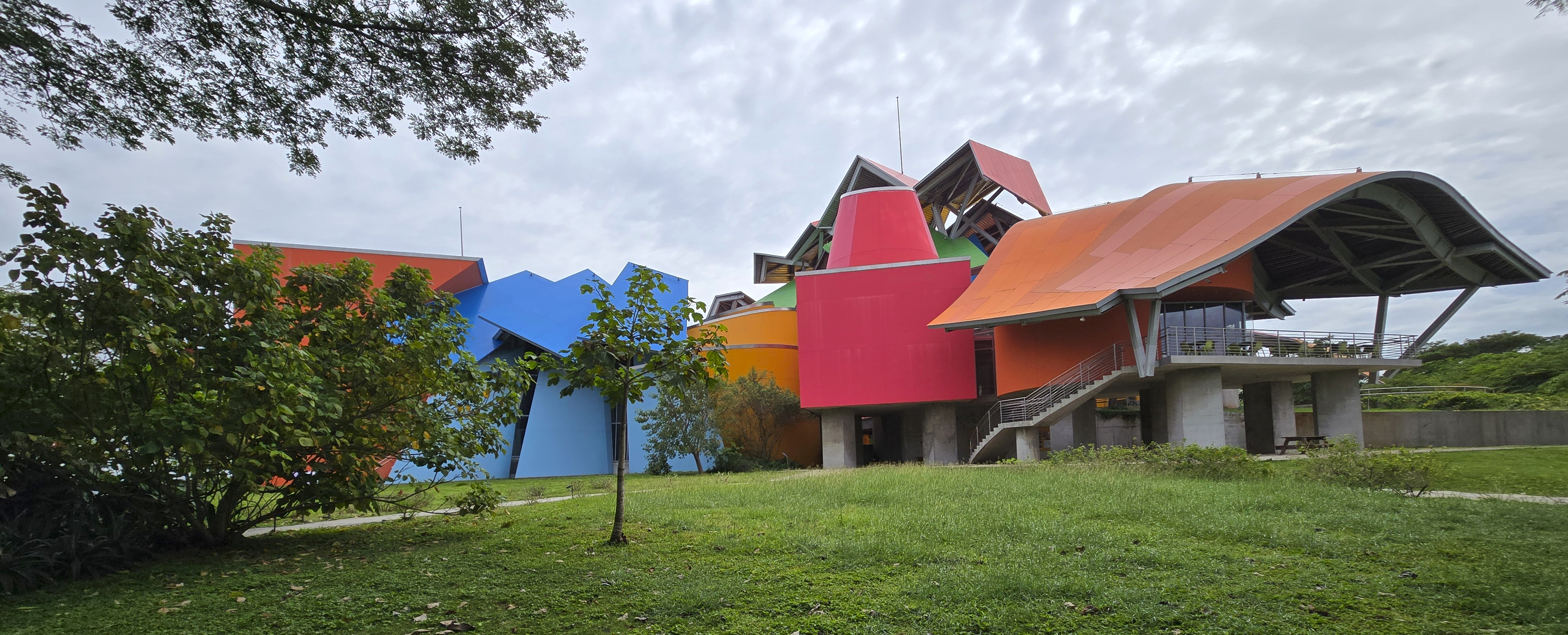
I then walked down toward the Biomuseo, with many other avian encounters
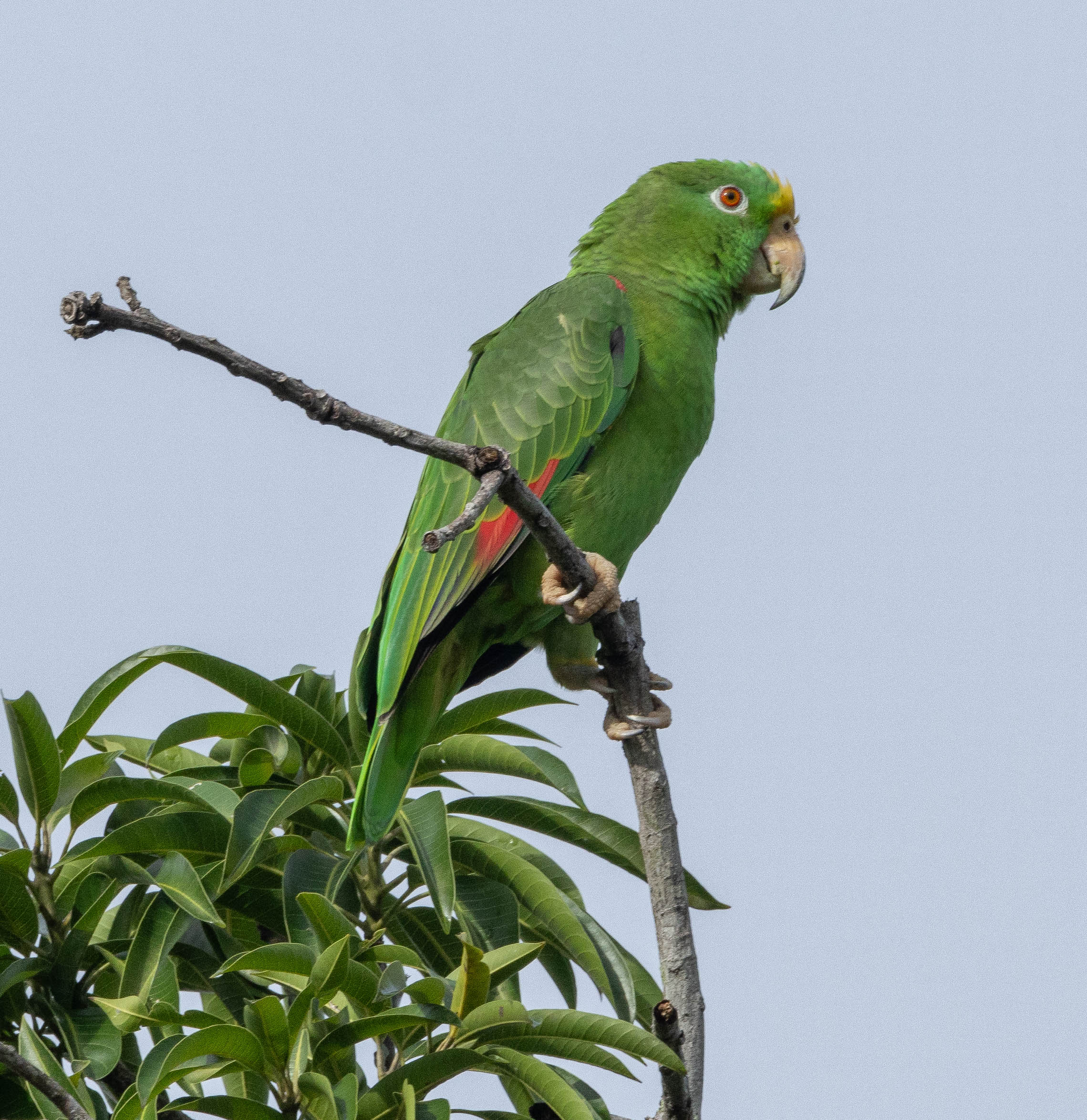
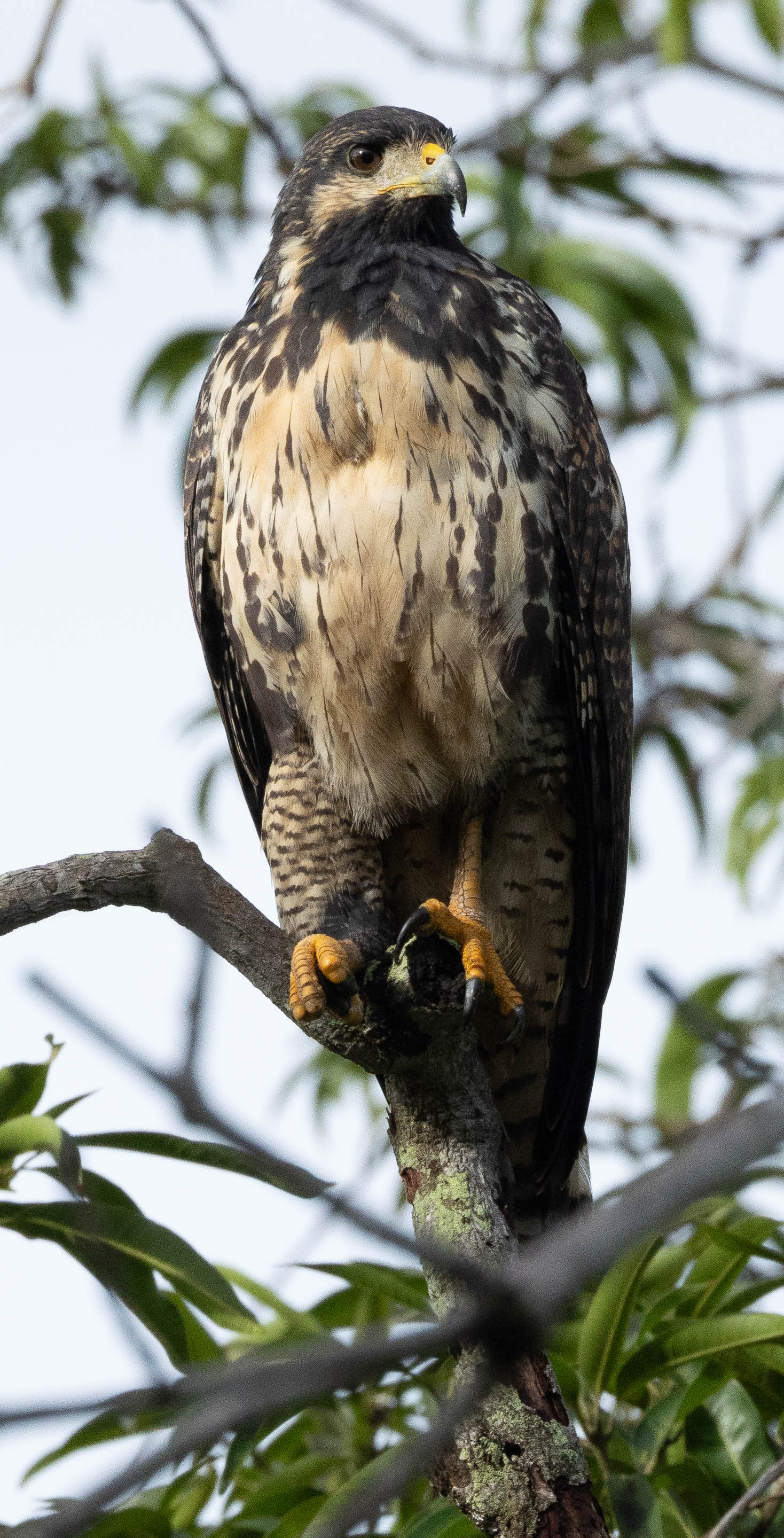
Yellow-crowned AmazonCommon Black Hawk, immature (not yet all black)
There were many thousands of Black Vultures around, including this one
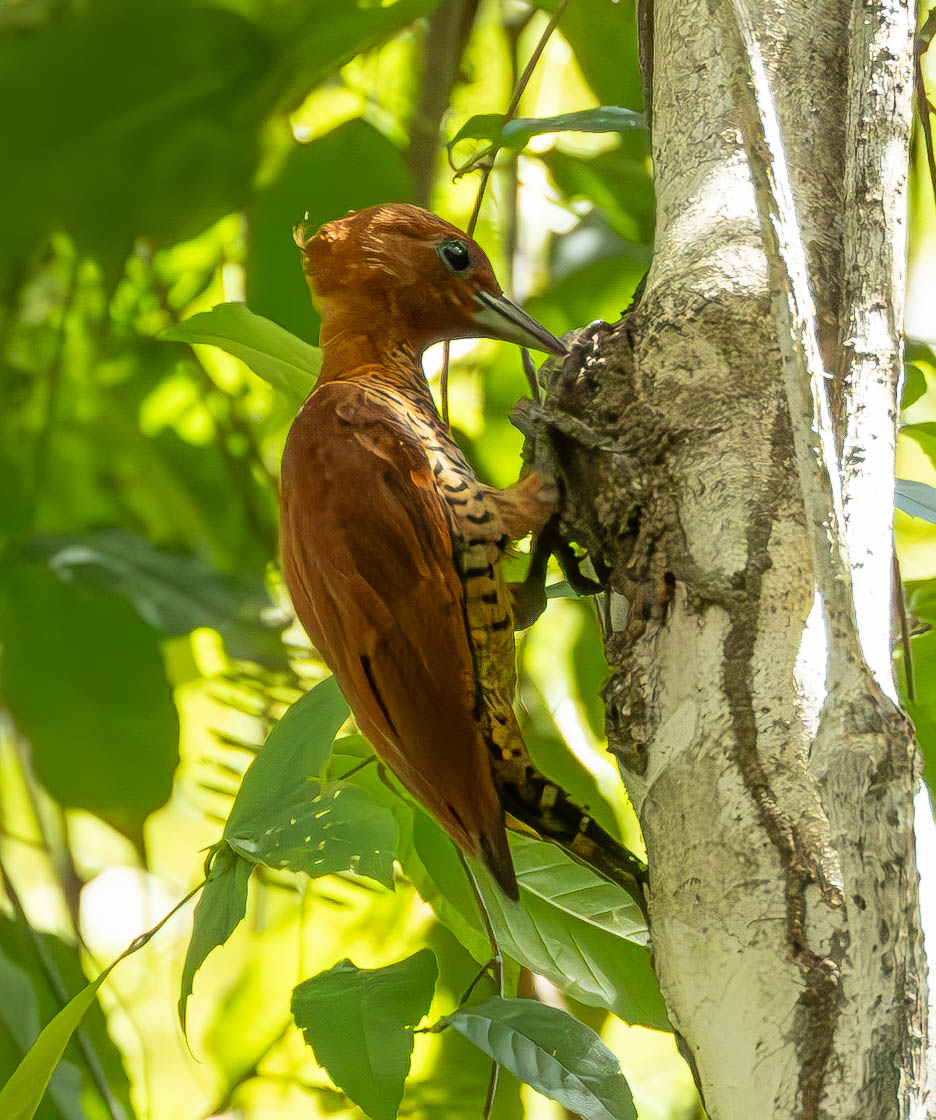
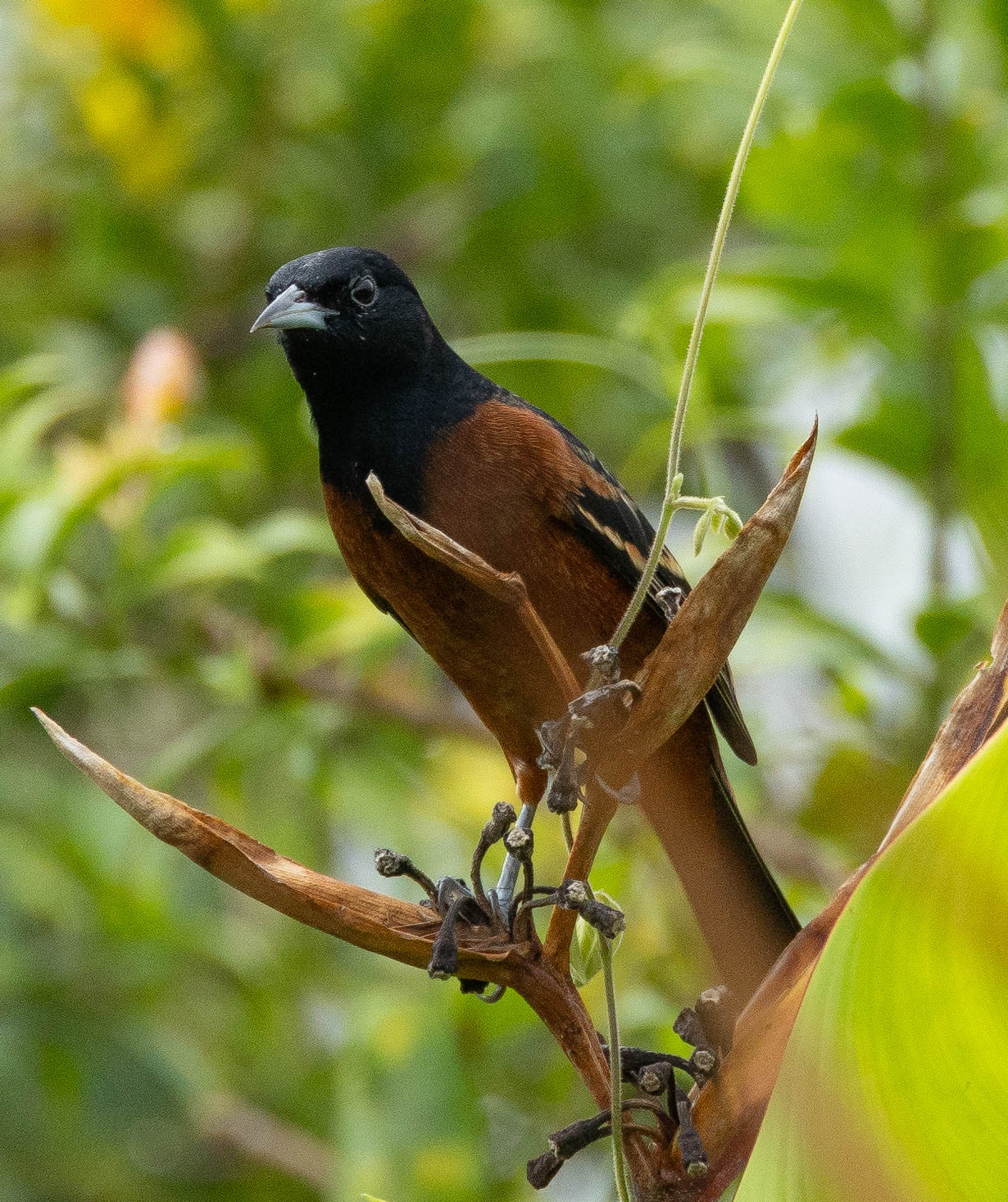
Black Vulture on Korean friendship monumentRed-crowned WoodpeckerOrchard Oriole
The Biomuseo was designed by Gehry, and is fascinating, with the geologic history of Panama well explained. The isthmus formed about 20 million years ago, followed by the Great Interamerican Biotic Interchange (apparently), with south american bids and animals heading north, and vice versa, which is what gives Panama its amazing biodiversity.
Right on the grounds of the Biomuseo were these 2 birds, one from a family originally south american, the second northern.
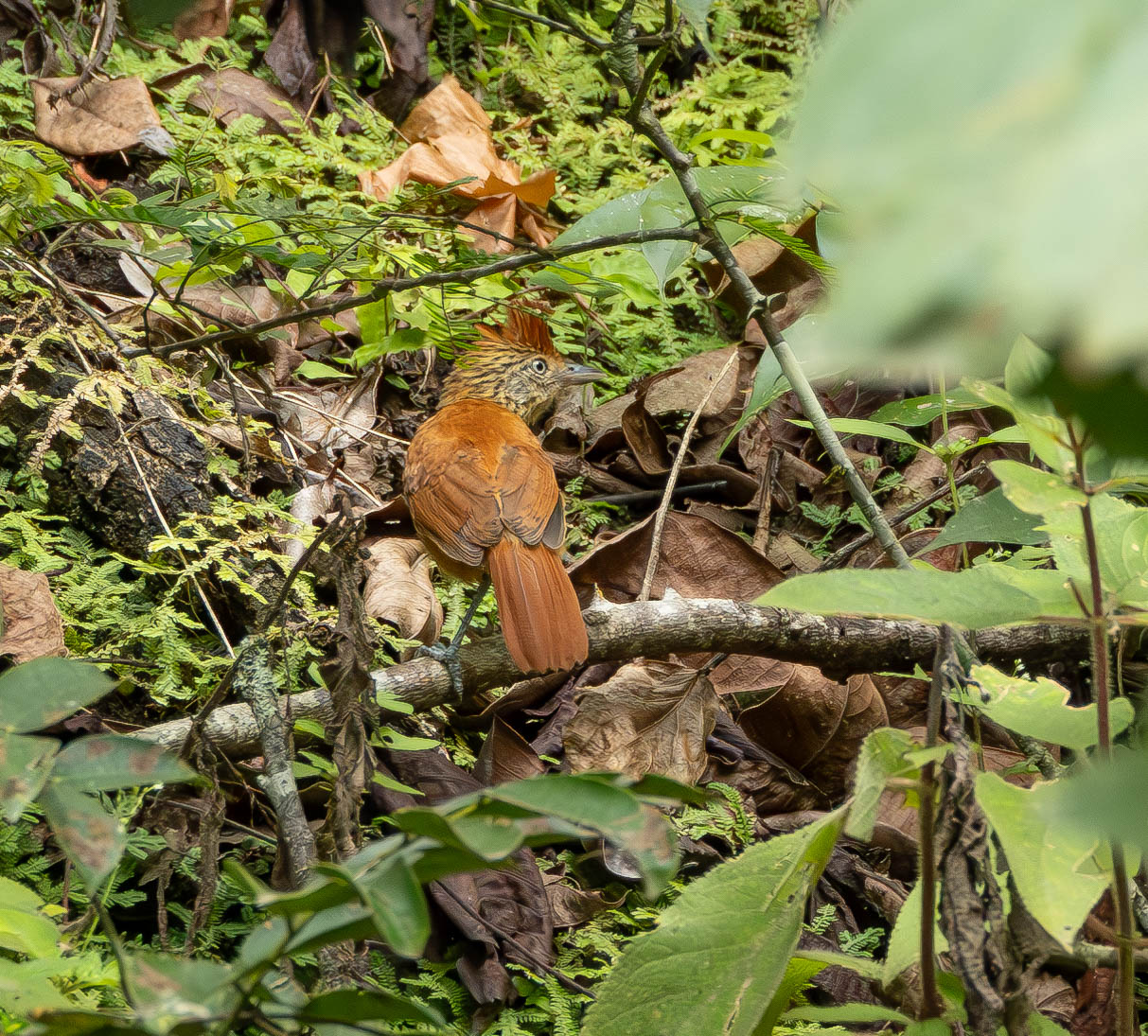
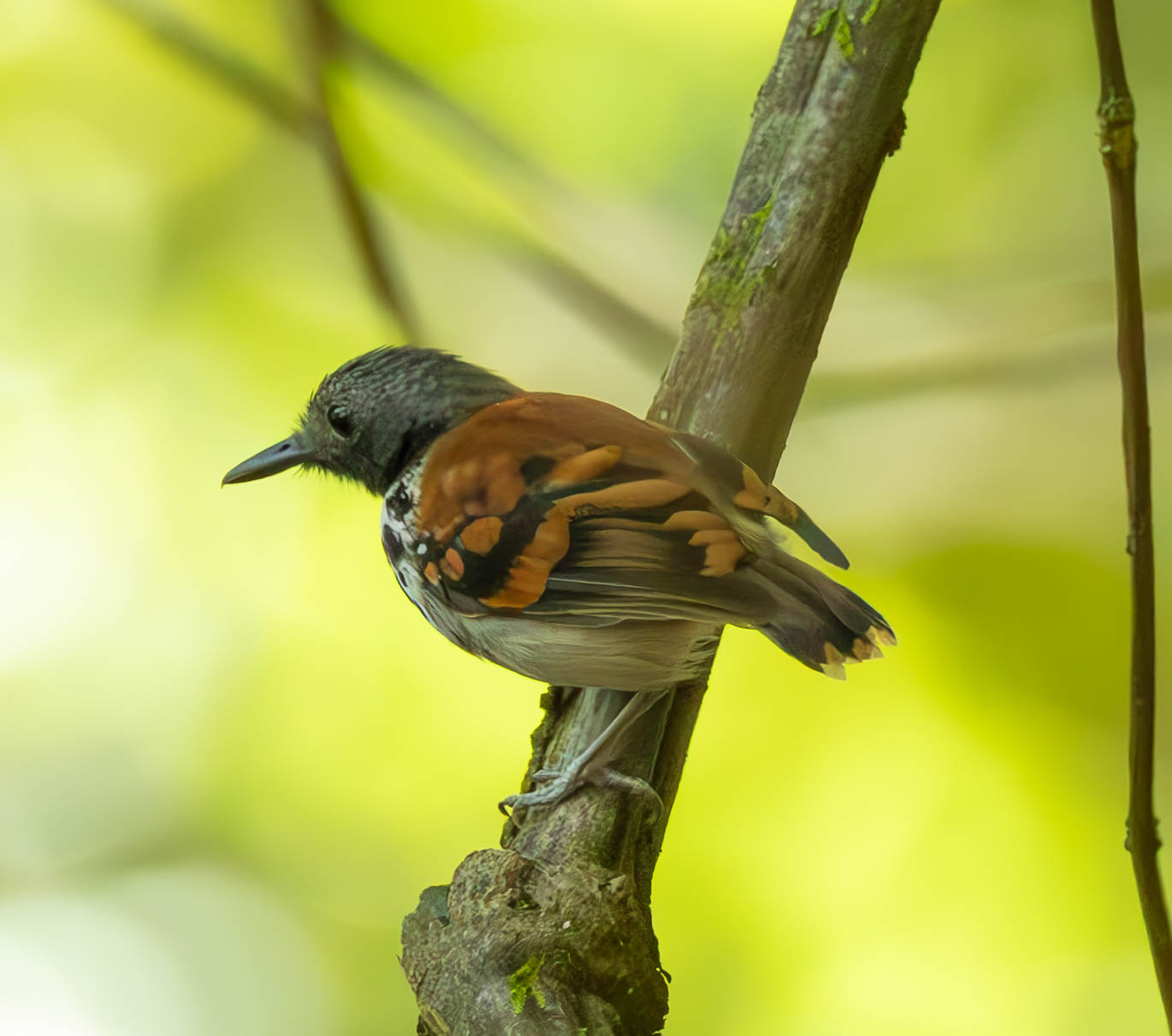
Barred AntshrikeTropical Mockingbird
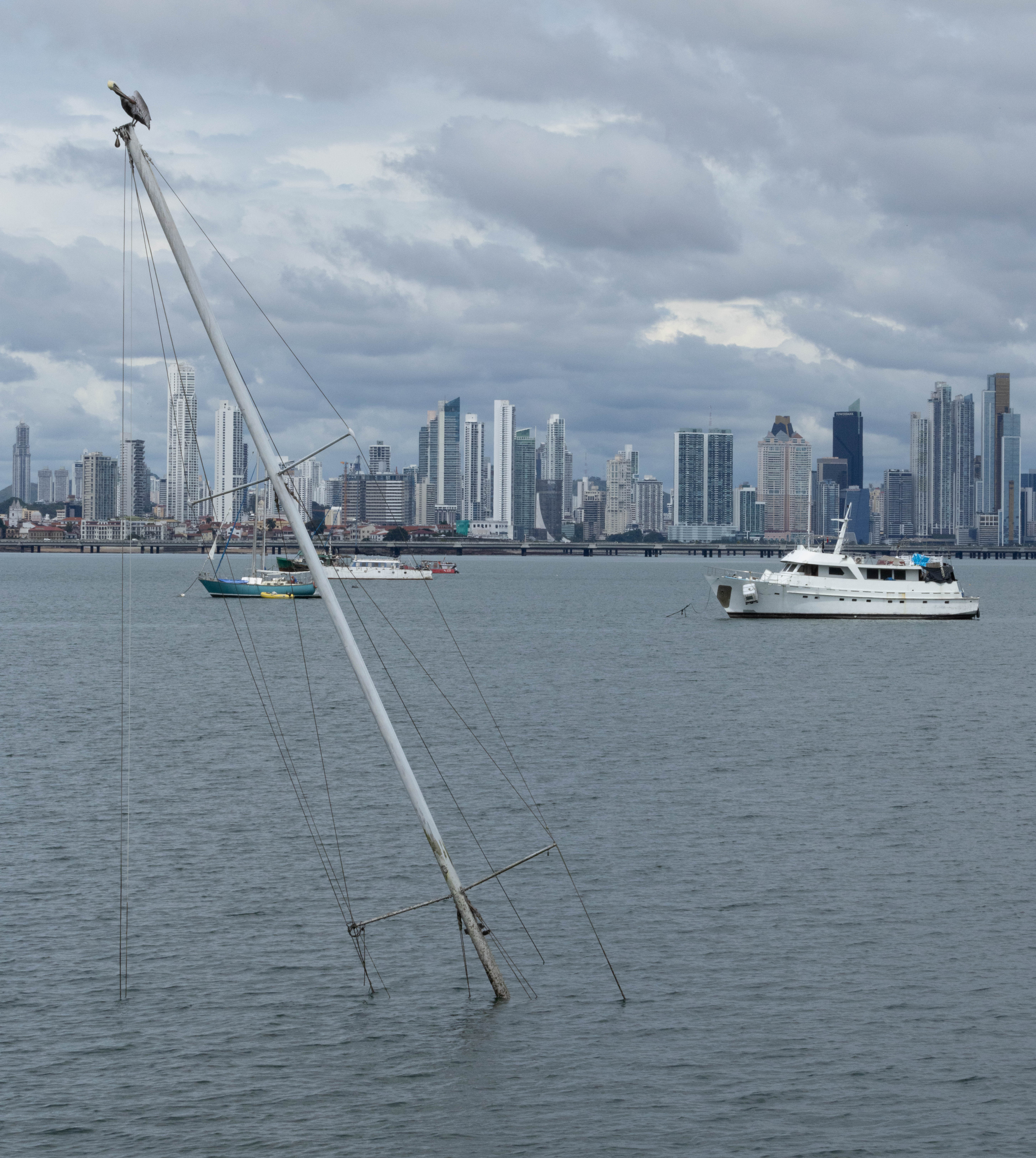
I then hired a bike to cycle down the Amador peninsula, constructed from rock that was excavated to build the canal, to a group of 3, what used to be, islands. On the first of which there is a Smithsonian research institute. On the way down there is a view of the city, and this sunken boat with a Brown Pelican perched.
At the research centre, just near the gate, a Hoffman’s two-toed Sloth was hanging out.
I then took a trip to Panama city old town, which was interesting, but marked by a tropical downpour, so I got soaked cycling back to the hotel area. An amazing first day.
On vacation in Corsica, my long-suffering family organized a few outings for wildlife finding and photography. This allowed me several life-firsts, and a number of photos I’m happy with.
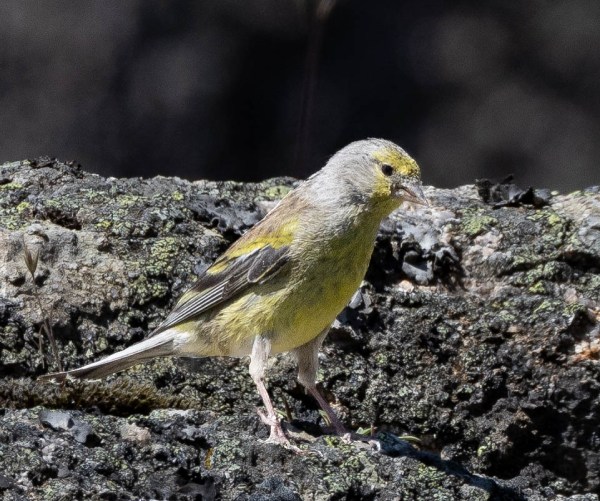
The header image is a Corsican Finch, endemic to Corsica and Sardinia, and not common, even there.
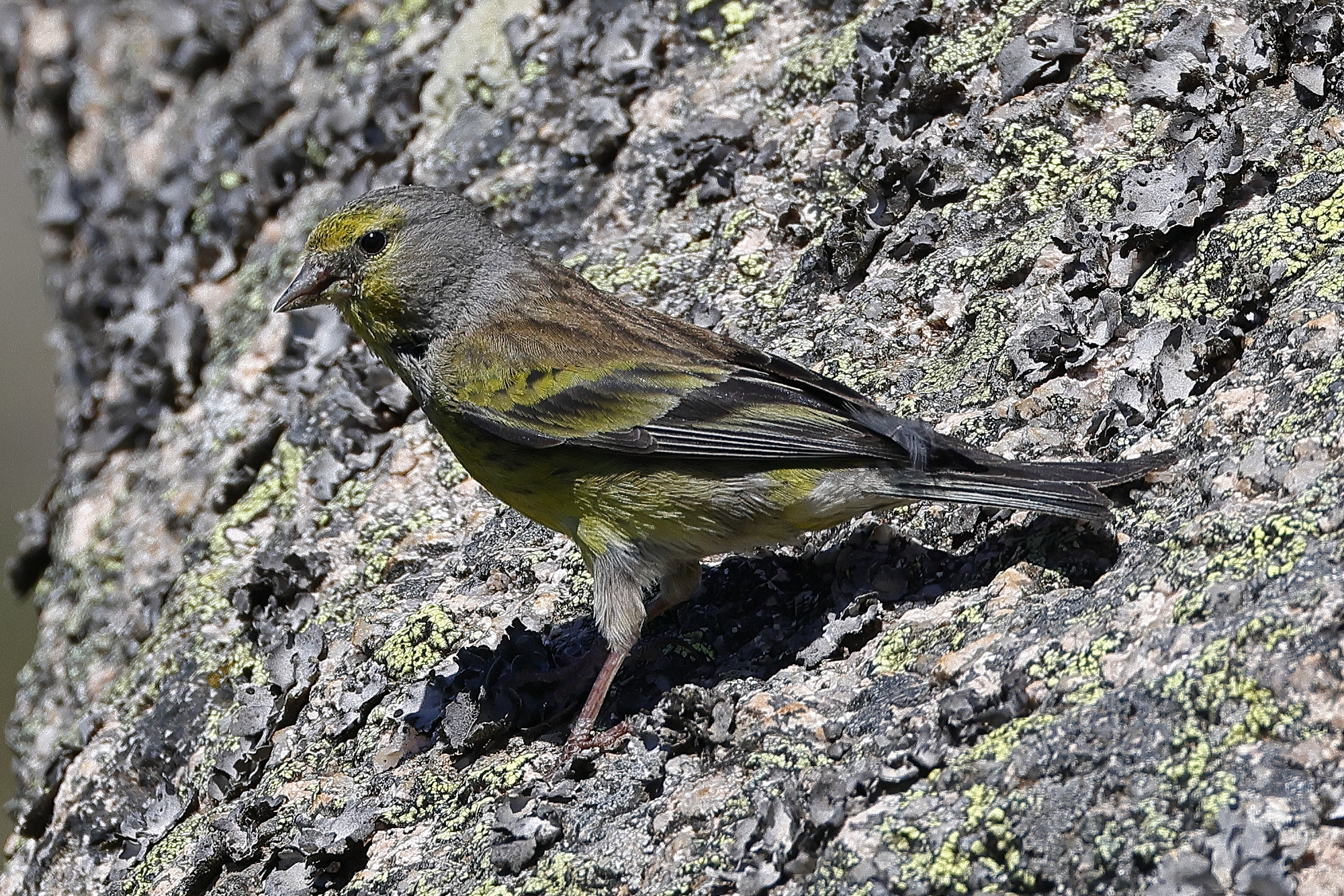
This is another image of the same individual
The Sardinian Warbler, shown here, is somewhat more widespread, seen around the Mediterranean.
Also singing away, and a first for me, the Cirl Bunting.
I had seen Blackcaps before, but never had a good photo.
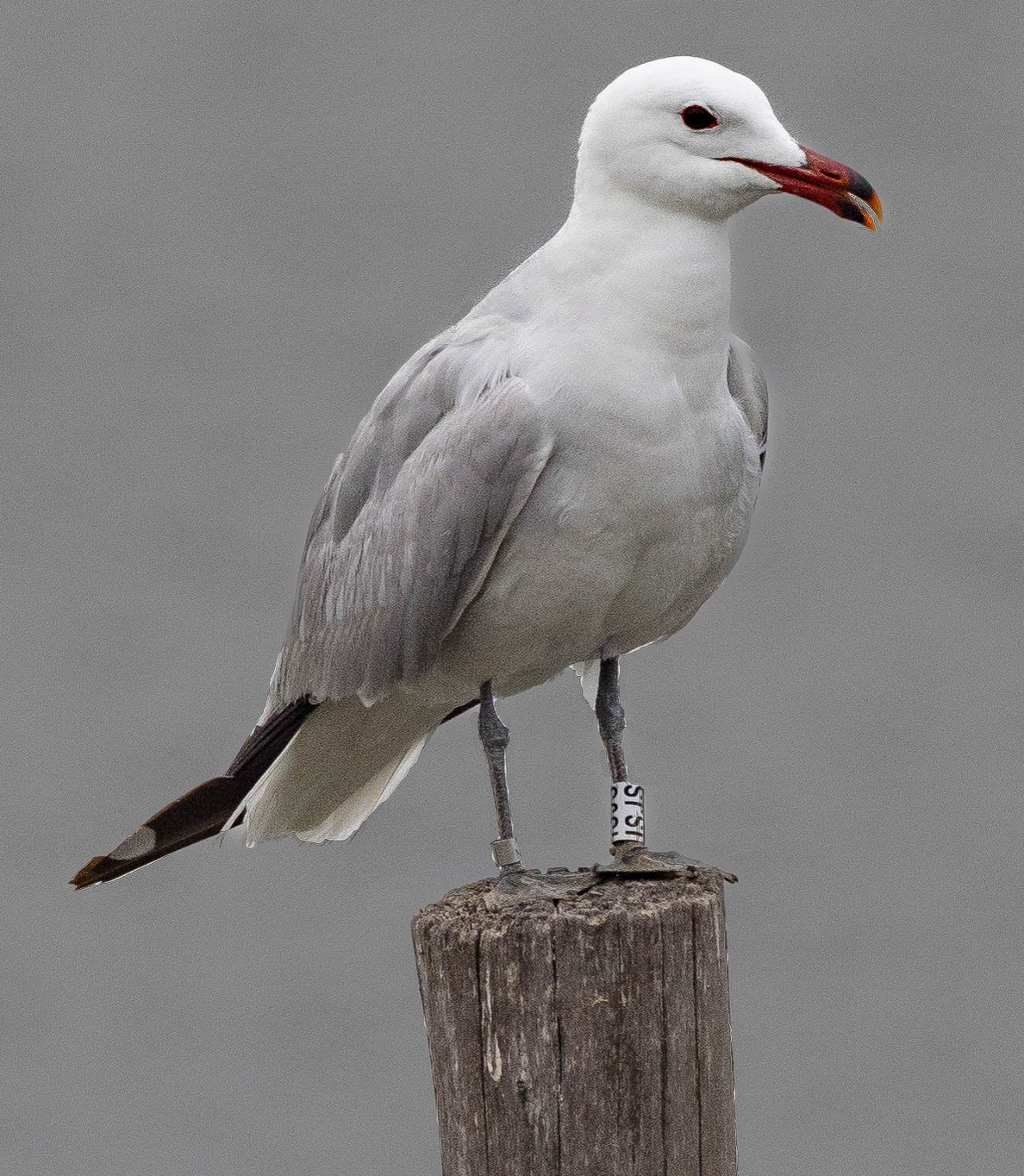
The Audouin’s Gull has a fairly restricted range, including some parts of the Mediterranean, and the noth west African coast, distinguished by the red bill and grey legs.
Another first for me was the Eurasian Treecreeper.
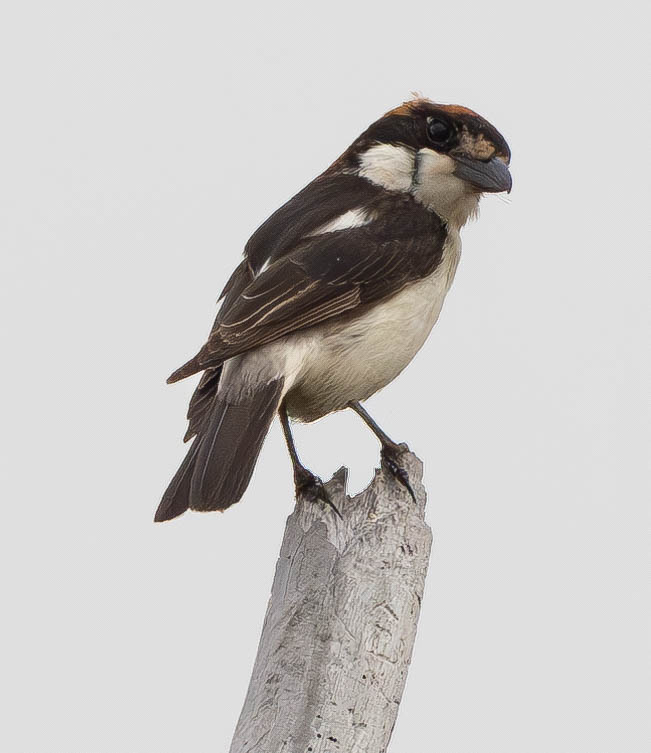
One bird I was not expecting, was this Woodchat Shrike, who struck several poses for me.
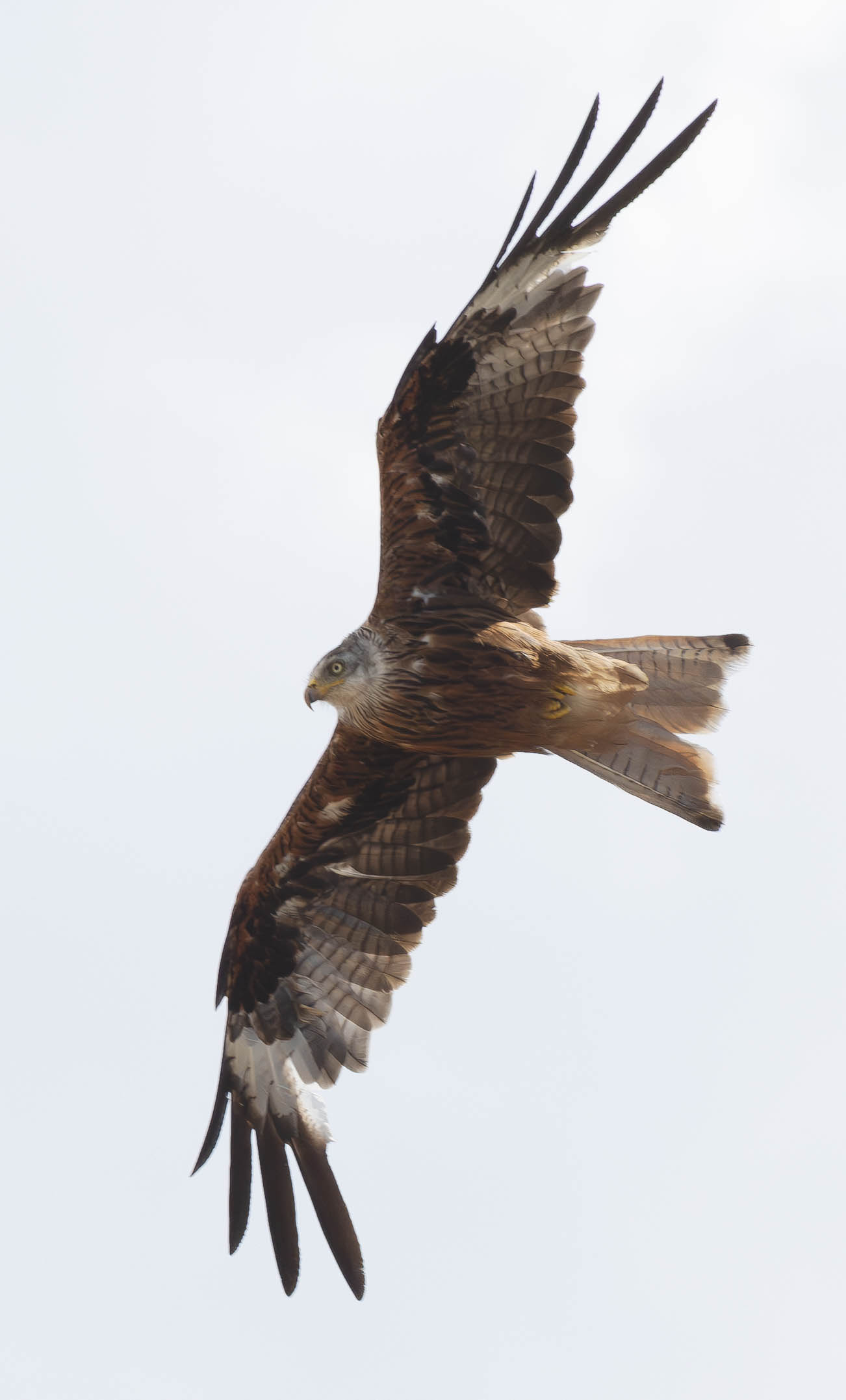
There were large numbers of Red Kites, on one occasion I saw 8 soaring over a hillside.
Point Pelee is a peninsula with its southern most tip being the most southerly point in mainland Canada, and is a spot where birds migrating northward in the spring rest to refuel after crossing Lake Erie. Every May the “Festival of Birds” takes place with many guided walks, and large numbers of bird sightings.
Harris’s Sparrow is a great rarity in this part of Ontario
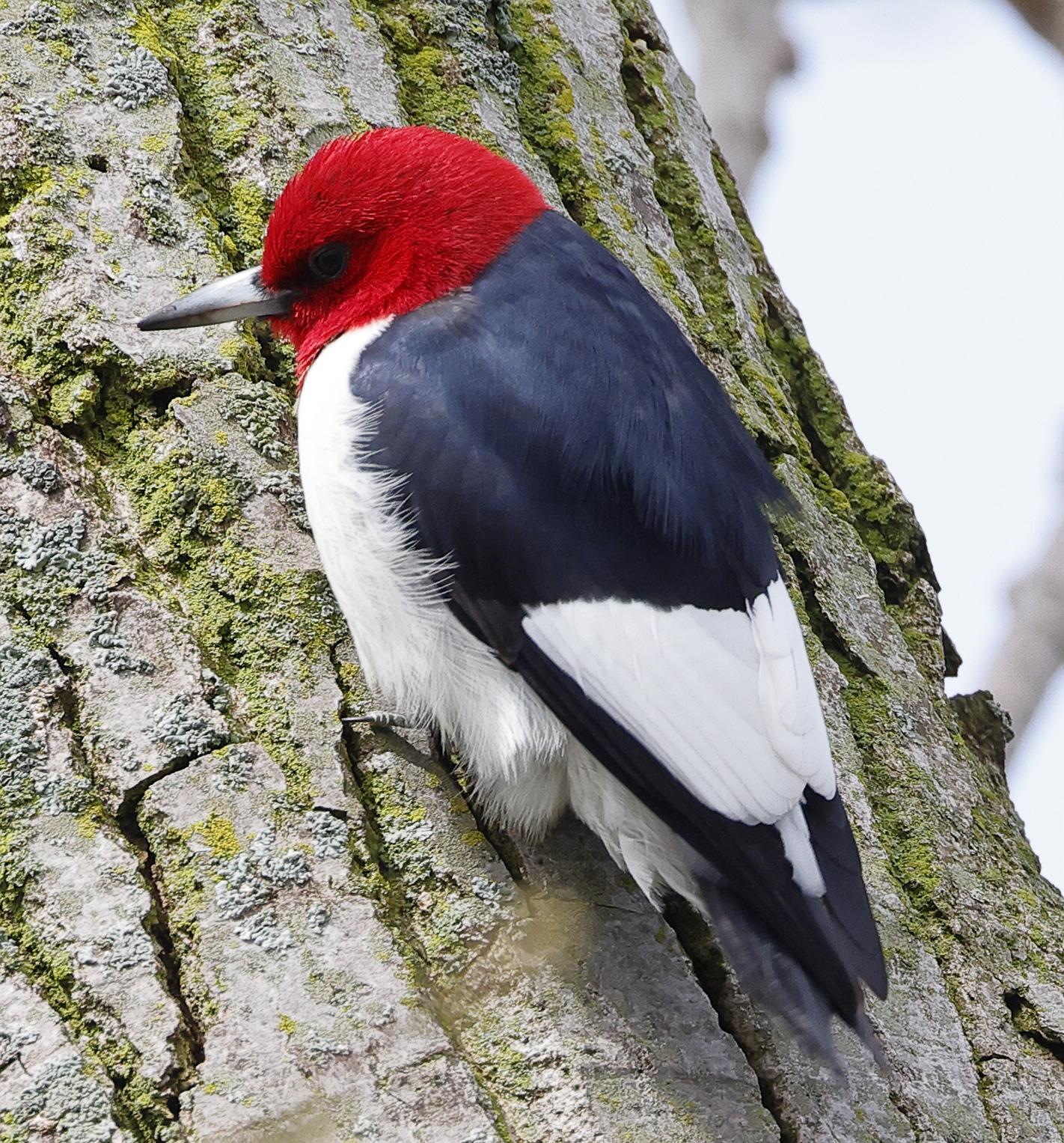
Red-headed Woodpeckers were present the first day, a small flock of 10 or 12 were there.
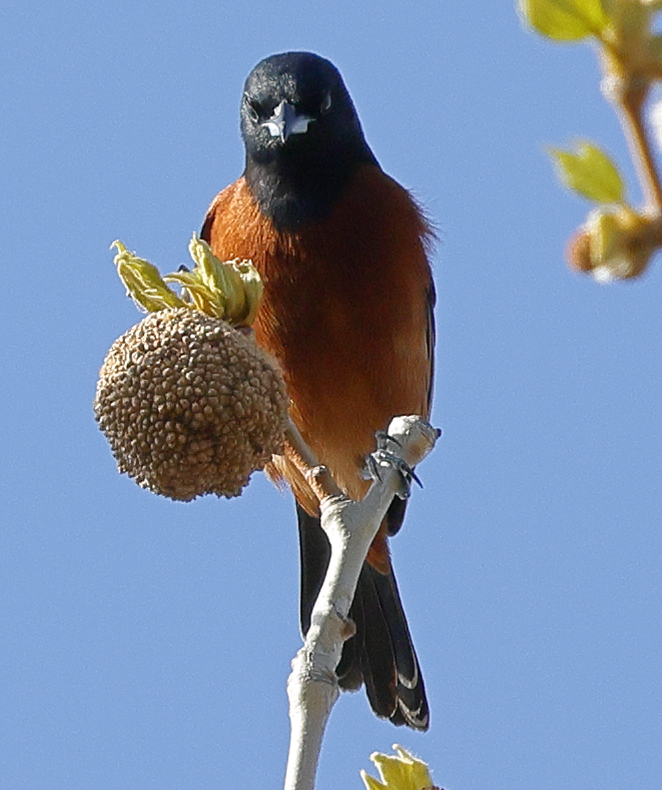
It was my first ever sighting of an Orchard Oriole
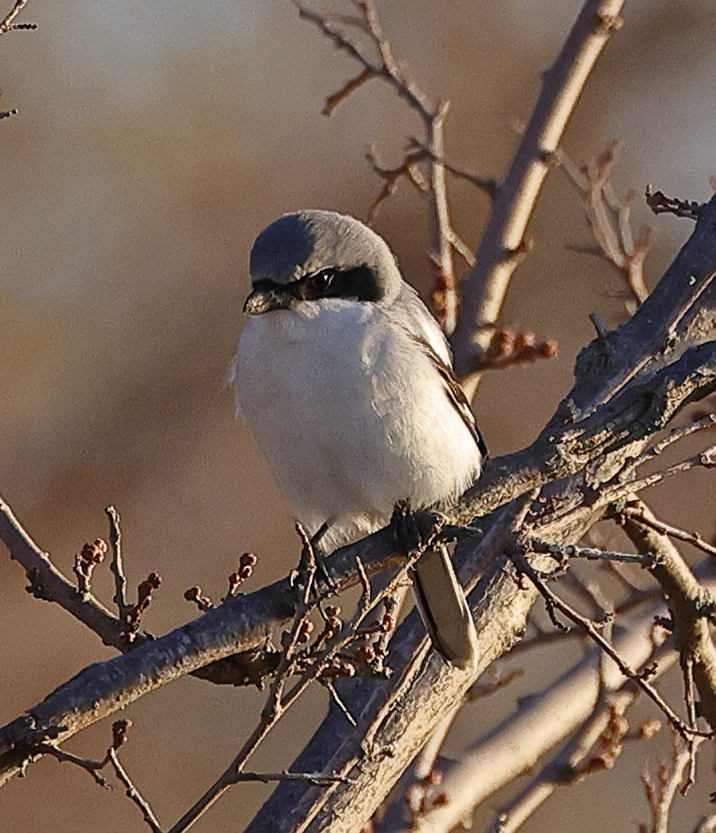
The Loggerhead shrike is a bird normally found much further south, was probably blown here by the winds.
One of the prettiest little birds you could hope to see is the Prothonatory Warbler, seen here with a Yellow Warbler in the background
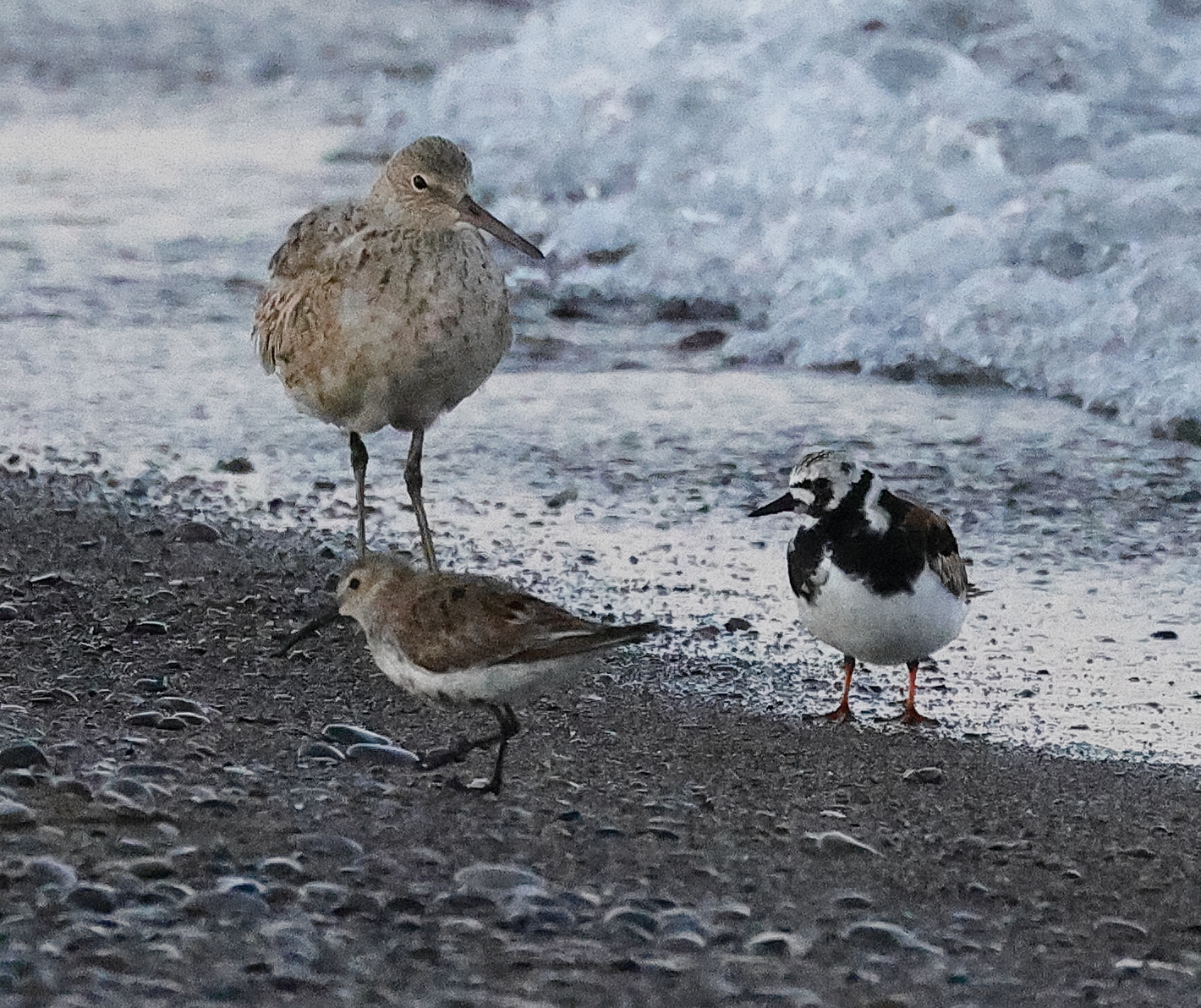
Other birds not normally seen here included this Willet (the larger brown bird) and Ruddy Turnstone (the bird with black patchy colouration) accompanying the Dunlin, which is a common sighting.
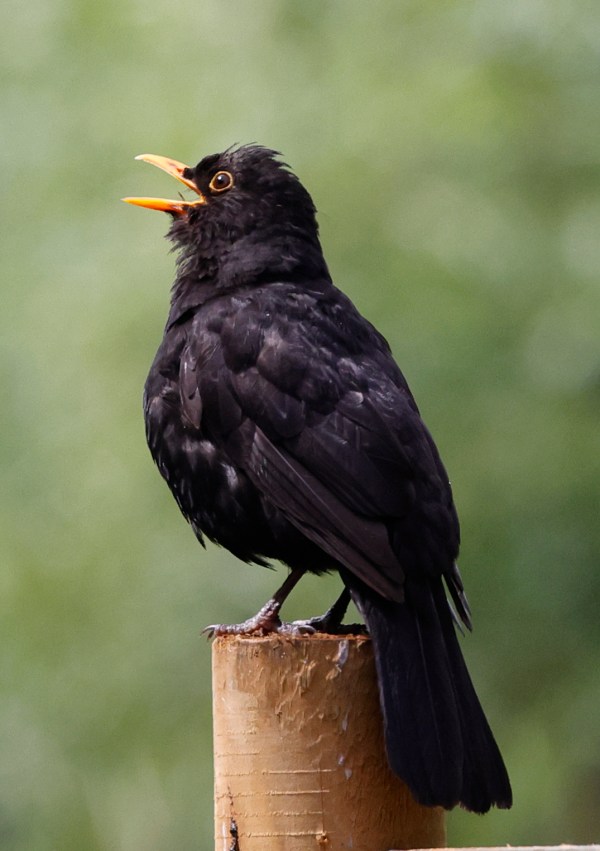
During the trip there were, of course, many commoner birds, the blackbird in the header image was a beautiful specimen, singing for his supper.
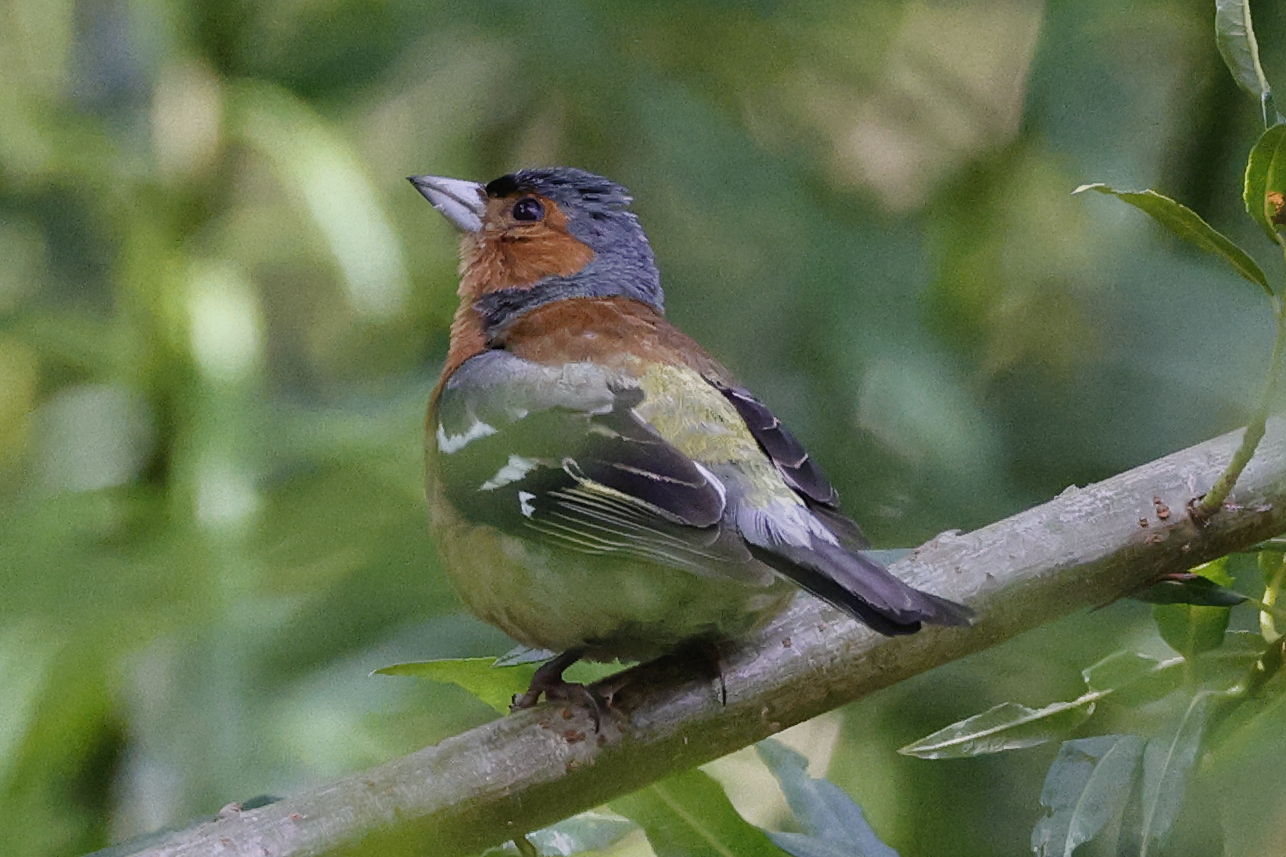
And there was this handsome Chaffinch.
I never previously had a good photo of a Red Kite, they were almost extinct in the UK in the 1980’s, with a study suggesting that there was only one breeding female, in mid-Wales, at the species lowest point. They then became a protected species, and were reintroduced from Europe, and now are locally reasonably common.
Looking for lunch.
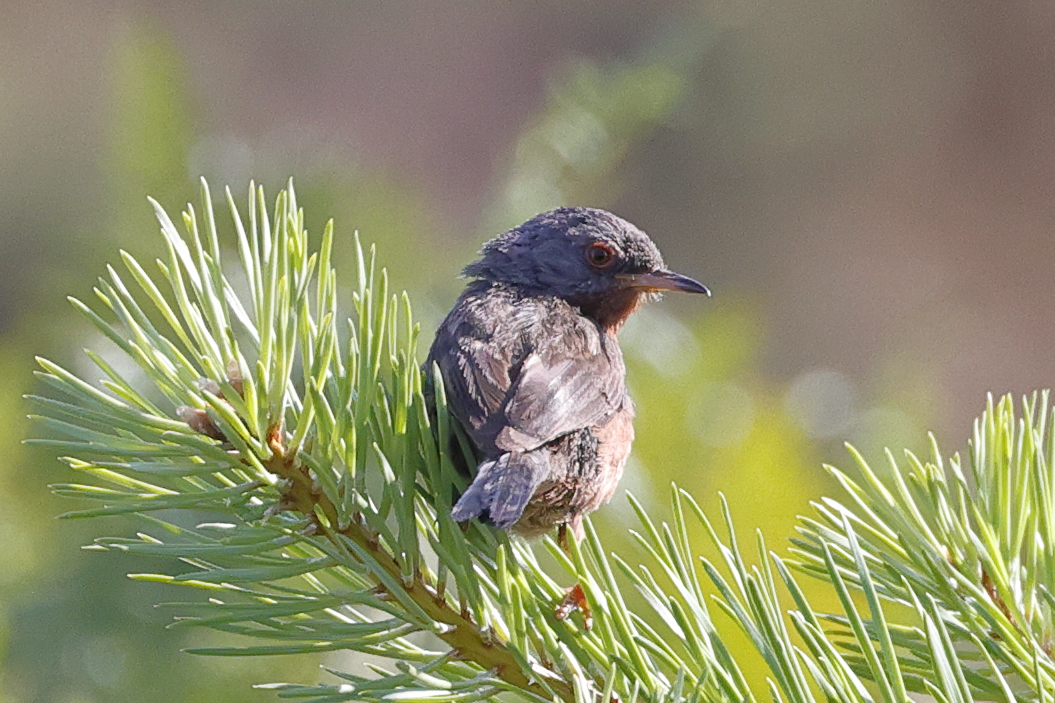
Another threatened species that I was able to see, at an RSPB reserve in the south of England, was the Dartford Warbler.
But I couldn’t persuade him to turn around!
Ruddy Turnstones are less common than some other waders, and are on the Amber list of UK birds with concern about their conservation status.
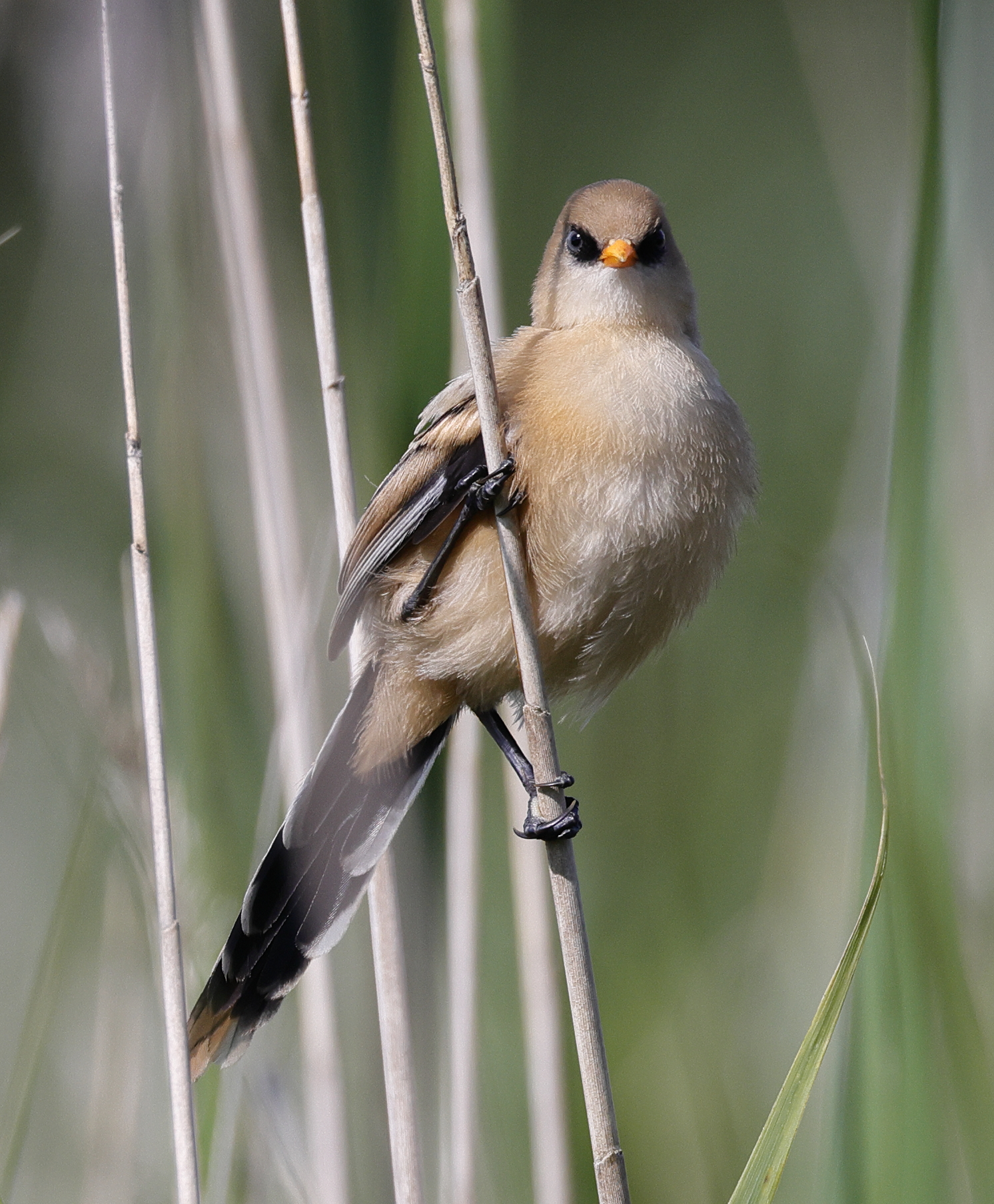
This young Bearded Tit (called a reedling by the American Ornithological Society) is not closely related to other tits, and as the other name suggests, like to live among the reeds. As they get more mature the facial markings develop into a droopy moustache.
The next stop was in southern Yorkshire, again on the coast.
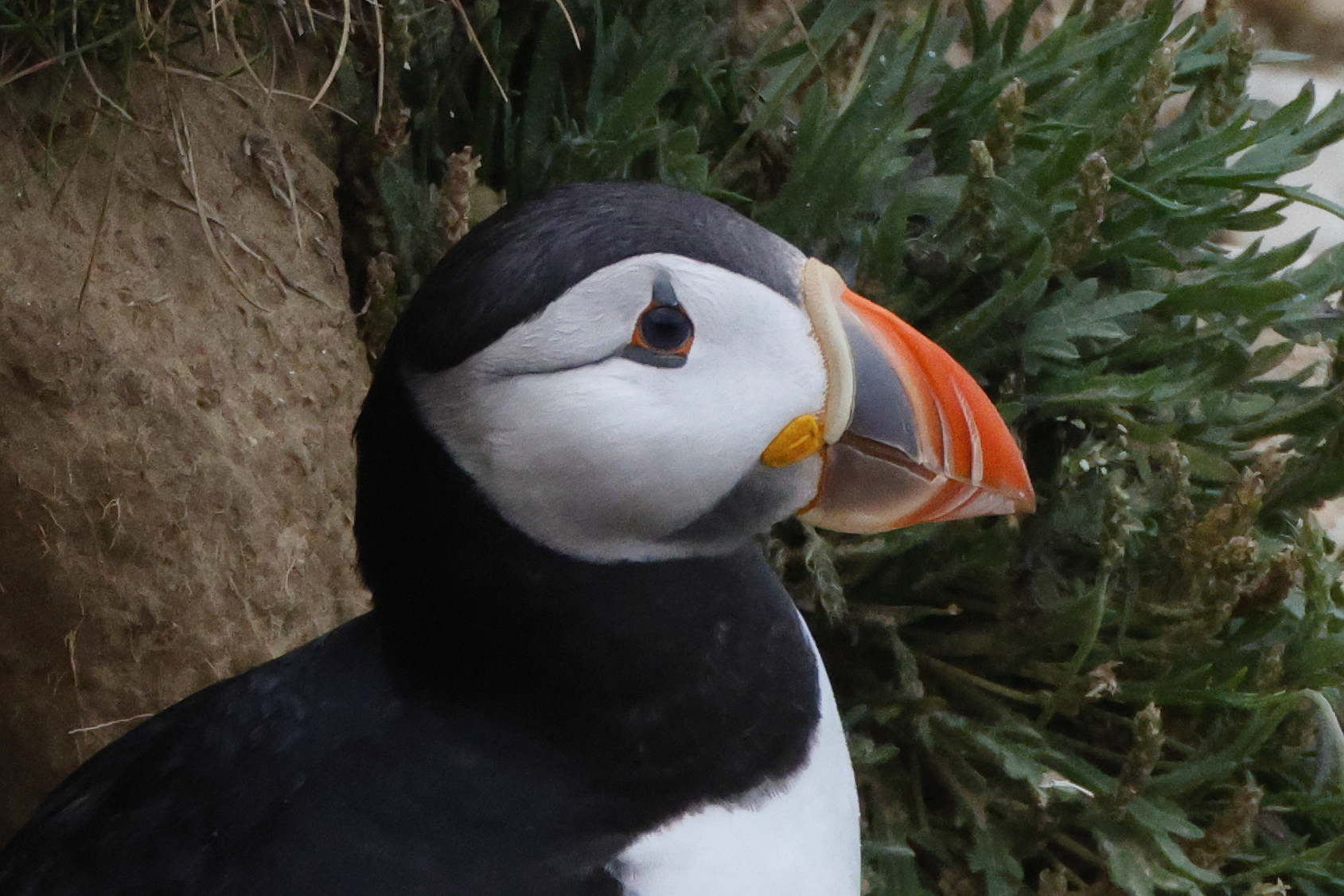
i was keen to see Puffins on the trip, and there were many.
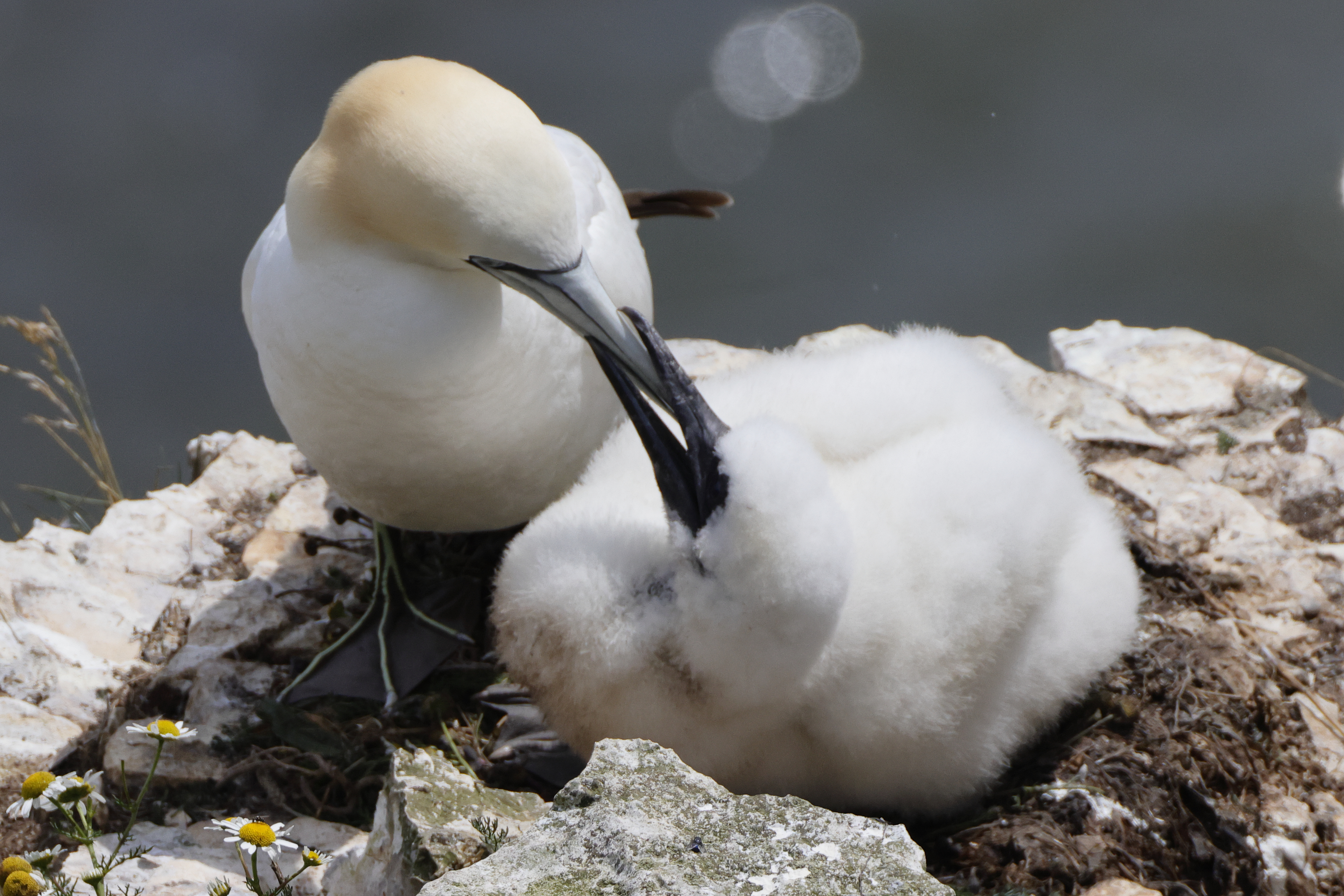
And many thousands of Gannets, some with young downy chicks
The Norther Fulmar has passages above the bill, known as naricorns, and salt secreting glands associated with them, which they use to excrete the excessive salt they absorb from their diet and from the ocean water, much like the closely related albatross.
Slightly inland were these two, a Common Sandpiper in front and a Green Sandpiper behind.
An added bonus was this Barn Owl, flying over the meadow