Corsica

On vacation in Corsica, my long-suffering family organized a few outings for wildlife finding and photography. This allowed me several life-firsts, and a number of photos I’m happy with.

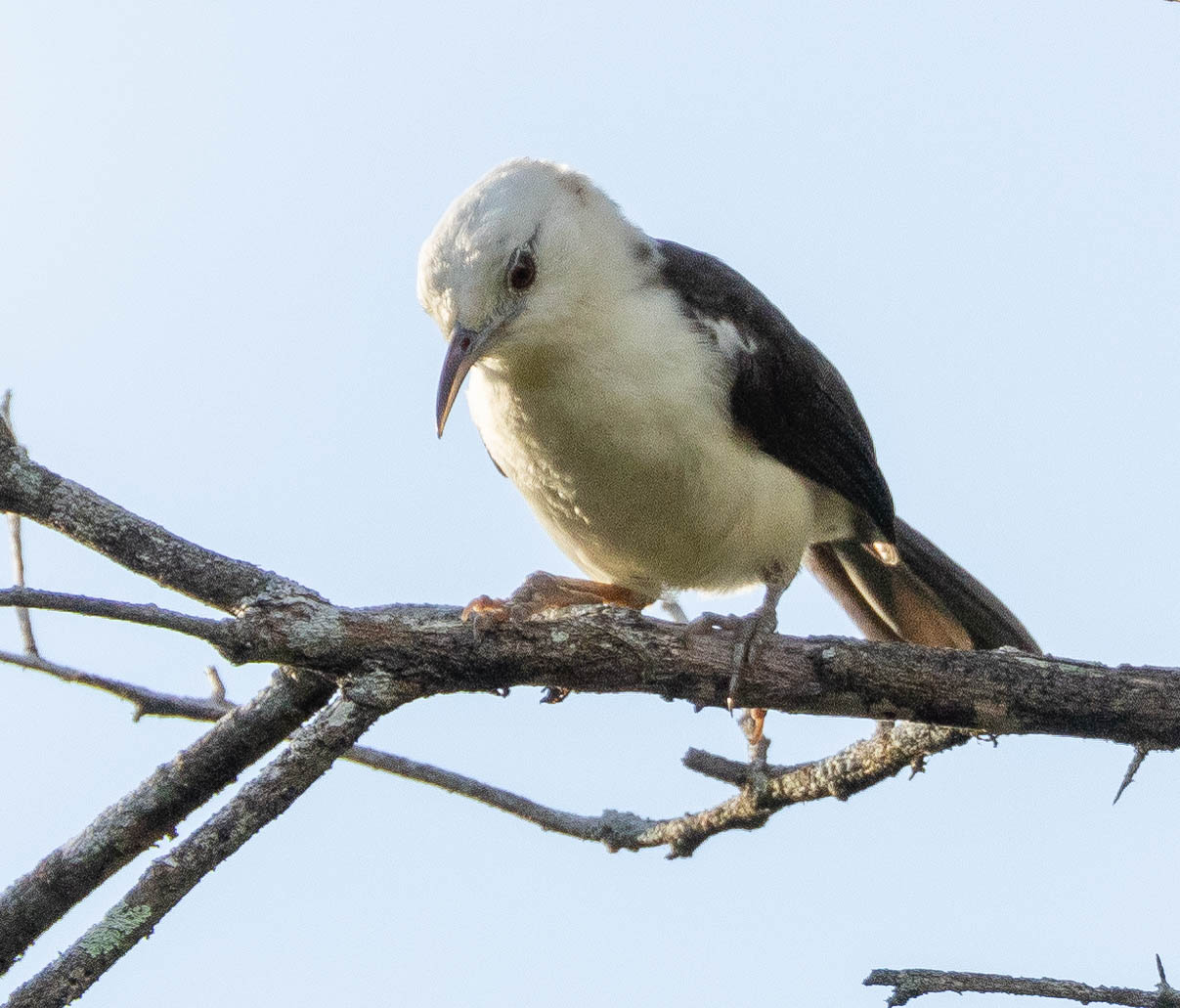
The header image is a Corsican Finch, endemic to Corsica and Sardinia, and not common, even there.

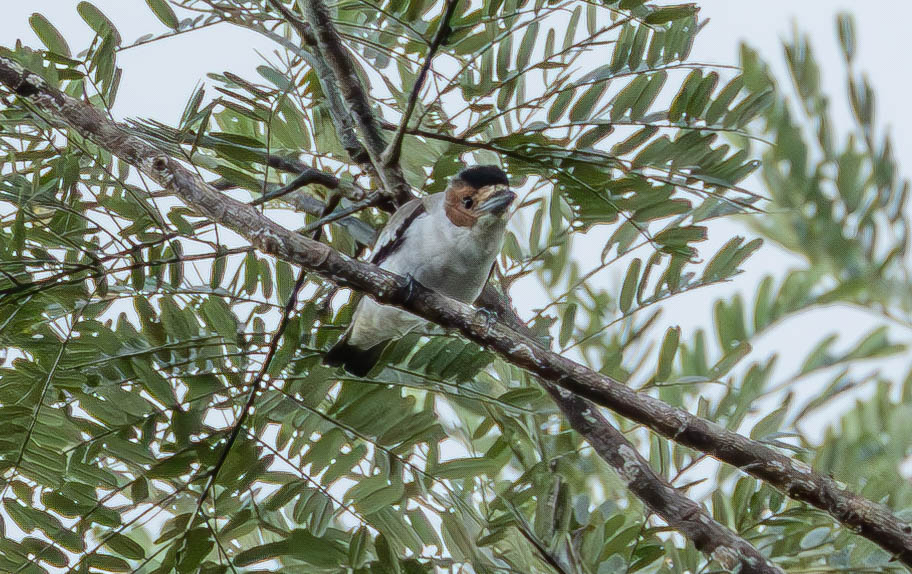
This is another image of the same individual

The Sardinian Warbler, shown here, is somewhat more widespread, seen around the Mediterranean.

Also singing away, and a first for me, the Cirl Bunting.

I had seen Blackcaps before, but never had a good photo.

The Audouin’s Gull has a fairly restricted range, including some parts of the Mediterranean, and the noth west African coast, distinguished by the red bill and grey legs.

Another first for me was the Eurasian Treecreeper.

One bird I was not expecting, was this Woodchat Shrike, who struck several poses for me.

There were large numbers of Red Kites, on one occasion I saw 8 soaring over a hillside.

Western Ontario: Point Pelee National Park

Point Pelee is a peninsula with its southern most tip being the most southerly point in mainland Canada, and is a spot where birds migrating northward in the spring rest to refuel after crossing Lake Erie. Every May the “Festival of Birds” takes place with many guided walks, and large numbers of bird sightings.

Harris’s Sparrow is a great rarity in this part of Ontario

Red-headed Woodpeckers were present the first day, a small flock of 10 or 12 were there.

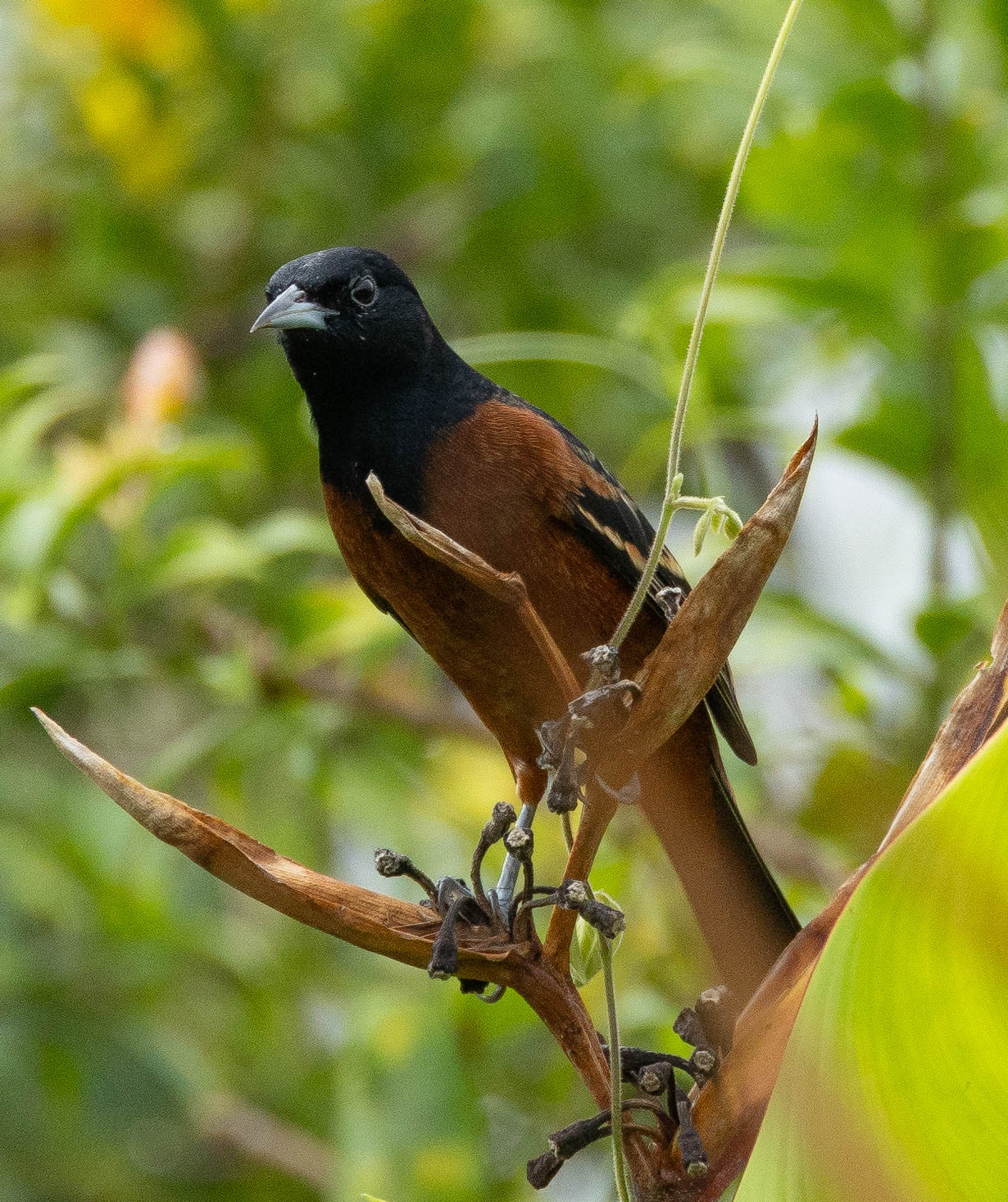
It was my first ever sighting of an Orchard Oriole

The Loggerhead shrike is a bird normally found much further south, was probably blown here by the winds.

One of the prettiest little birds you could hope to see is the Prothonatory Warbler, seen here with a Yellow Warbler in the background

Other birds not normally seen here included this Willet (the larger brown bird) and Ruddy Turnstone (the bird with black patchy colouration) accompanying the Dunlin, which is a common sighting.

Trip to England, part 3

During the trip there were, of course, many commoner birds, the blackbird in the header image was a beautiful specimen, singing for his supper.

And there was this handsome Chaffinch.

I never previously had a good photo of a Red Kite, they were almost extinct in the UK in the 1980’s, with a study suggesting that there was only one breeding female, in mid-Wales, at the species lowest point. They then became a protected species, and were reintroduced from Europe, and now are locally reasonably common.

Looking for lunch.

Another threatened species that I was able to see, at an RSPB reserve in the south of England, was the Dartford Warbler.

But I couldn’t persuade him to turn around!

Ruddy Turnstones are less common than some other waders, and are on the Amber list of UK birds with concern about their conservation status.

This young Bearded Tit (called a reedling by the American Ornithological Society) is not closely related to other tits, and as the other name suggests, like to live among the reeds. As they get more mature the facial markings develop into a droopy moustache.

Trip to England, part 2

The next stop was in southern Yorkshire, again on the coast.

i was keen to see Puffins on the trip, and there were many.

And many thousands of Gannets, some with young downy chicks

The Norther Fulmar has passages above the bill, known as naricorns, and salt secreting glands associated with them, which they use to excrete the excessive salt they absorb from their diet and from the ocean water, much like the closely related albatross.

Slightly inland were these two, a Common Sandpiper in front and a Green Sandpiper behind.

An added bonus was this Barn Owl, flying over the meadow

Trip to England, part 1

After Portugal a trip to my home country, for a few days of birdwatching. The Sedge Warbler image above was from that trip, at our first stop in Norfolk, as are all the photos in this post.

Little Ringed Plover

Pied Avocet

The Spoonbill on the left, with the yellow on the beak, is the adult who was being bugged by the juvenile to cough up some food.

This Black-headed Gull was having the same kind of attention from their chick.

These House Martins were collecting mud to build a nest

The Little Egret has a catch in its beak.

Common Reed Warbler

Stone-Curlew. Also known as the Eurasian Thick-knee by the American Ornithological Society. Quite a rare bird, but with one or two sites where they return each year.

Portugal

This summer our family vacation was in Portugal, which we all loved. There were a few birds observed over the first couple of weeks, and then I had a day trip to the Nature Reserve of the Tejo estuary (also known as the Tagus in English). The header image of Black-winged Stilt and Black-tailed Godwit was taken there, as were several of those which follow.

Greater Flamingo

Stonechat

Rock Bunting, eating cricket

Crag-martin with insect in mouth

Crag-Martin on nest feeding chick

Ruff and Common Redshank

Yellow Wagtail

Crested Lark

New Jersey

I was invited to speak at a great conference in New Jersey, NeoForum, and, as I now often do, I added on a couple of overnights to do some exploring. On this occasion I drove down to Cape May which is a birding hotspot, especially during migration, unfortunately the spring migration was largely finished, I also stopped at the Edwin B Forsythe wildlife refuge, where there were an impressive number of Ospreys, many of whom had young chicks in their nests.

The header image is a Glossy Ibis, which were quite common there, but I had not seen since I was in Africa.

The Black Skimmer was living up to its name, and was another first for me.

I could only get a picture of this Summer Tanager backlit, but I was able to overexpose, then adjust the lighting in production.

I love the colours of the Indigo Bunting, this male is in breeding plumage.

The Carolina Wren has a very loud song, like many wrens, it is more easily heard than seen.

The Forster’s Terns were abundant.

These Ospreys were chasing each other, the one at the back trying to snatch the fish.

Finally the fish was snatched from the claws of the first bird, but dropped it

And a Bald Eagle Swooped in and snatched the fish as it hit the water, escaping with the stolen prey. The Osprey didn’t seem to want to take on the eagle!

Australia Trip: Queensland day 3
The header image is a Buff-breasted Paradise Kingfisher one of the last birds we saw in the Atherton tablelands before we started the return journey to Cairns.

Pale-headed Rosella

Oriental Dollarbird

Nankeen Kestrel

Australasian Bustard

White-naped Honeyeater

A front view of the Buff-breasted Paradise Kingfisher

Australia trip: Queensland, day 2, nocturnal tour

I had never before tried to go wildlife watching in the dark, but with Patrick De Geest as my guide, it was a great experience. The header image is a Lumholz’s Tree Kangaroo

Green Ring-tailed Possum, carrying a baby

Striped Possum

Yellow-bellied Glider

This is the smallest gliding mammal (a marsupial), the Broad-toed Feathertailed Glider

Lumholz’s Tree Kangaroo

Australia trip: Queensland, day 2

The next two days I was guided by Patrick De Geest from Eyes on Wildlife, who was an excellent guide and good company, with an extensive knowledge of all the wildlife, birds, mammals, reptiles, amphibians and of the plants also. We had a great day starting in Cairns then heading to Atherton, and finished the day with a nocturnal trip during which we saw possums, gliders, lizards, bats, and a kangaroo that lives in trees.

Olive-backed Sunbirds, the header image is a male Olive-backed Sunbird, the closer one in this image is a female, without the blue throat.

This Scarlet Myzomela is one of a large group of birds known as the Honeyeaters, who all gorge on nectar whenever the trees (or other plants) are producing.

This Umbrella tree was full of many different species of Honeyeater, including White-Cheeked, Scarlet, MacLeay’s and Brown (clockwise from top left)

A better view of the MacLeay’s Honeyeater

Chestnut-breasted Mannikin

I had never before seen a Goose sitting in a tree! This is a Magpie Goose.

Australia trip: Queensland, day 1

I decided to extend the Australia trip with a visit to Cairns and the Atherton tablelands. The first day in Cairns I was on my own, but with the advice of a guide I searched out the Southern Cassowary shown in the header image.

Southern Cassowary

The feet on this Comb-crested Jacara are amazing

The Bar-Tailed Godwit has the longest non-stop flight of any bird, with the south-bound migration being about 12,000 km from Alaska to Australia or New Zealand. Before the flight they pack on fat, reaching more than 50% of their body weight being fat, and they shrink their digestive organs just before taking off. 12,000 km and about 8 days later they land with little body fat left, and then spend the next months eating.

Little Kingfisher

Sacred Kingfisher

Australia trip: Victoria

I was fortunate enough to take a trip to Australia very recently, with a few days in Victoria, mostly spent in Melbourne and at Wilson’s Promontory. The header image is a juvenile Emu that we saw there.

This family of Emus confronted us at Wilson’s Prom, they are huge, the adult’s head being somewhat higher than mine.

Crested Dove

Male and female Maned Ducks taking flight

Blog at WordPress.com.

Up ↑