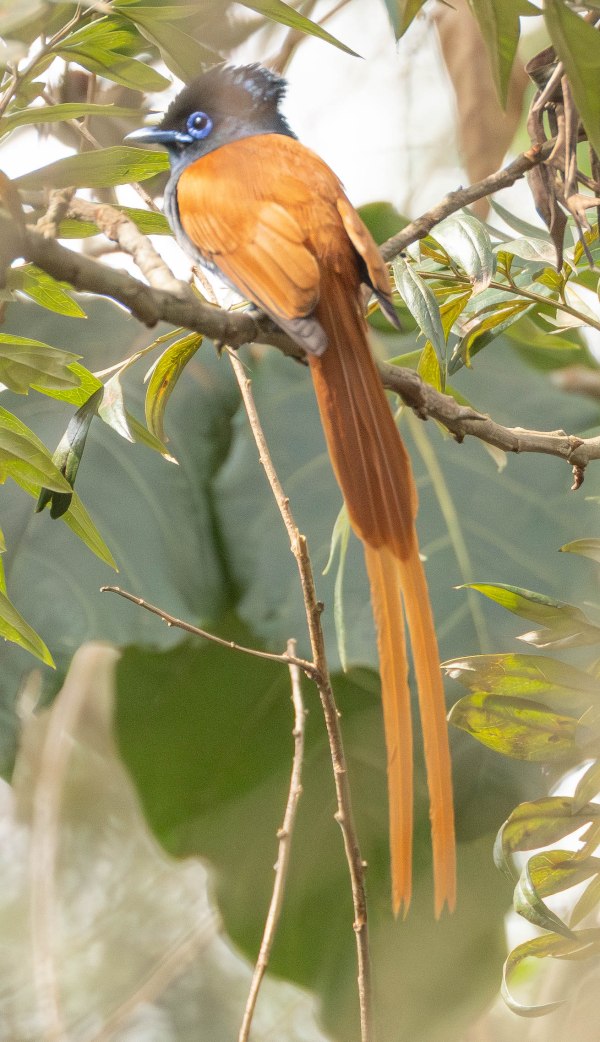
On my last day in the country, I finished my teaching commitments in time to be able to go back to the Nyandungu Eco-park for a couple of hours. The male African Paradise Flycatcher in the header image grows those spectacular elongated tail feathers every breeding season, then sheds them to regrow them again later.
The eco-park has a sort of split personality, having a kids playground with bouncy castles, and electric buggies in the form of fantasy vehicles that you can hire, and many paths and regions devoted to maintaining the wetlands, and providing wildlife viewing opportunities.
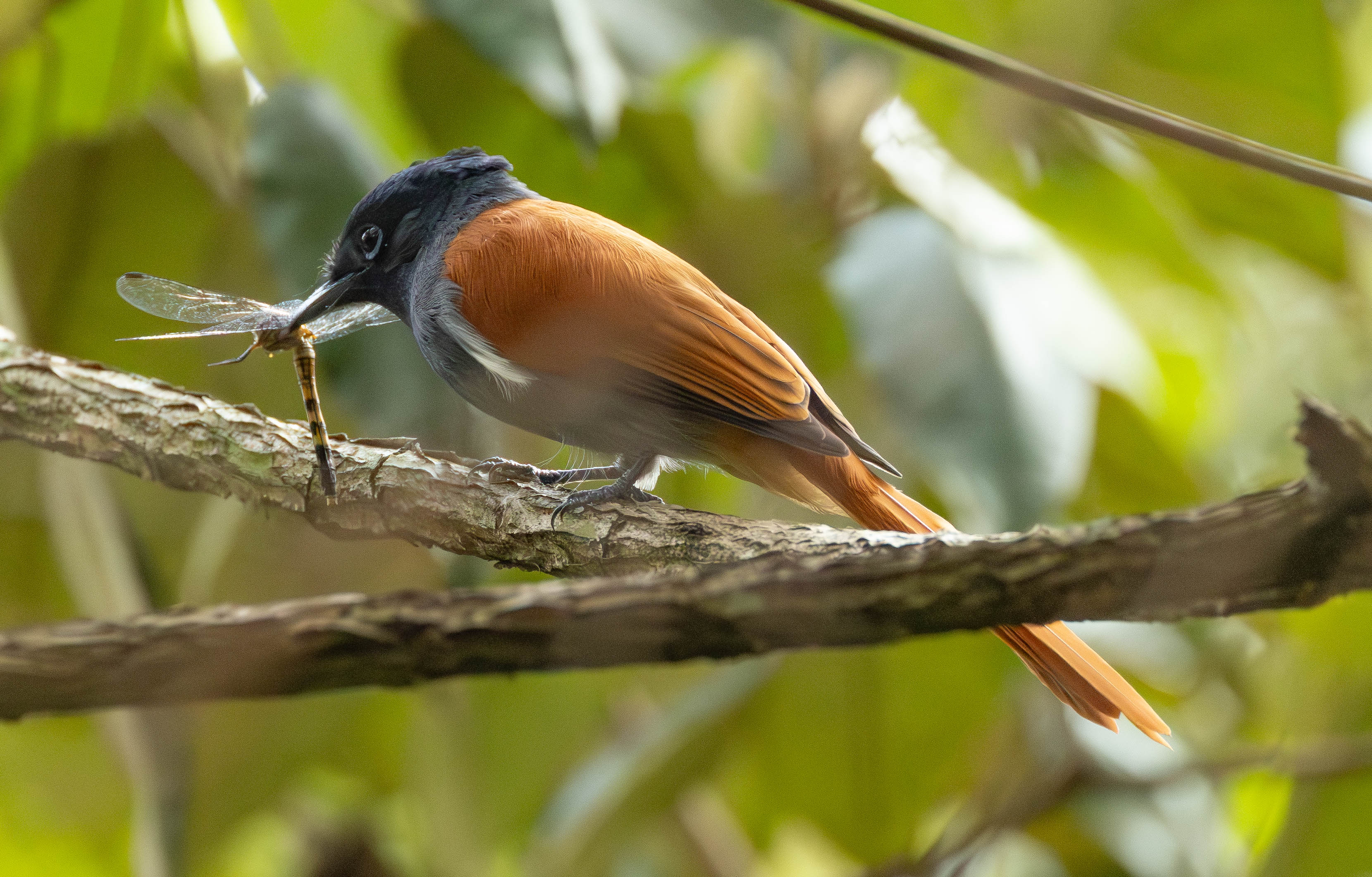
This female African Paradise Flycatcher, with a much shorter tail, had just caught a dragonfly.
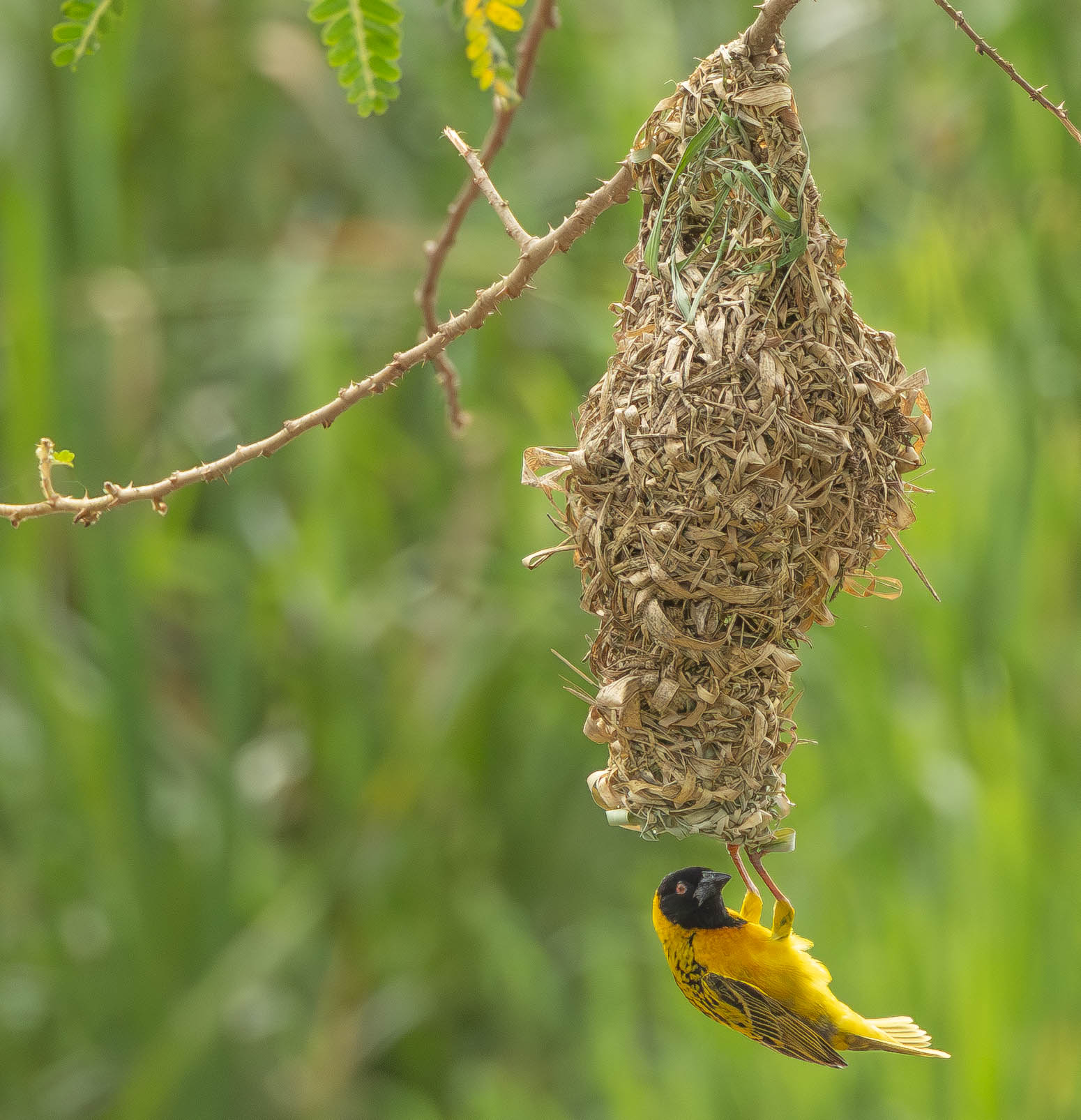
Village Weaver and his nest
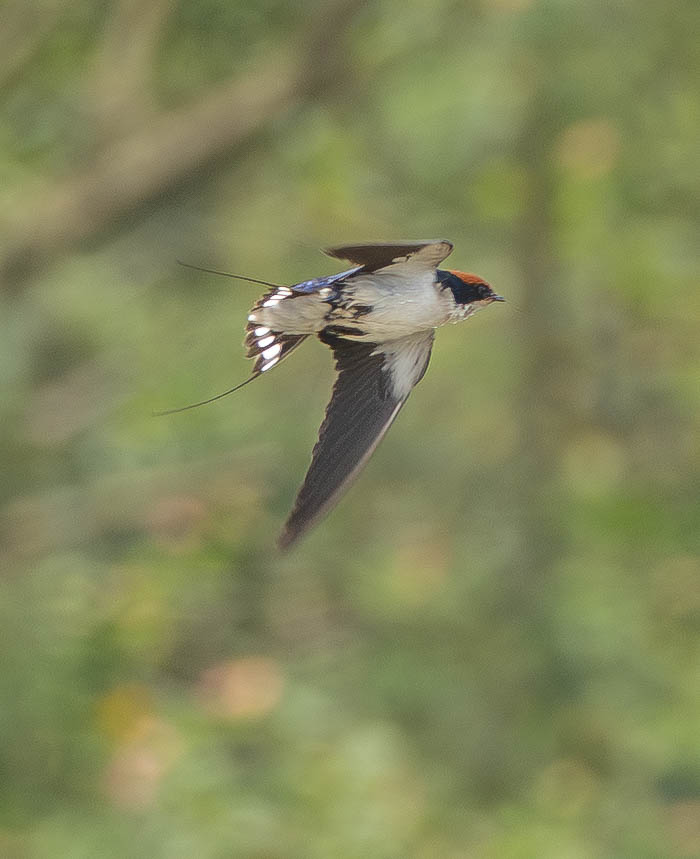
Wire-tailed Swallow
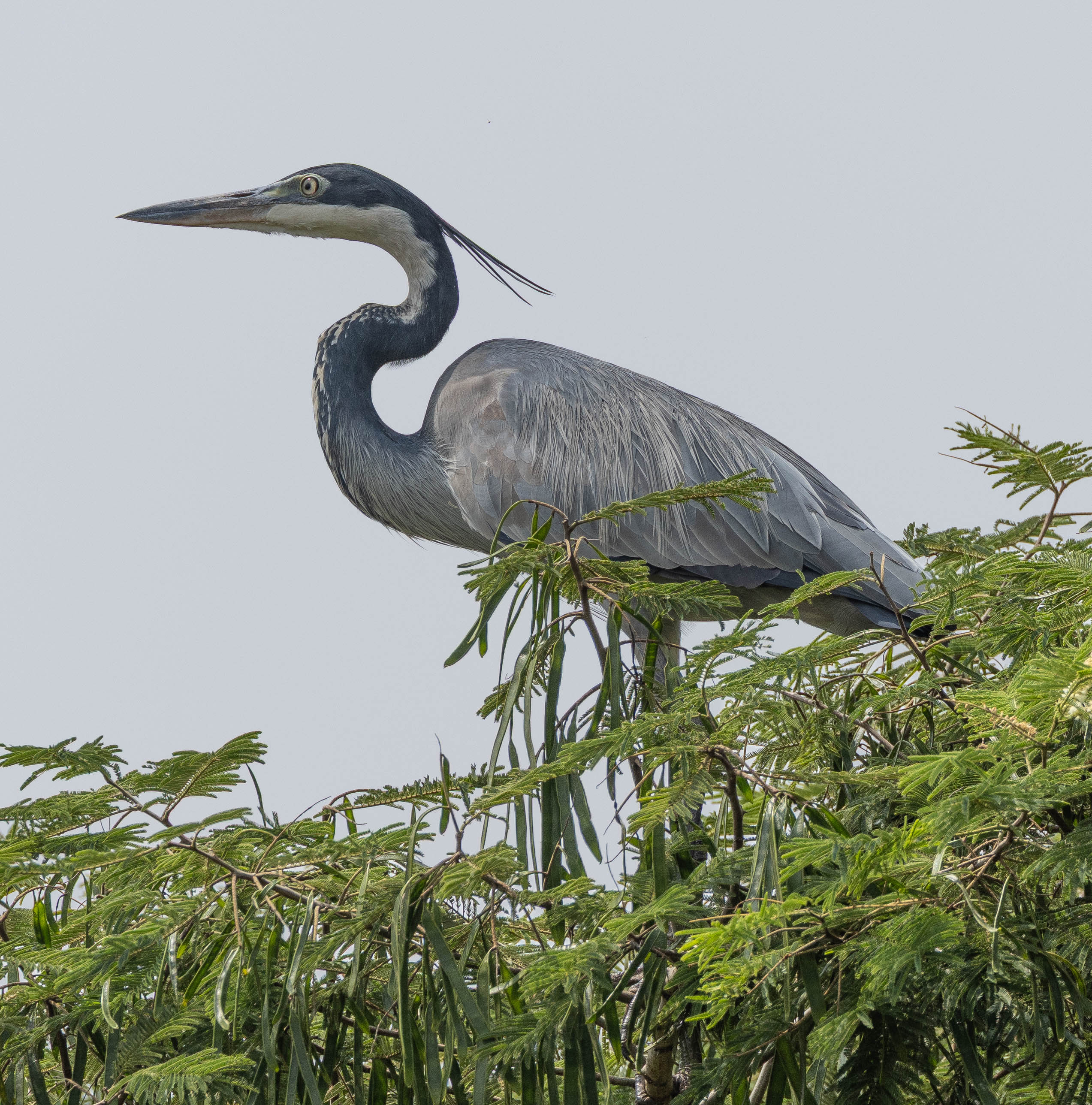
Gray-headed Heron
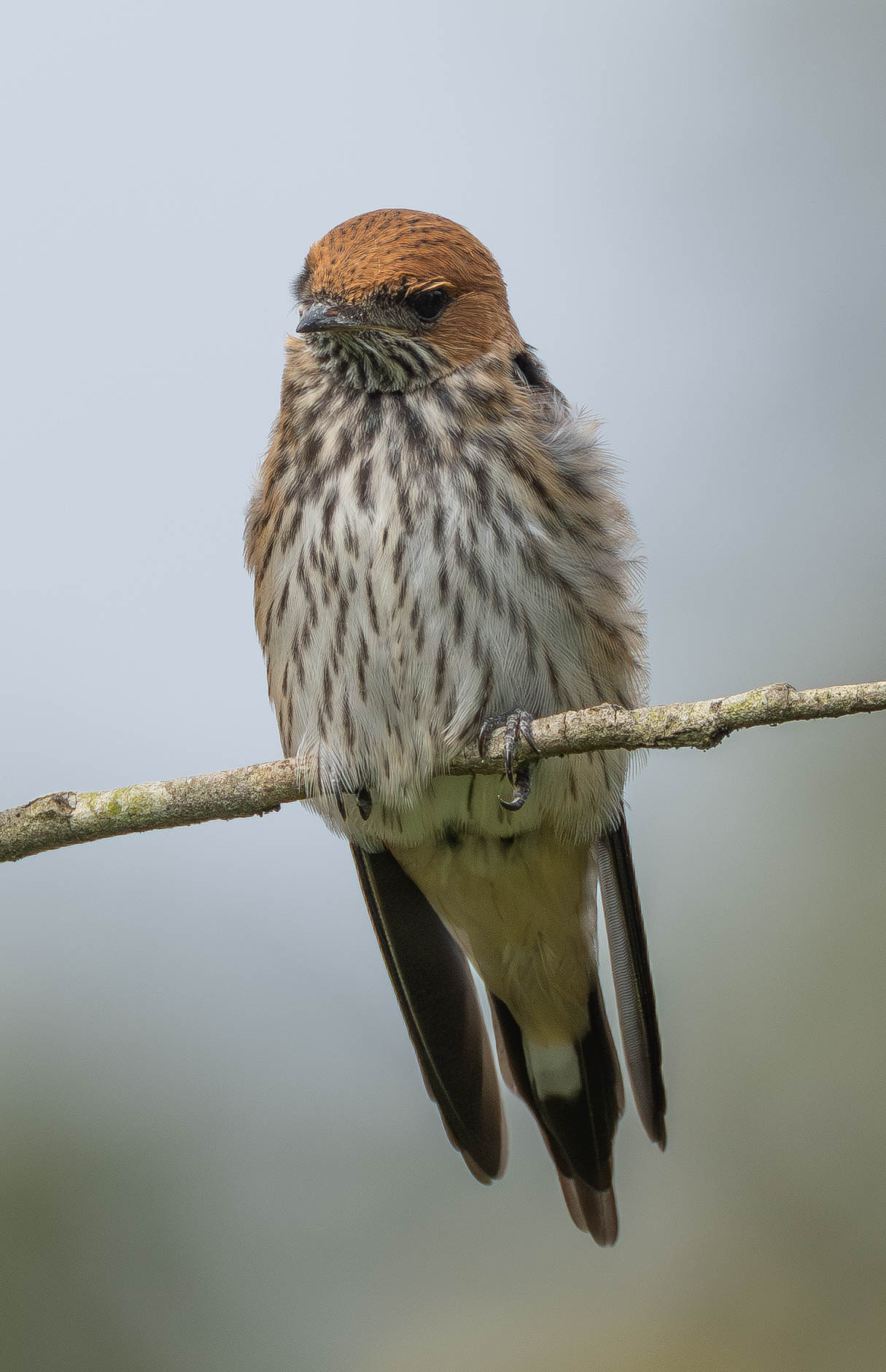
Lesser-striped Swallow
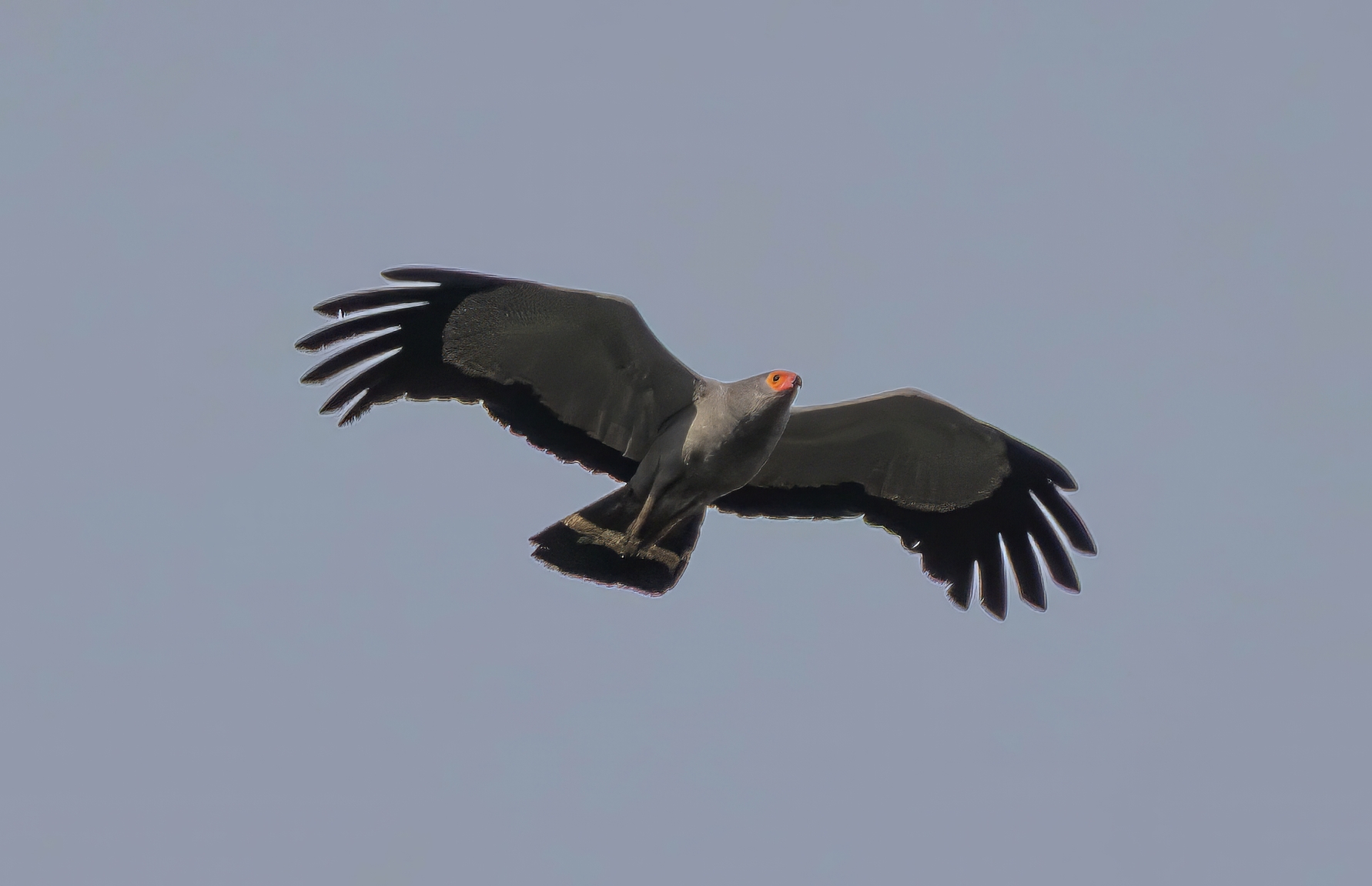
The last lifer for me before leaving to go to the airport, an African Harrier-hawk
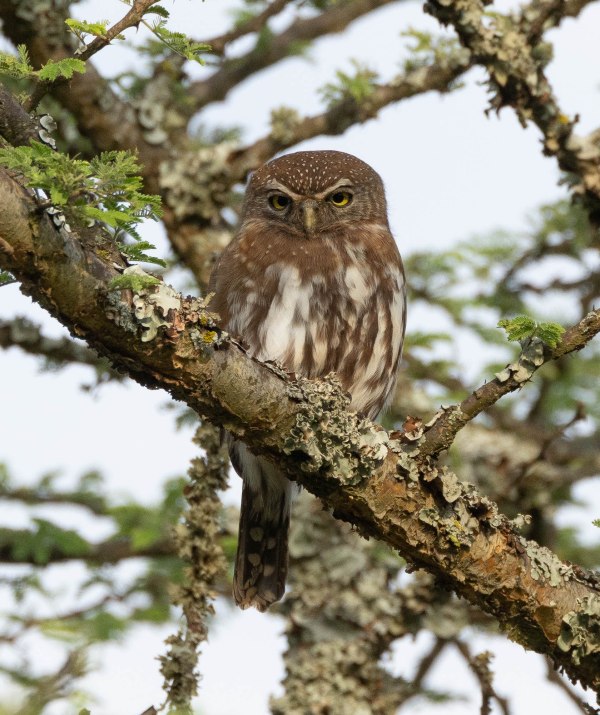
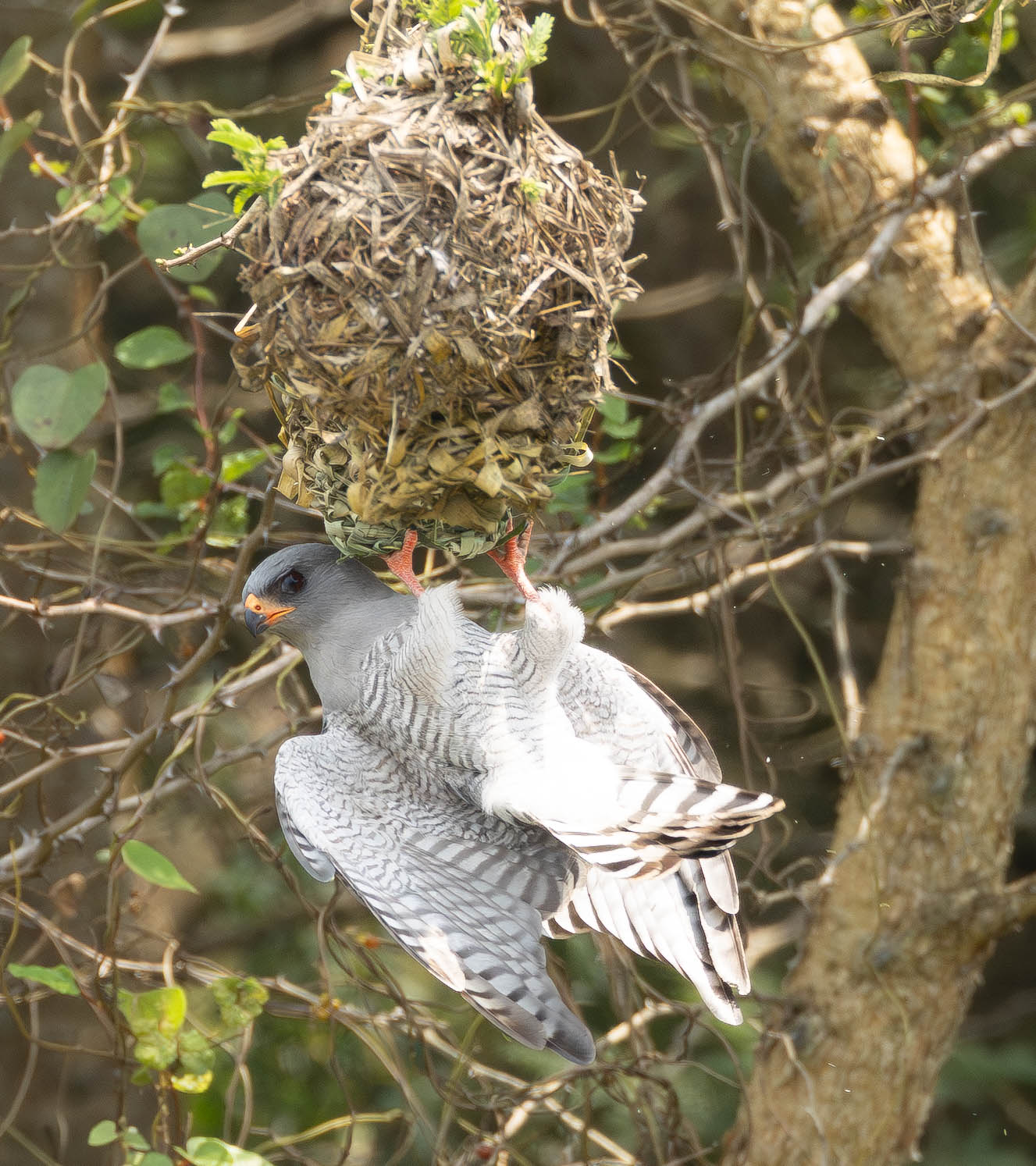
The last morning in Akagera park we stayed in the southern half of the park, not having enough time to explore the north. There were still several new species, like the Pearl-spotted Owlet in the header image, and the opportunity for some great shots of birds I had already seen, with a total of 64 species on the morning list.
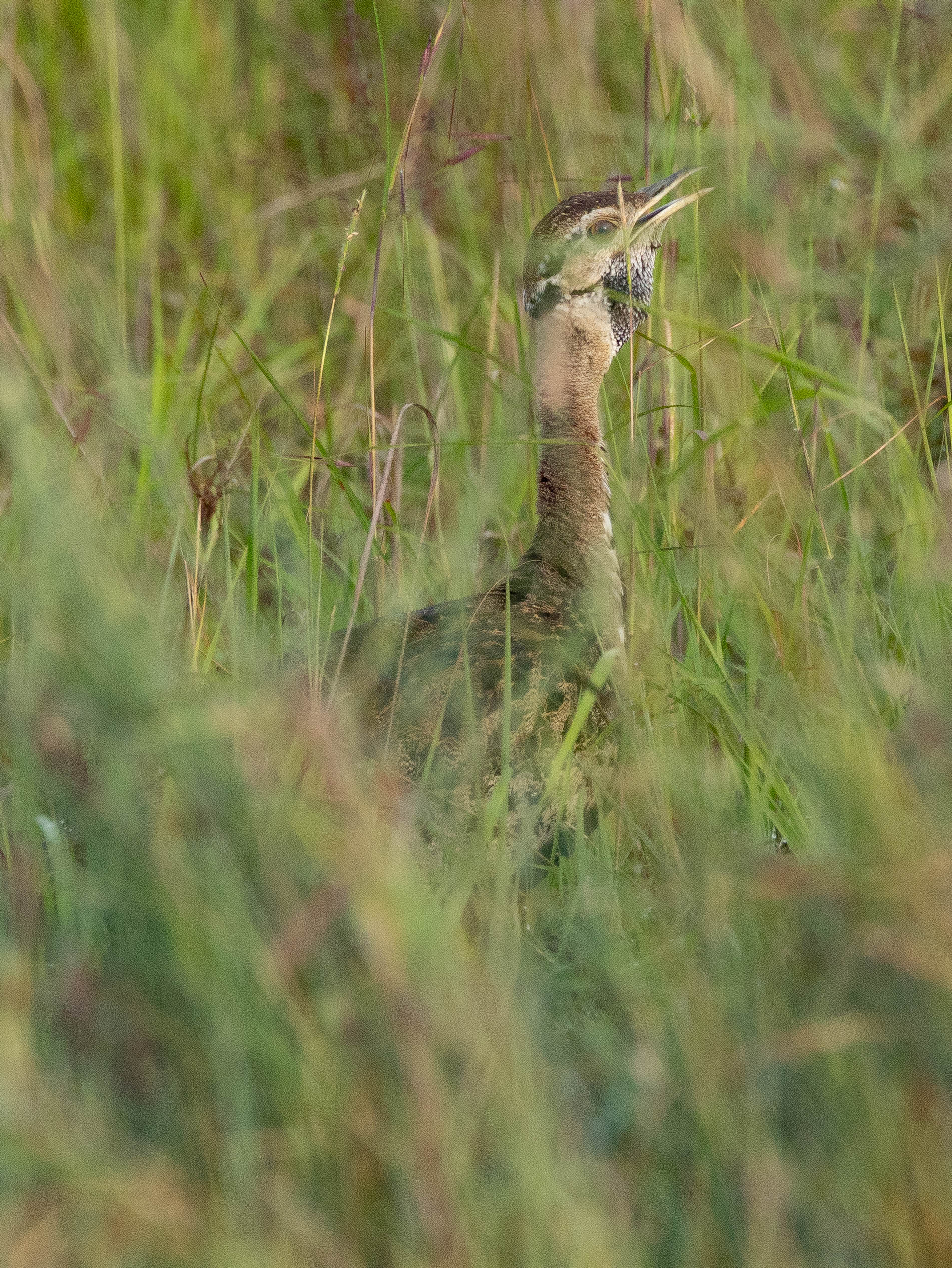
This Black-bellied Bustard was partly hidden in the grass, and then lifted his head up to call out.
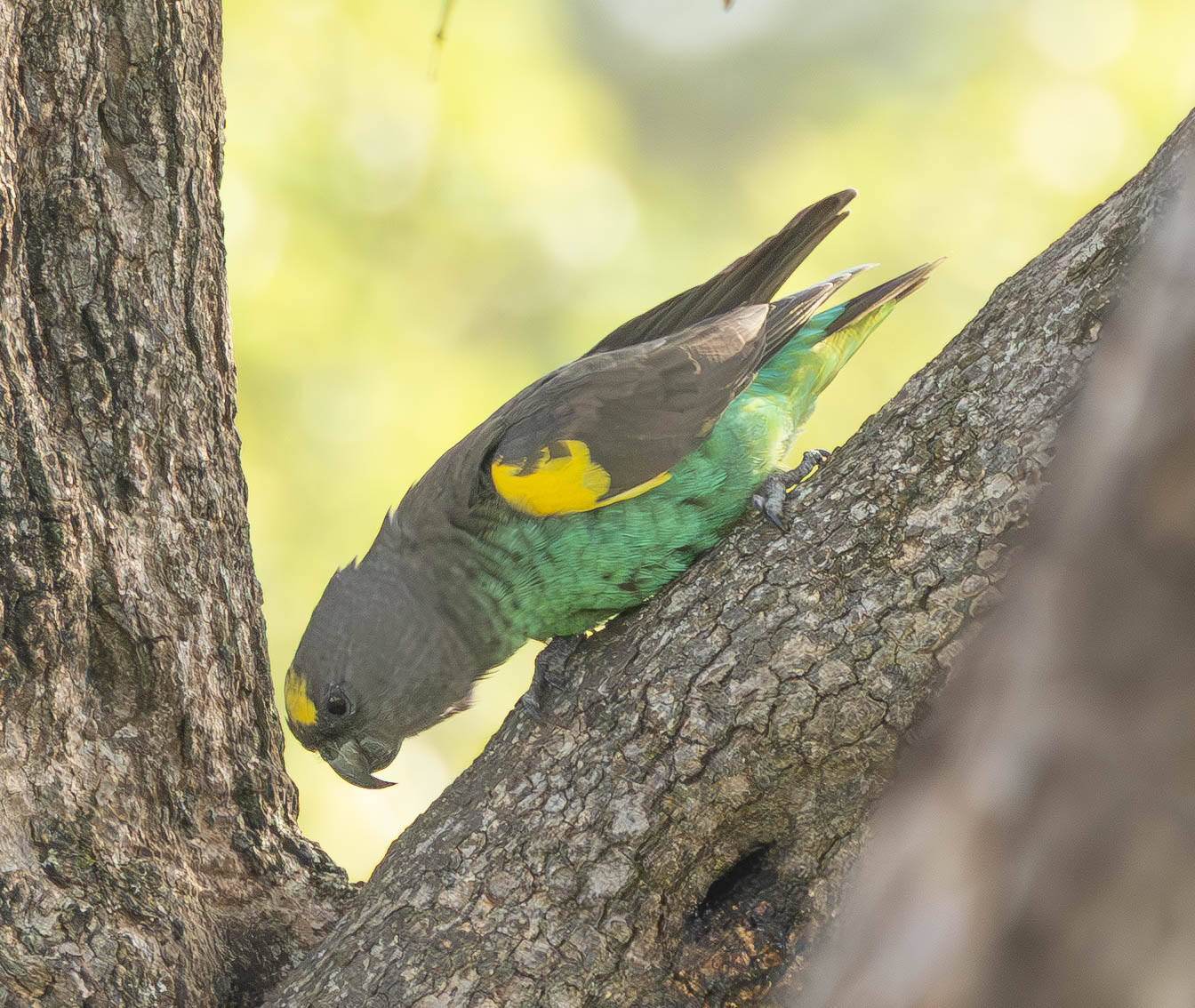
Meyer’s Parrot
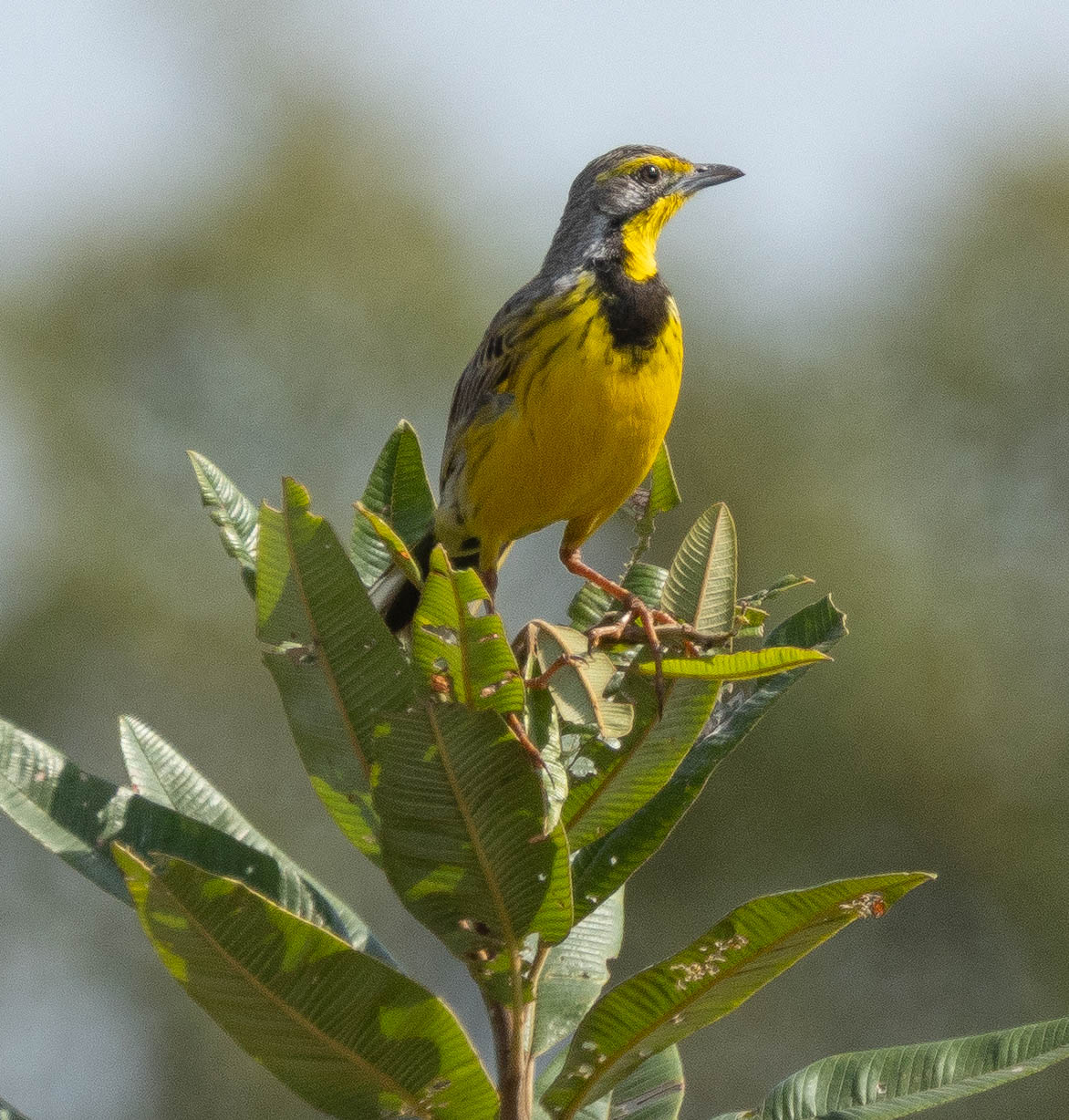
Yellow-throated Longclaw, with, indeed, long claws.
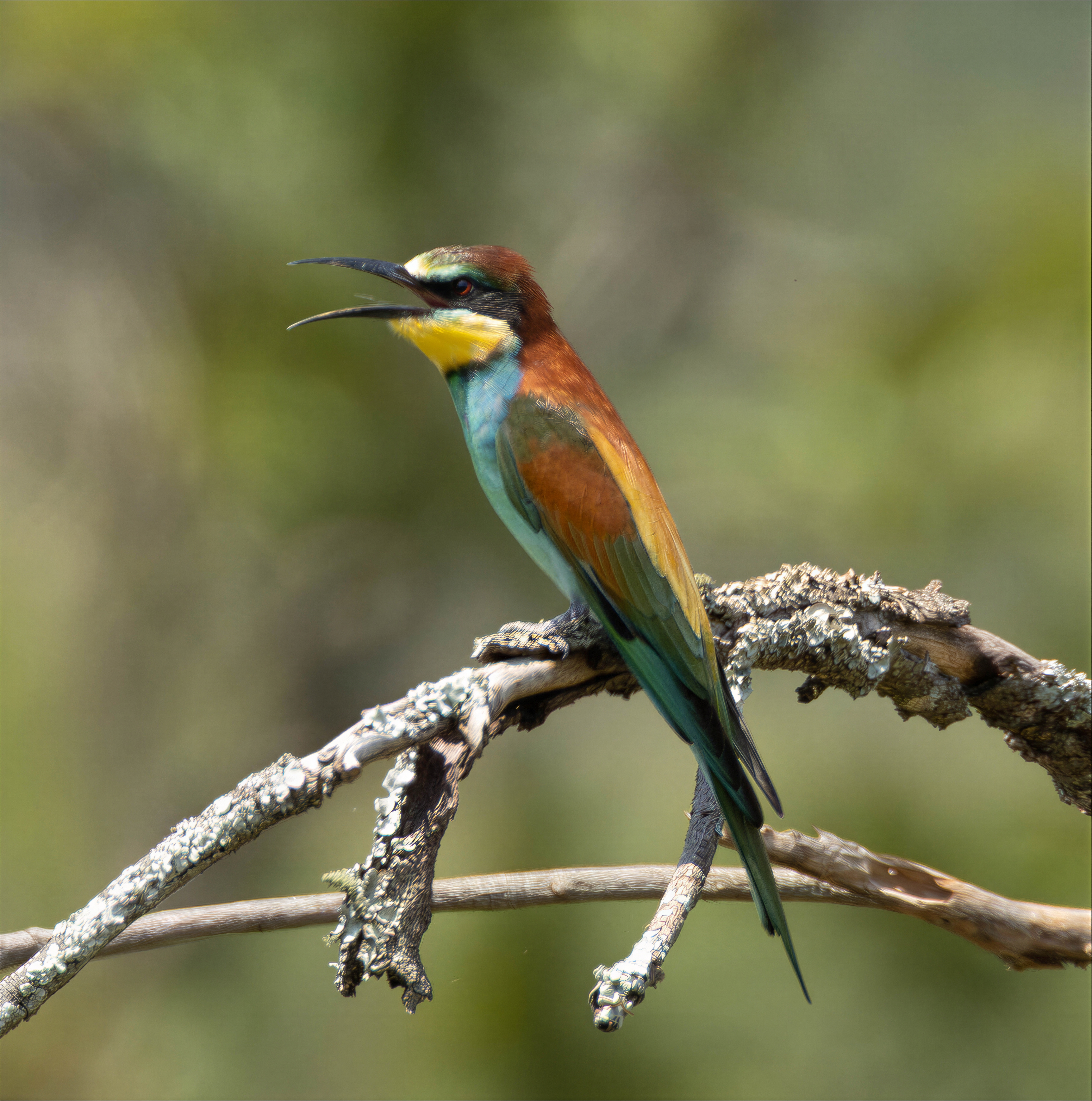
When I first saw a European Bee-eater on this trip, I said, “I didn’t come all this way to see a EUROPEAN Bee-eater” but in fact they are so beautiful.
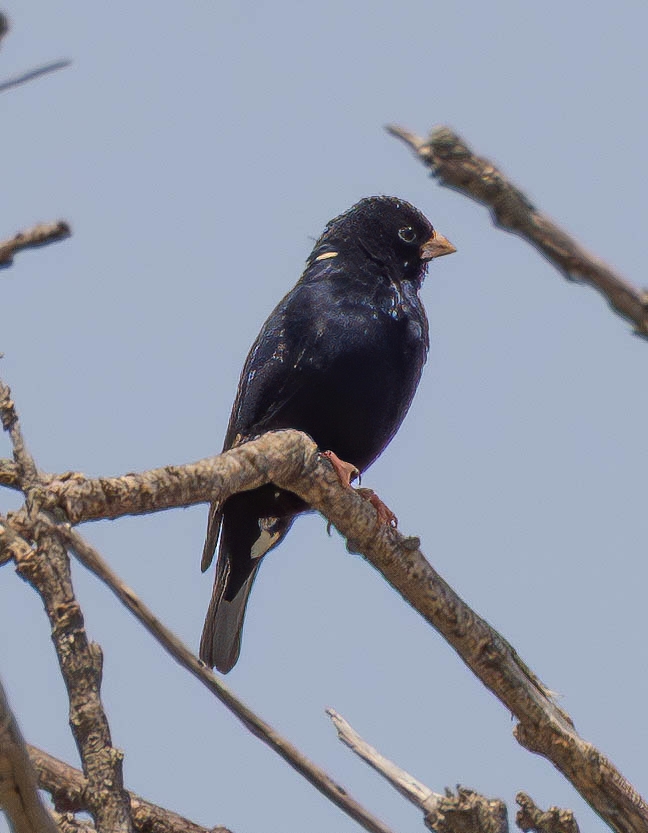
Village Indigobird
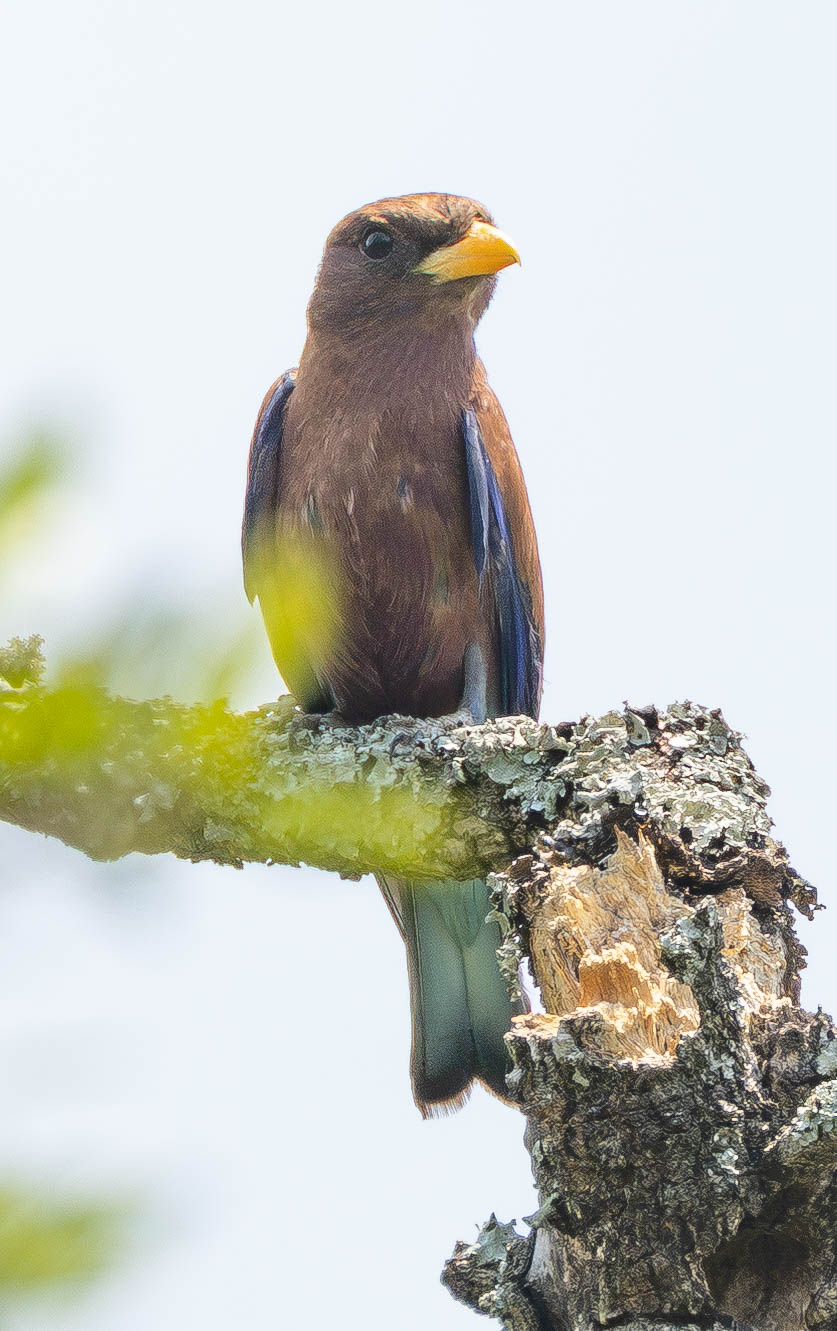
Broad-billed Roller
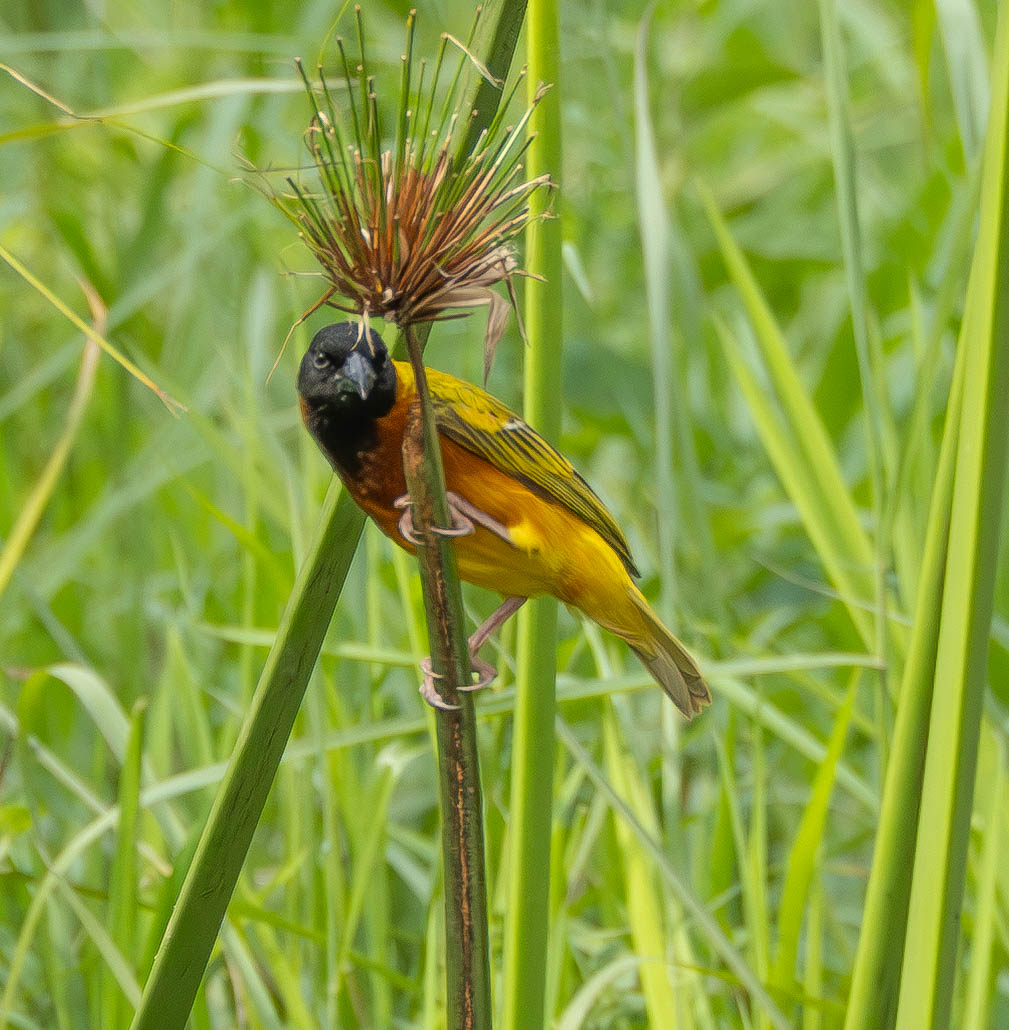
Black-headed Weaver.
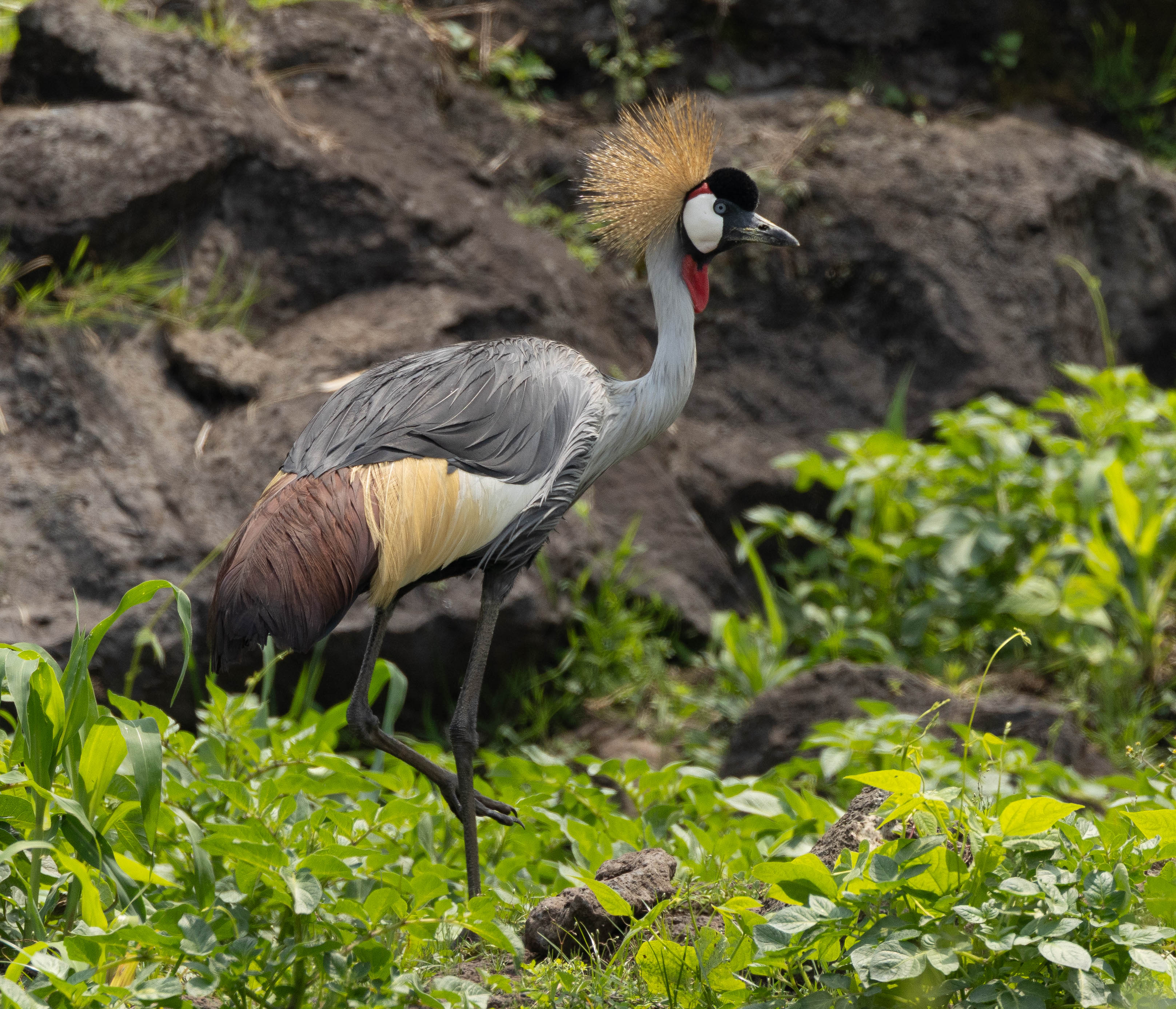
On the way back to Kigali, a stop off at the Umusambi village. “Umusambi” is the local Kinyarwanda (the language spoken here) name for the Gray Crowned-Crane. Until recently it was basically extinct in the wild, specimens existing in private collections and zoos. A project to rescue them, and release into the wild has been very successful, with several hundred breeding pairs now known. Some are too badly damaged by wing clipping to be released, so they set up this “village” to accommodate them, in a wetlands not far from the capital. It has become a nature reserve, with a permanent flock of mostly healthy Cranes, as well as other species.
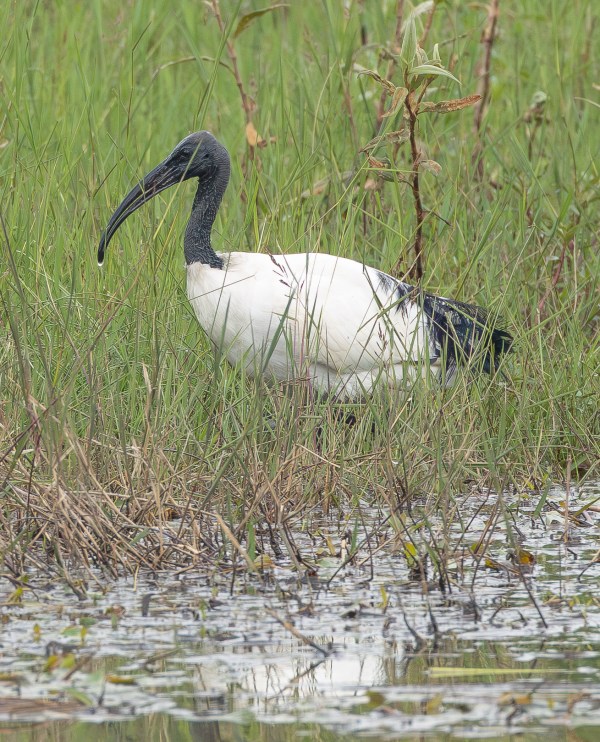
I took the boat trip on the lake again in the afternoon, from which I was able to get a good shot of the African Sacred Ibis in the header image. The remainder of the images were taken from the Toyota Land Cruiser, which seems to be the safari vehicle default, and which are engineered with a roof that rises up, so you can stand and photograph wildlife.
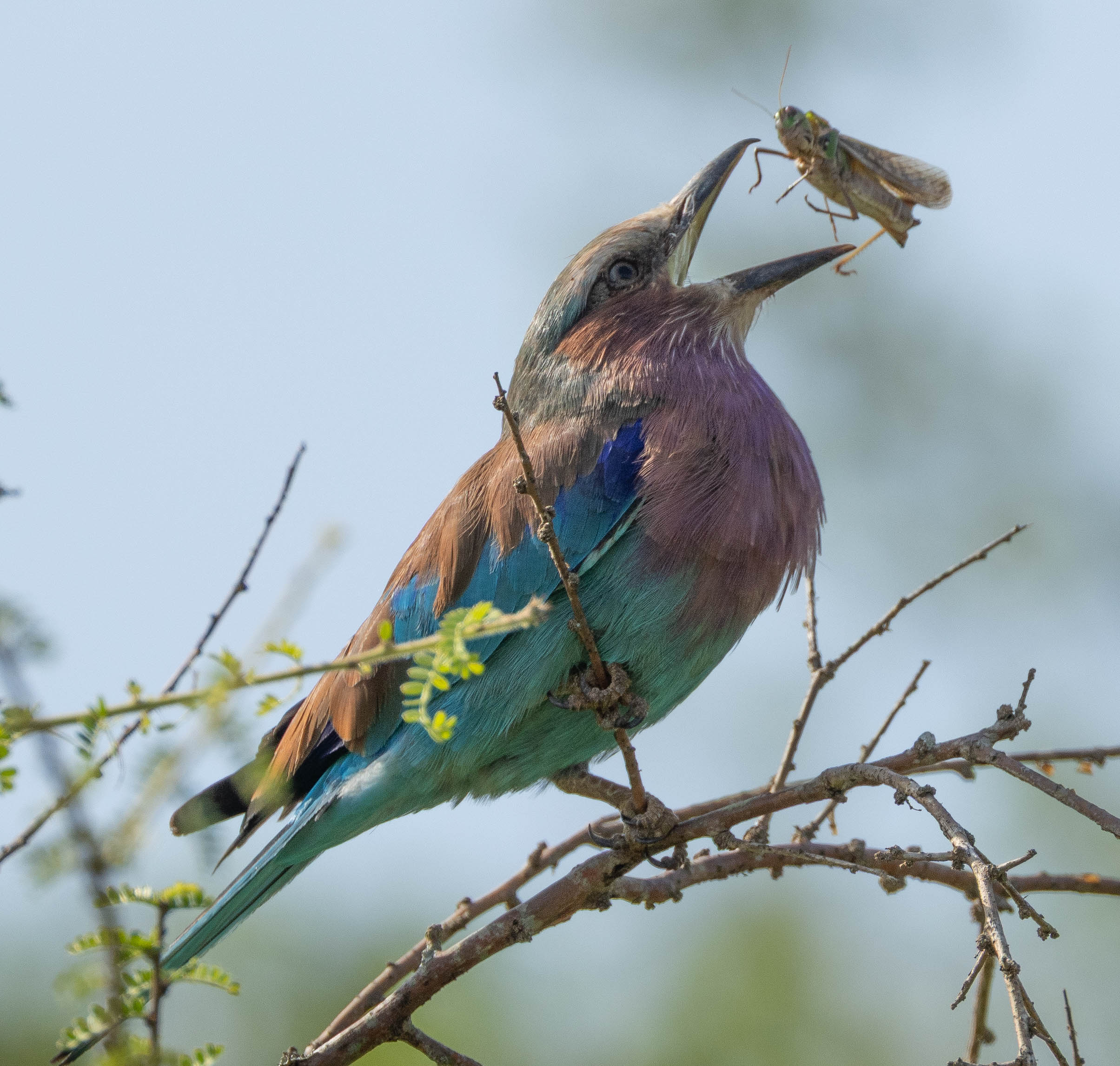
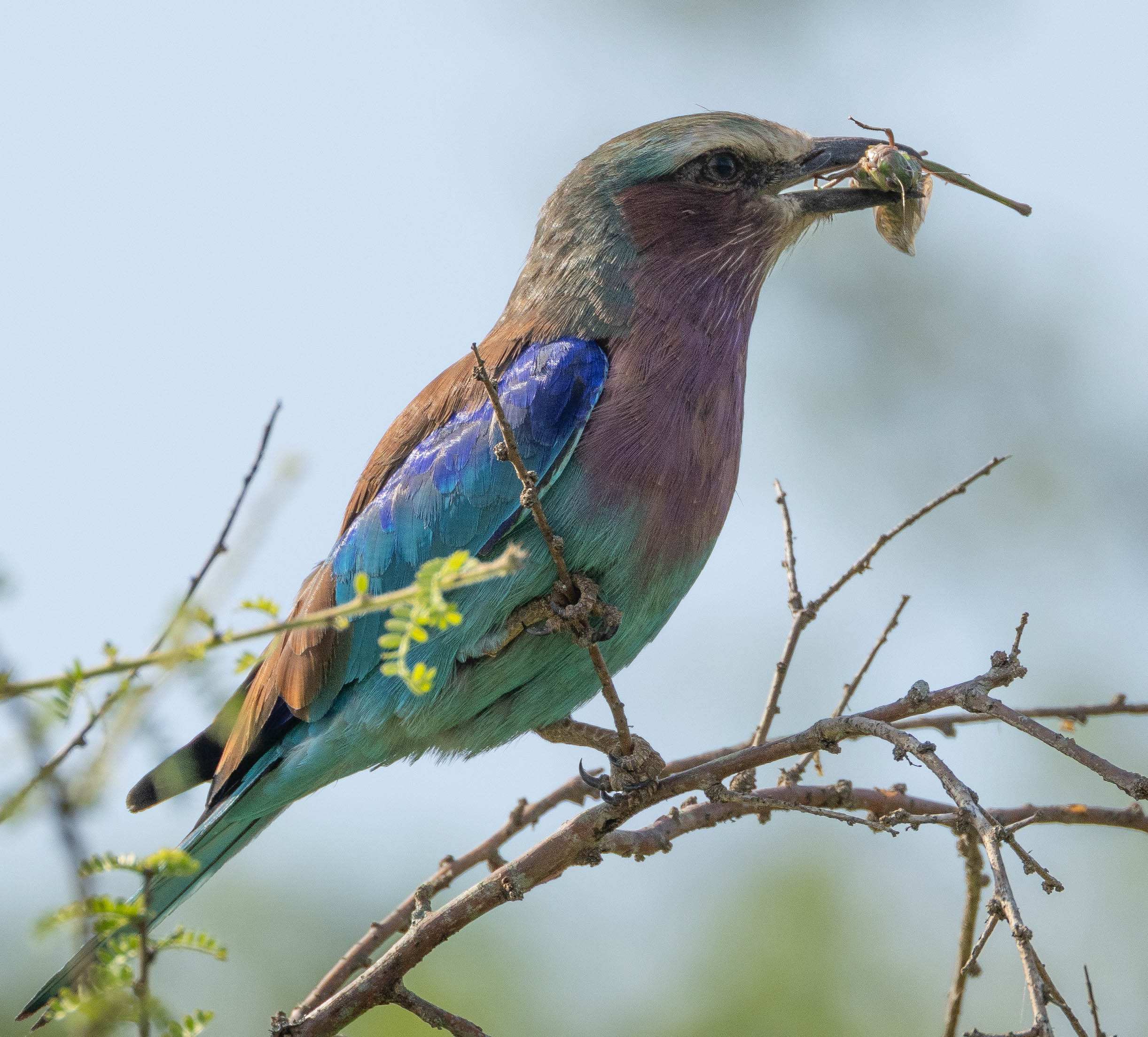
This Lilac-breasted Roller had just caught a cricket, and threw it in the air to catch it again, in order to turn it round, and eventually swallow it.
Caught!
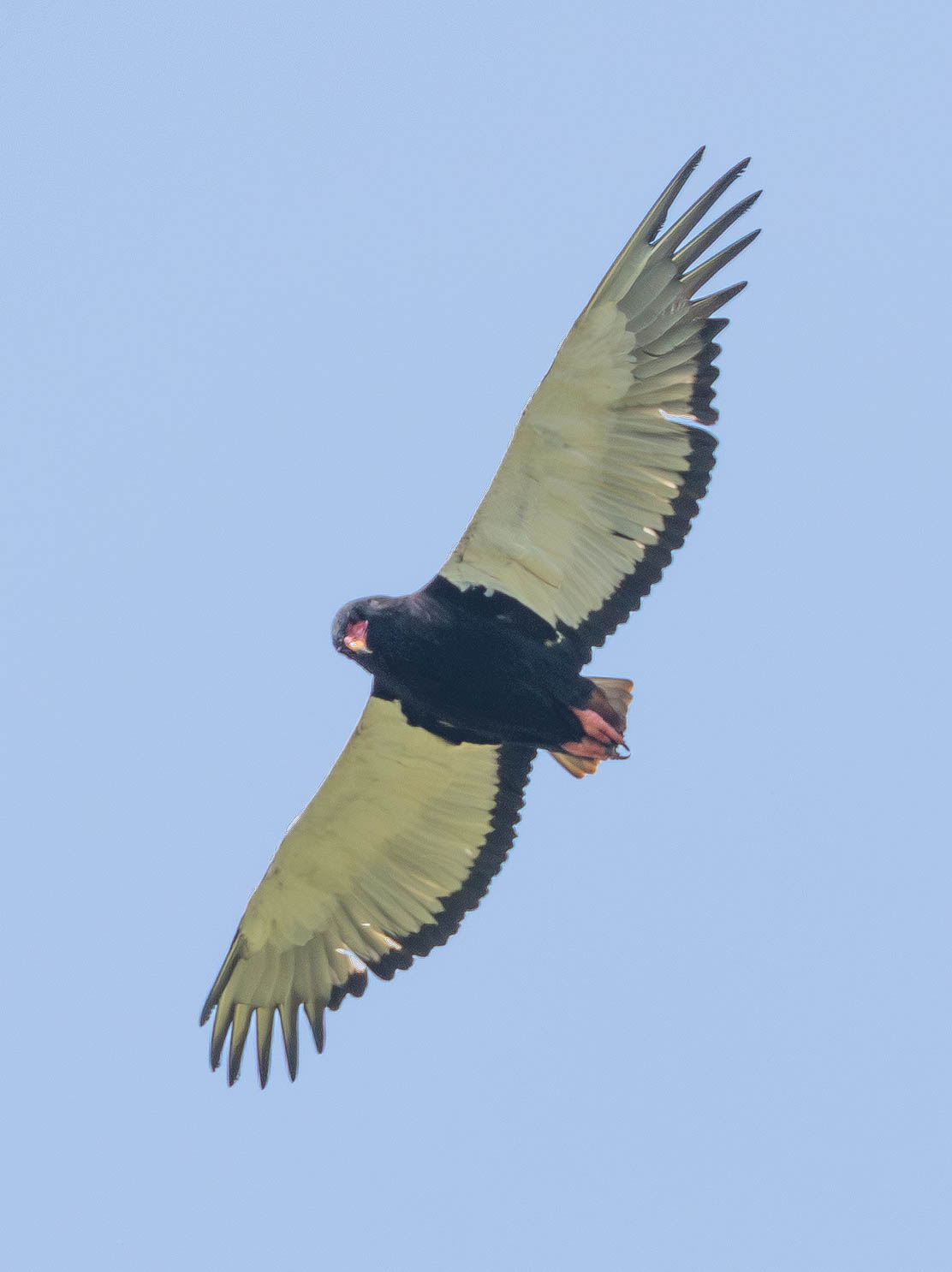
The Bateleur is a bird of prey which is fairly common around here.
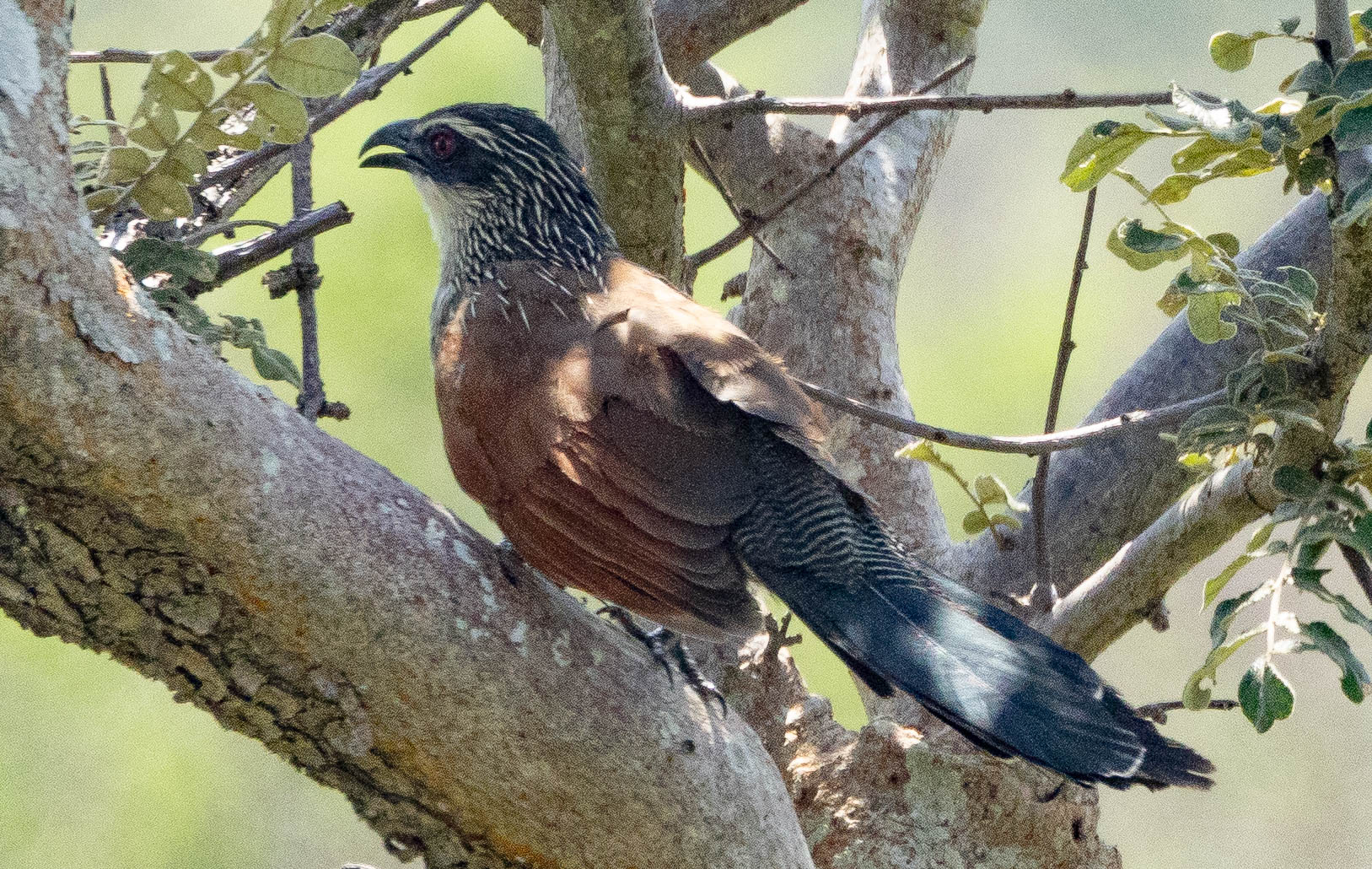
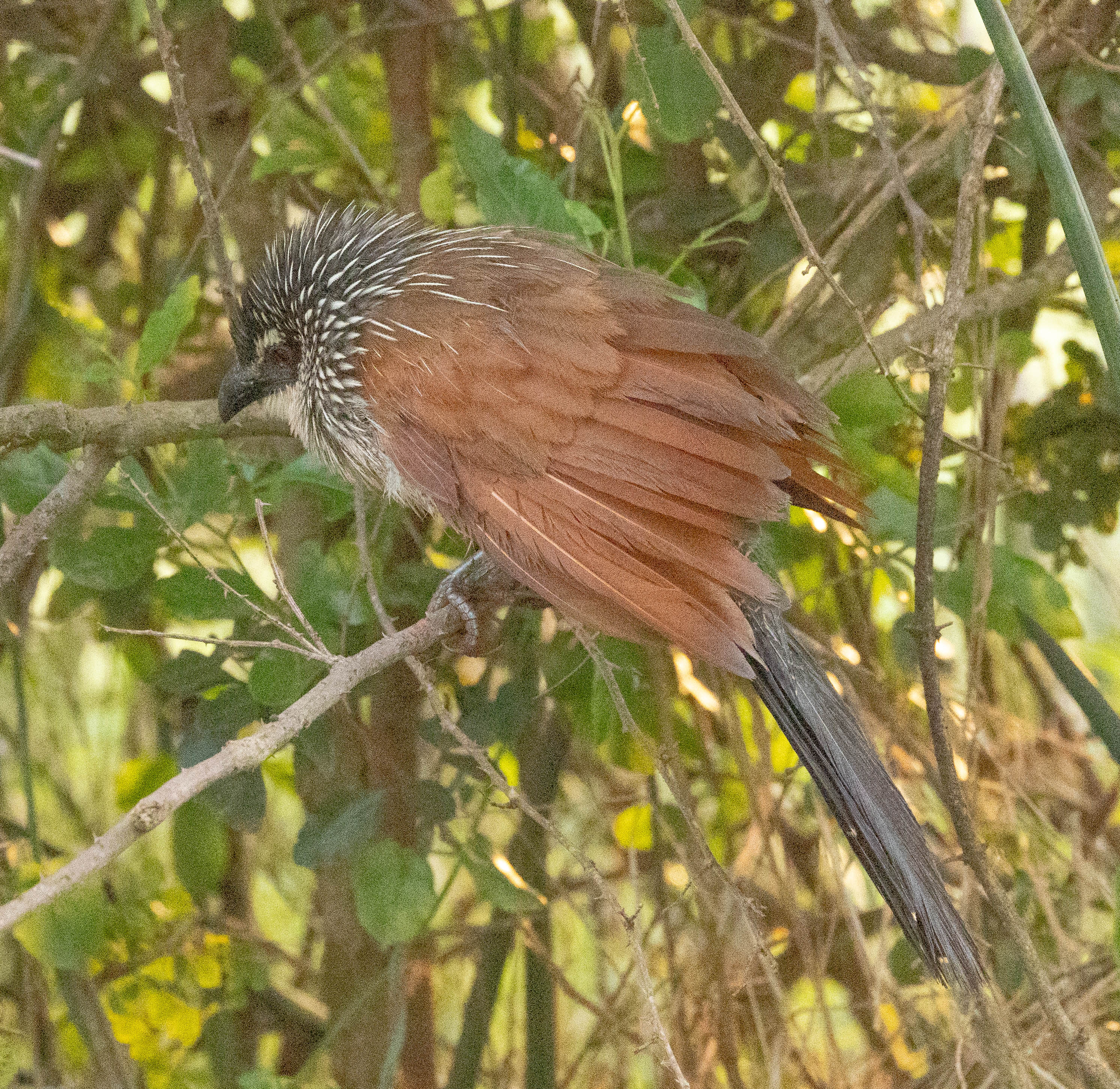
The White-browed Coucal is from the cuckoo family.
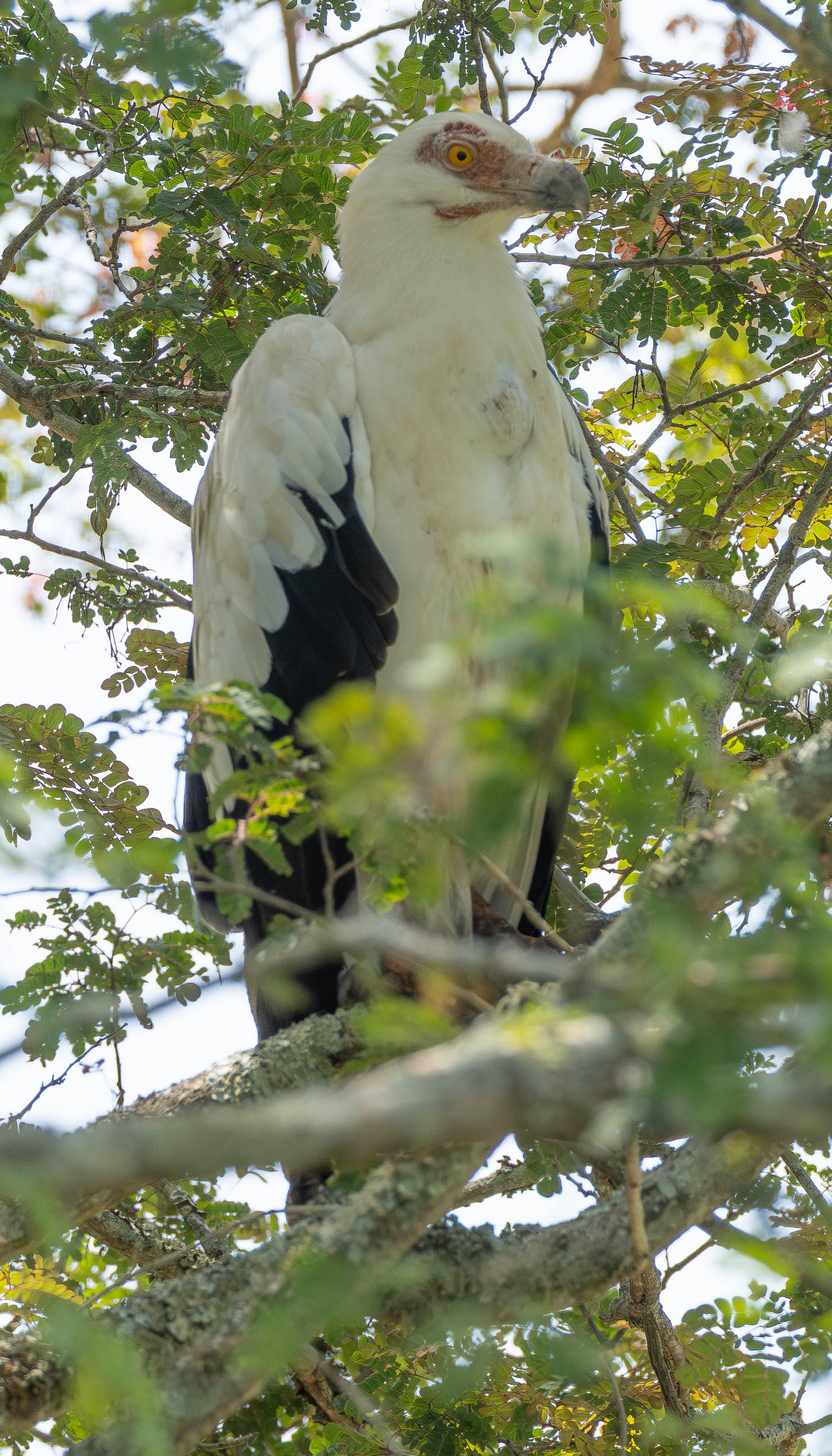
This Palm-nut Vulture is a fish eating raptor. Why is it called the Pam-nut Vulture? I’ve no idea.
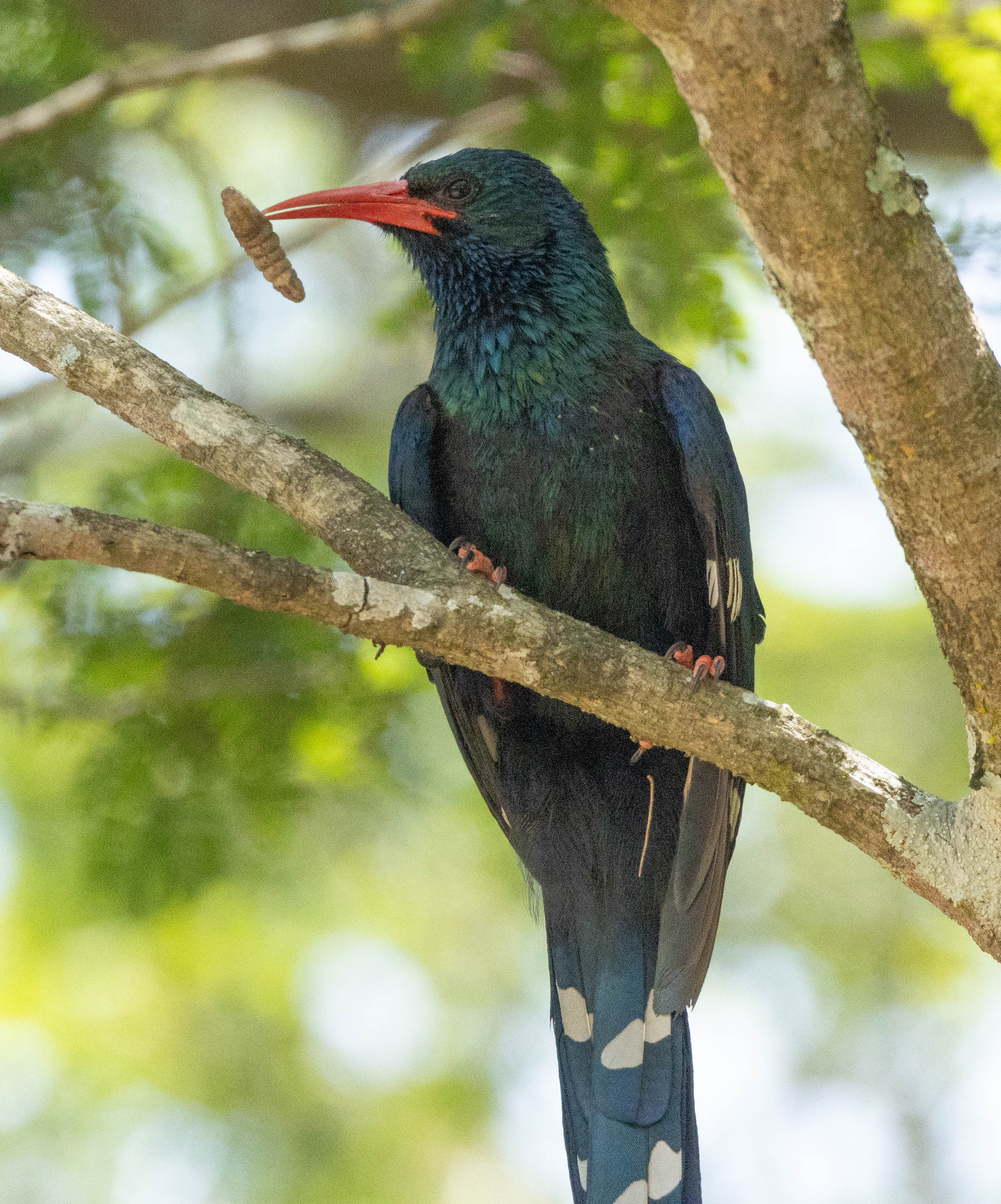
The Green Woodhoopoe had caught come sort of larva.
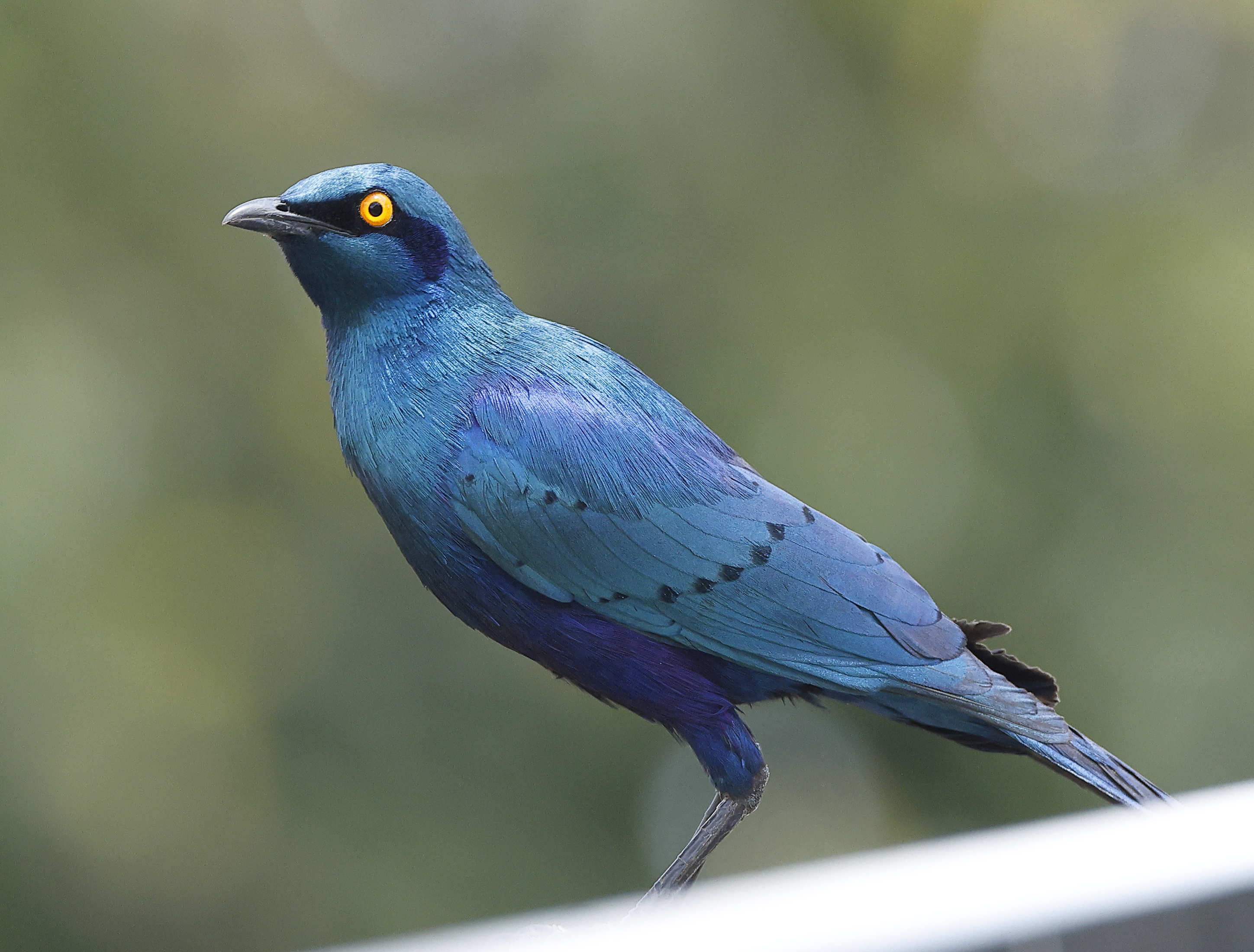
Greater Blue-eared Starling
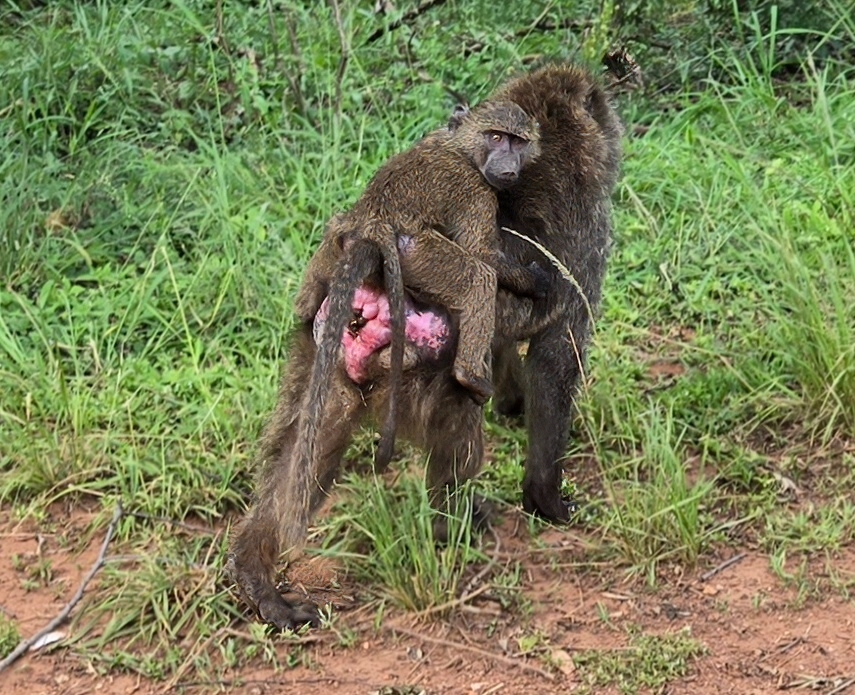
The young Olive Baboon gave us an uncertain stare.
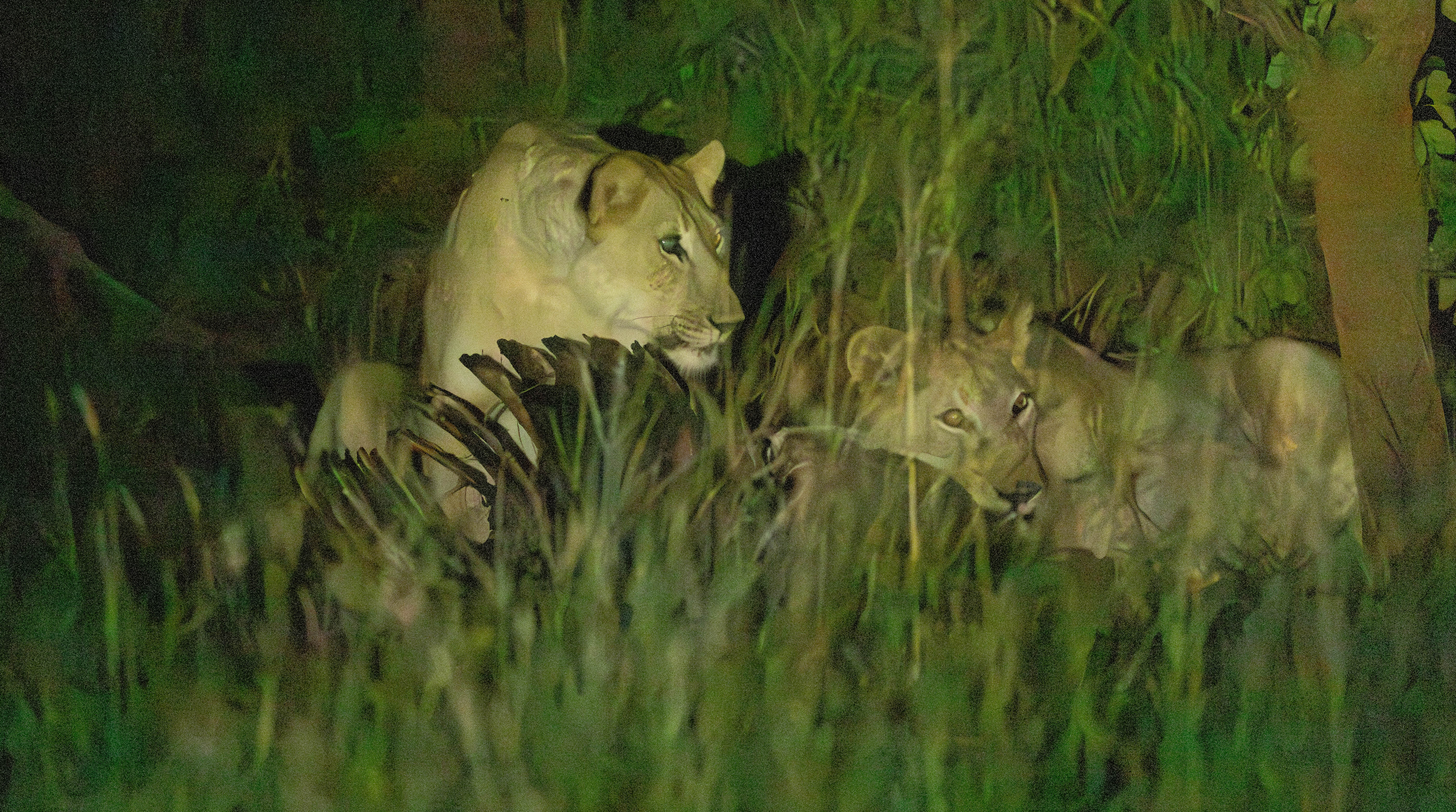
I went on an evening game tour. As the sun went down, the guide shone a flashlight around searching for the reflection of eyes. We found a pair of lionesses eating the carcass of a Cape Buffalo.
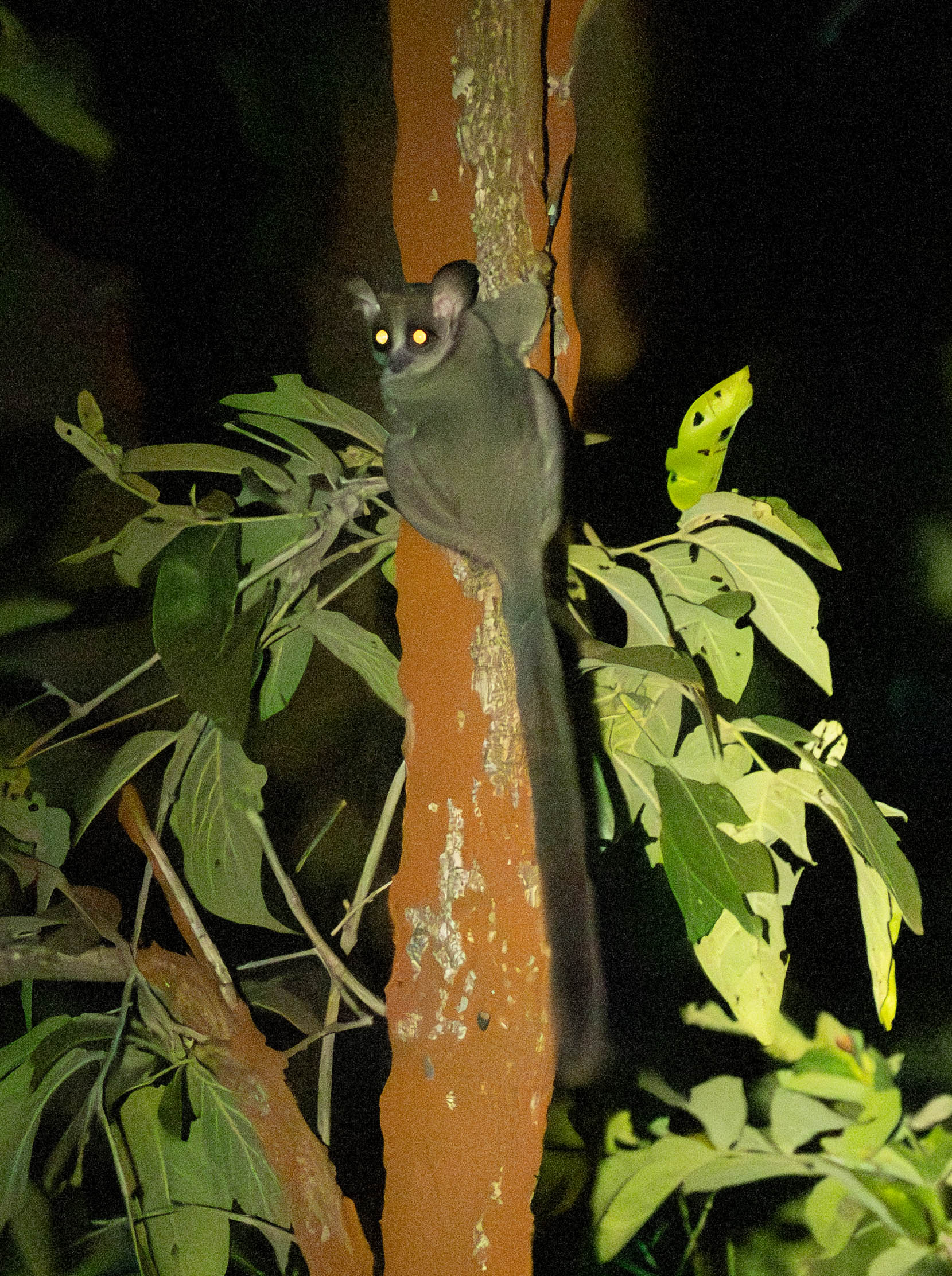
And a Bushbaby, officially known as a Southern Lesser Galago.
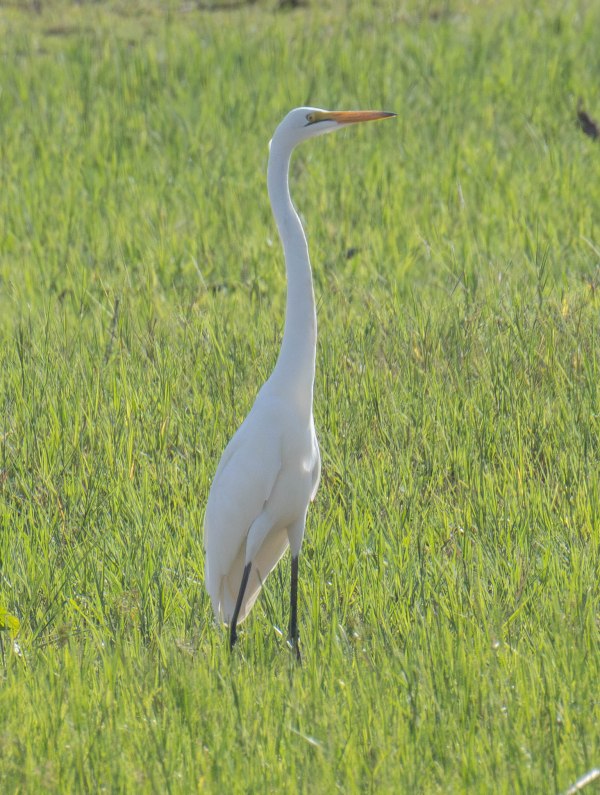
After a busy, and, I hope, successful week, teaching neonatal respiratory care to the staff, fellows and nurses of the Rwanda NICUs, I decided that my weekend would be best occupied going on another guided trip to Akagera. It is the closest of the parks to Kigali, and I knew there was lots that I hadn’t yet seen. After another early start, we arrived in time to pick up a local park guide who specialized in bird life. There have been few name changes among the birds that I saw, which occasionally led to some confusion. The one in the header image was previously known as the Intermediate Egret, to distinguish it from the Great Egret and the Little Egret, but there is also a Medium Egret (across southern Asia), and in addition another of about the same size known as the Plumed Egret (which often doesn’t have plumes). This one is now known as the Yellow-billed Egret, even though it is not the only one with a yellow bill, but the park guides were all calling it the Intermediate.
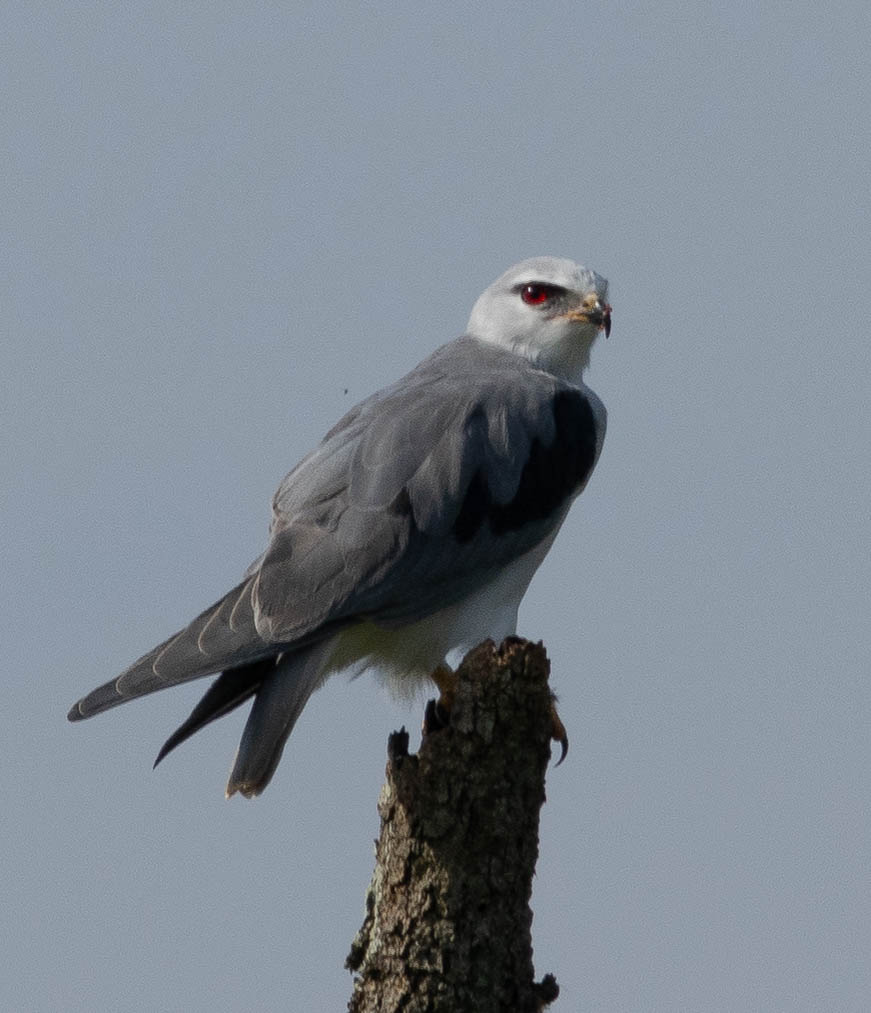
Black-winged Kite
Violet-backed Starlings
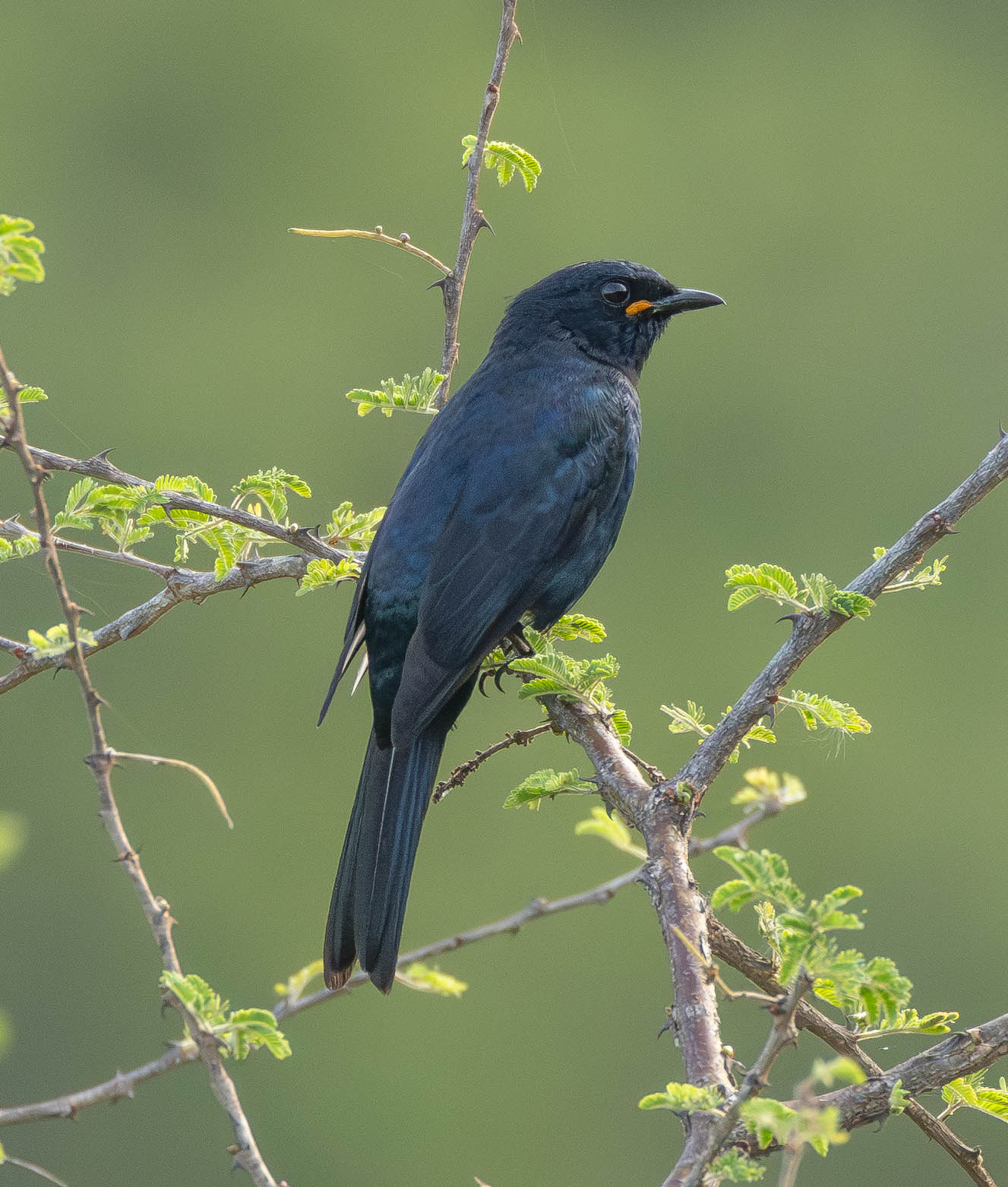
Black Cuckooshrike, the patch of colour behind his beak is an area of naked skin.
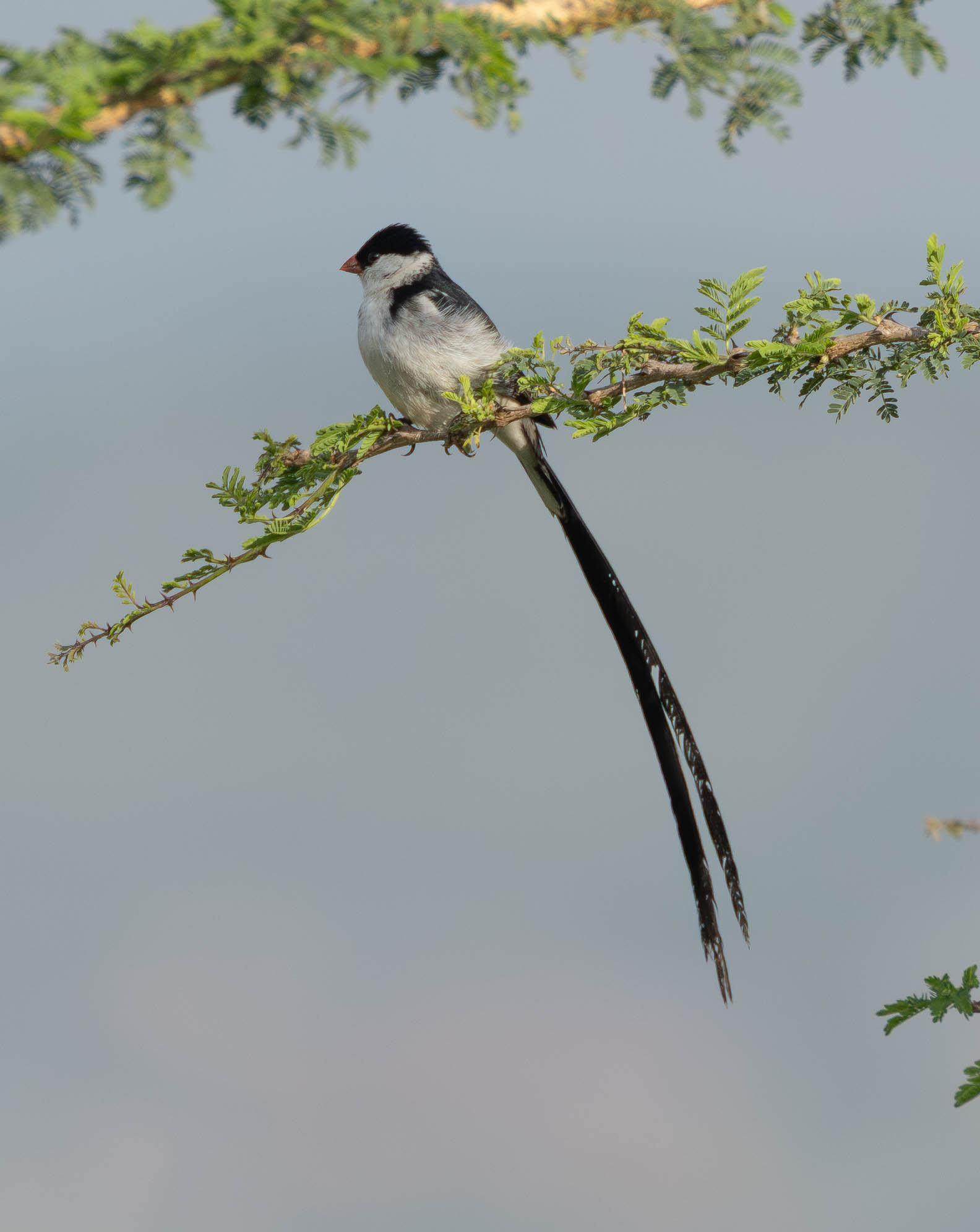
The male Pin-tailed Whydah. The female is brownish, with a “normal” tail.
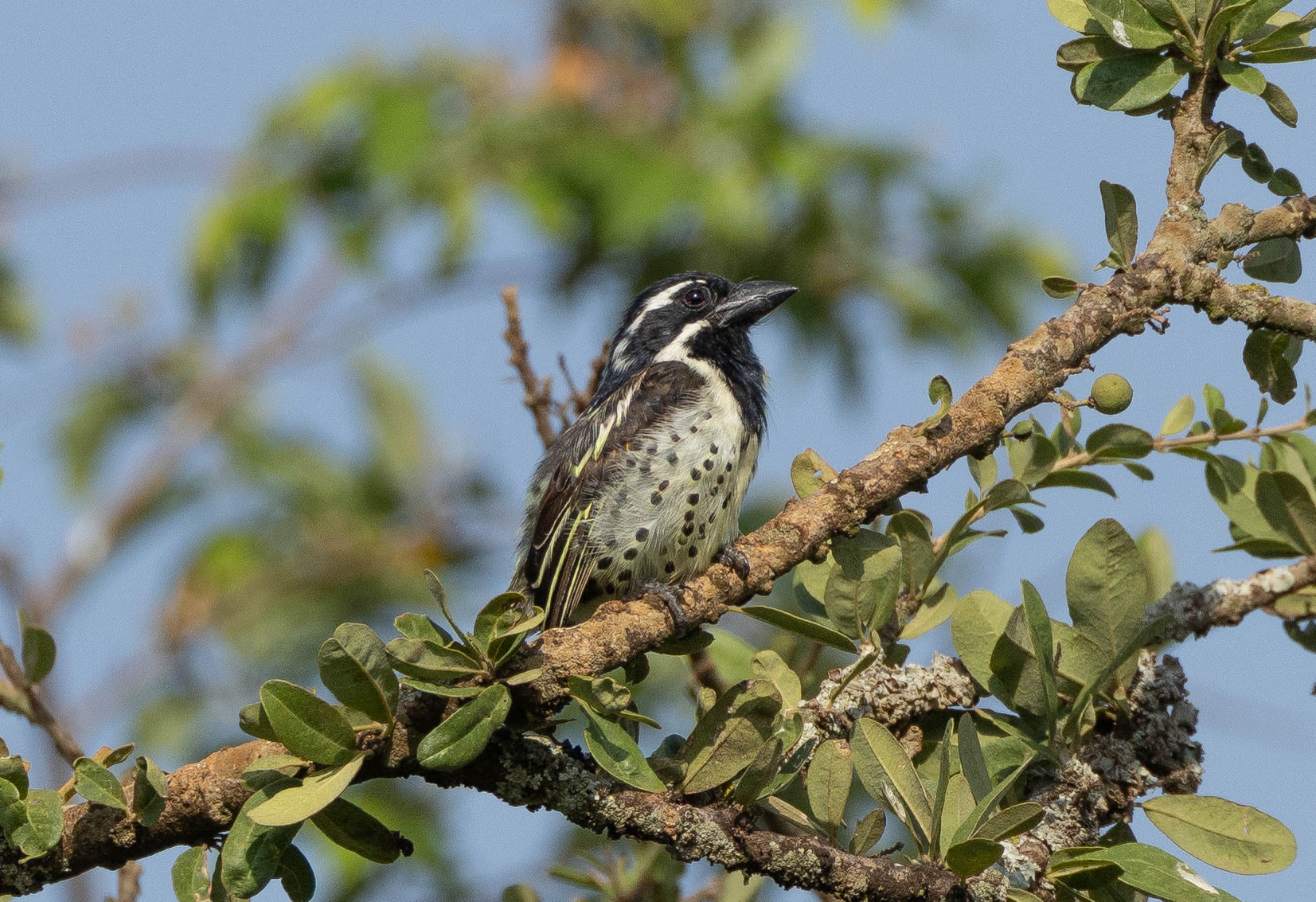
Spot-flanked Barbet
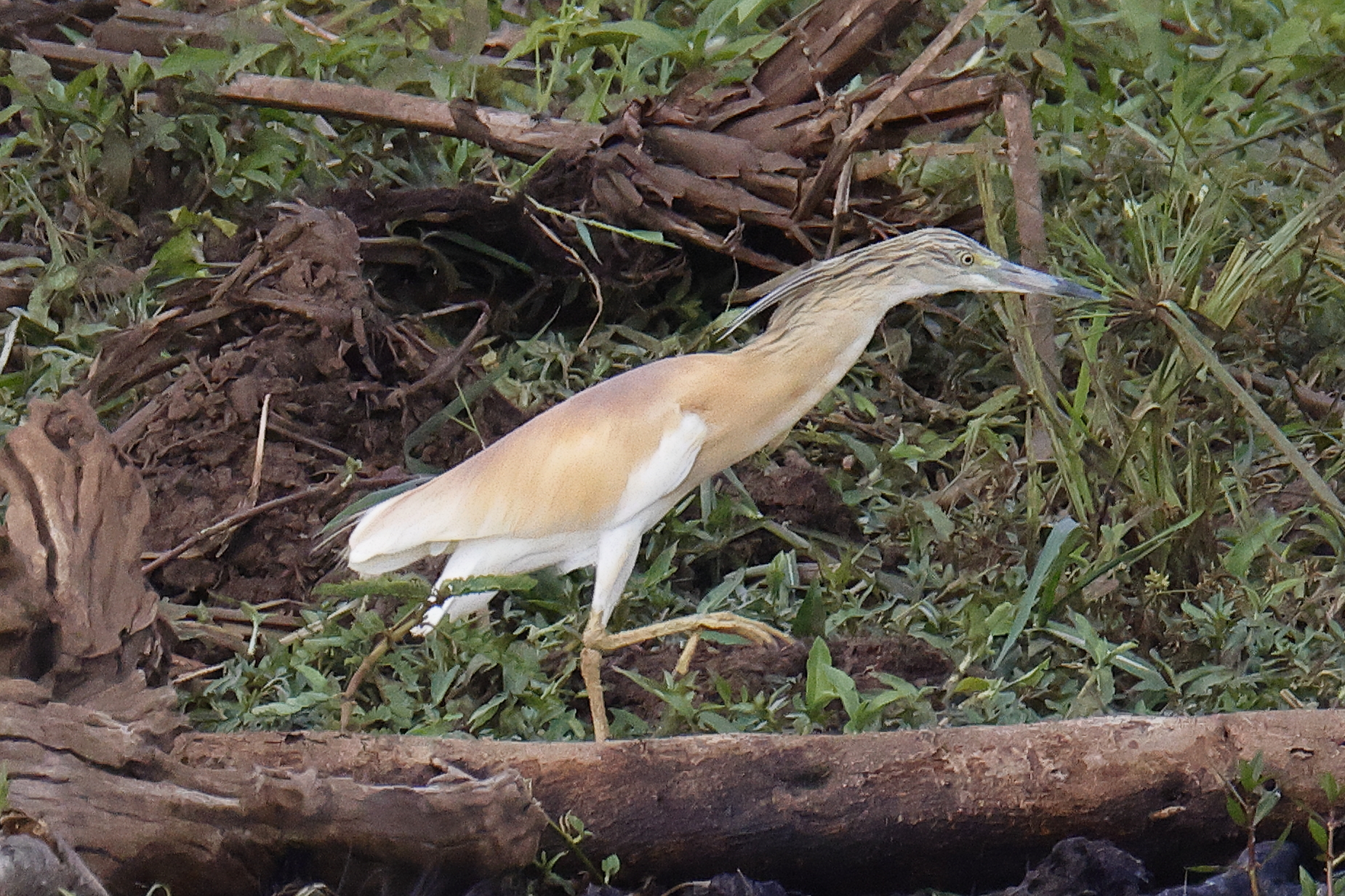
Another boat trip brought a better view of the Squacco Heron
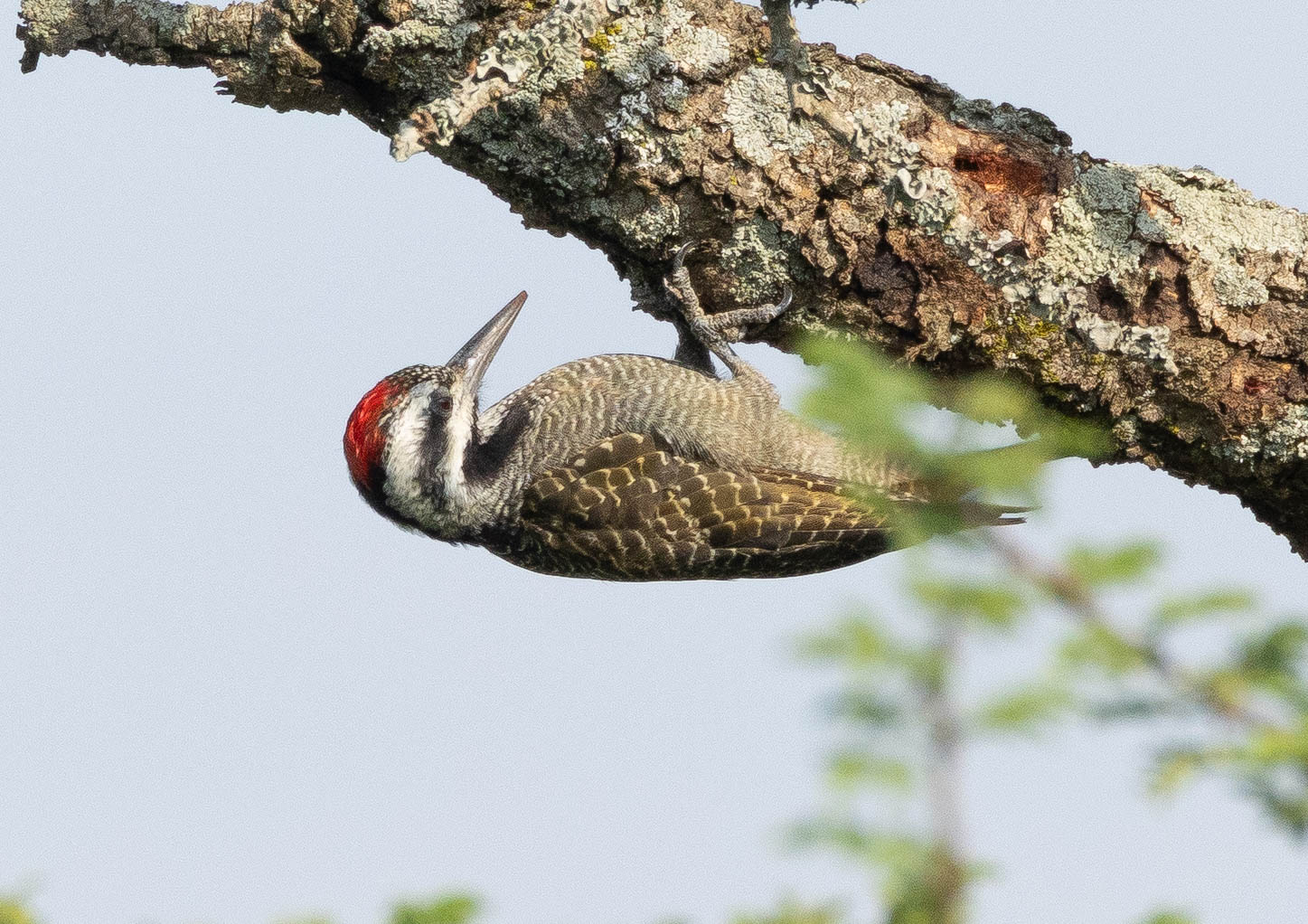
One of the few woodpeckers I saw, this Bearded Woodpecker
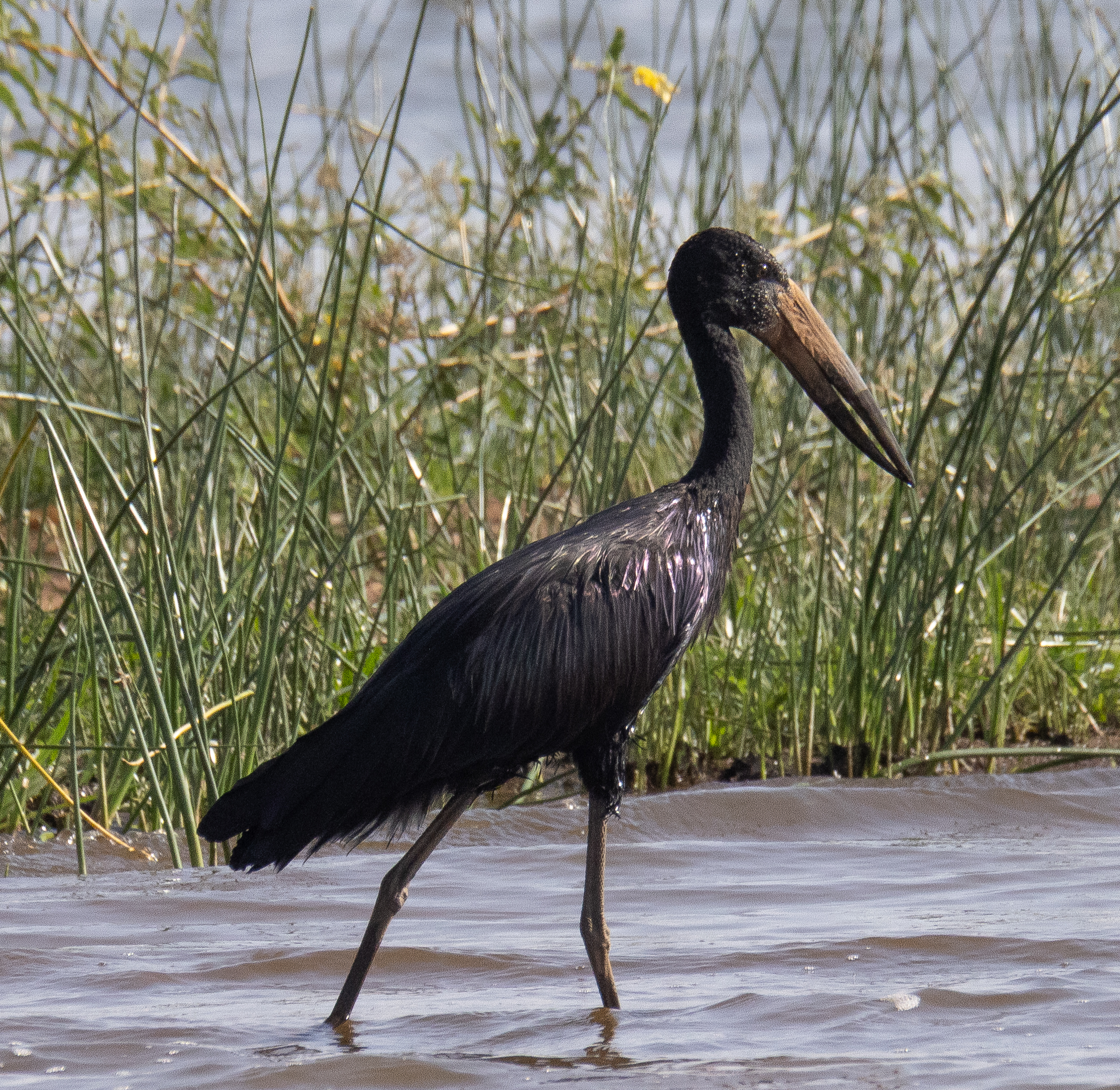
The African Openbill. Named, obviously, for the permanent gap between the two halves of the beak.
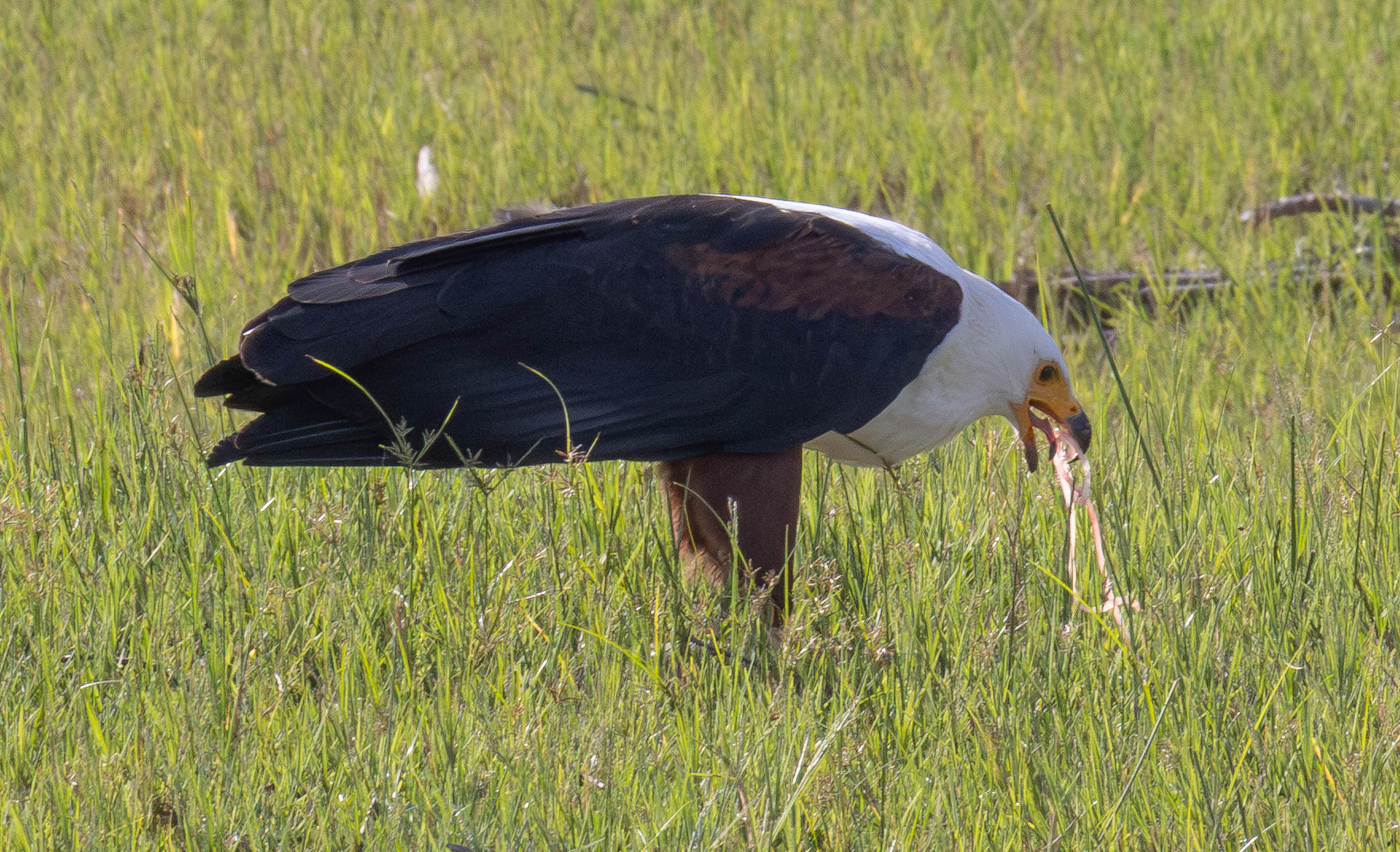
African Fish-eagle, tucking into the entrails of a fish he had just caught.
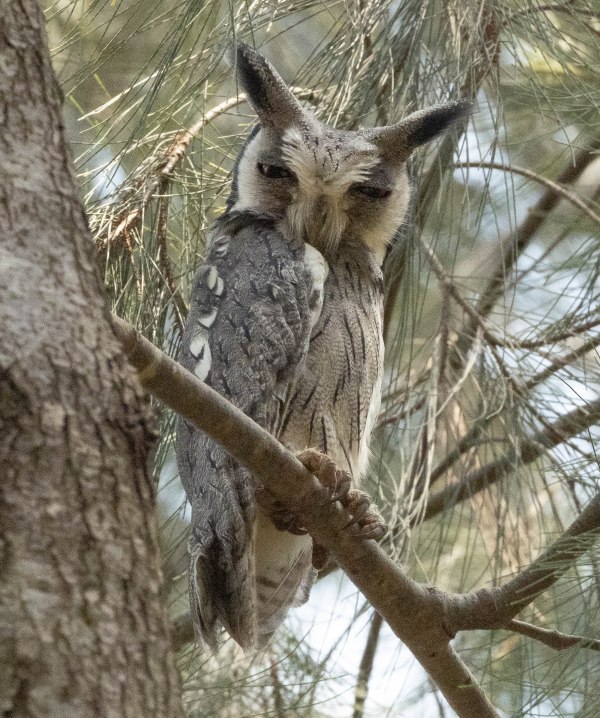
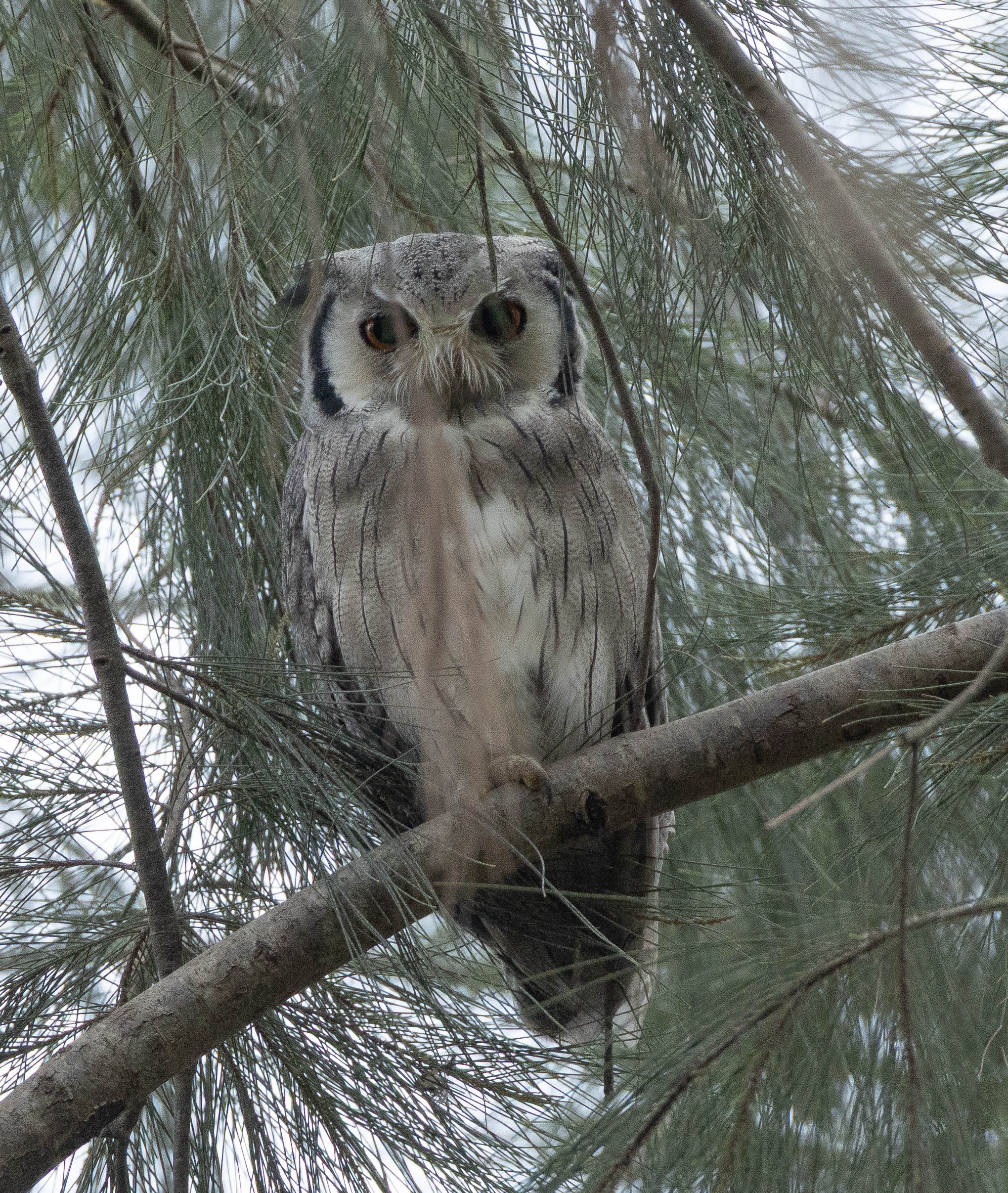
As we were driving closer to the hotel, the guide asked if I’d like to make one last stop to see an Owl, how could I refuse? This (male) Southern White-faced Owl is well known to spend his time on a park which is on a large roundabout in Kigali. The park is surrounded by a 880m running track, which makes a surface area of the park about 60,000 m2. It is crossed by many walkways, has a small wooded area with mature trees, and is inhabited by a pair of Owls. The header image is the female, substantially smaller and quite different in appearance.
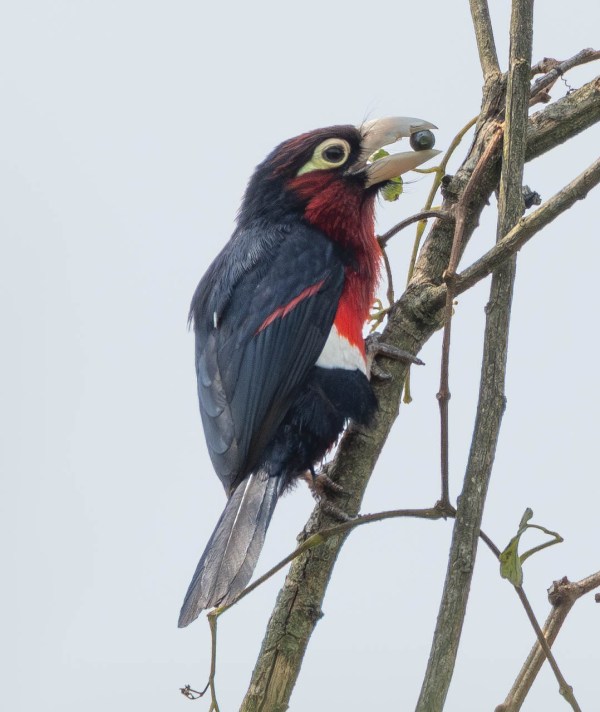
We Left Akagera early enough to spend a productive day at the Nyandungu Eco-Park in Kigali. Not far from the airport, they have preserved and reclaimed some wetlands that have a great variety of bird life, very close to the bustle of Kigali. The header image is of a Double-toothed Barbet.
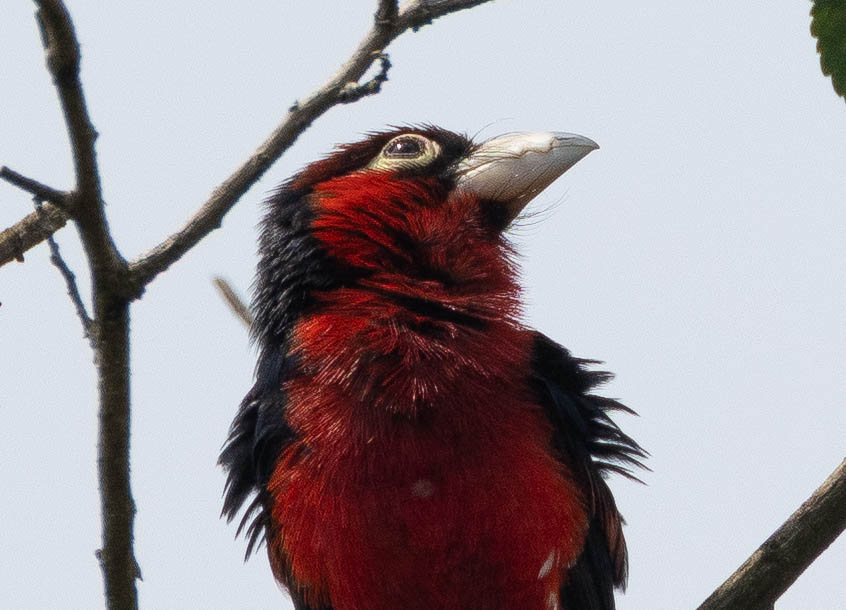
This view looking upward shows the notches on his beak that give him the misnomer “Double-toothed” Barbet
This is a male Red-billed Firefinch, just a few centimetres long,
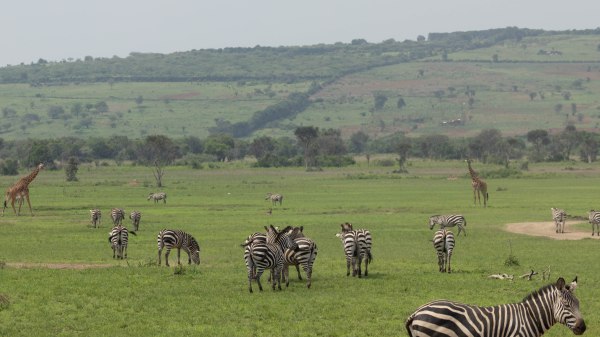
The header image is a view over one of the valleys in the park, with Plains Zebras and Masai Giraffes.
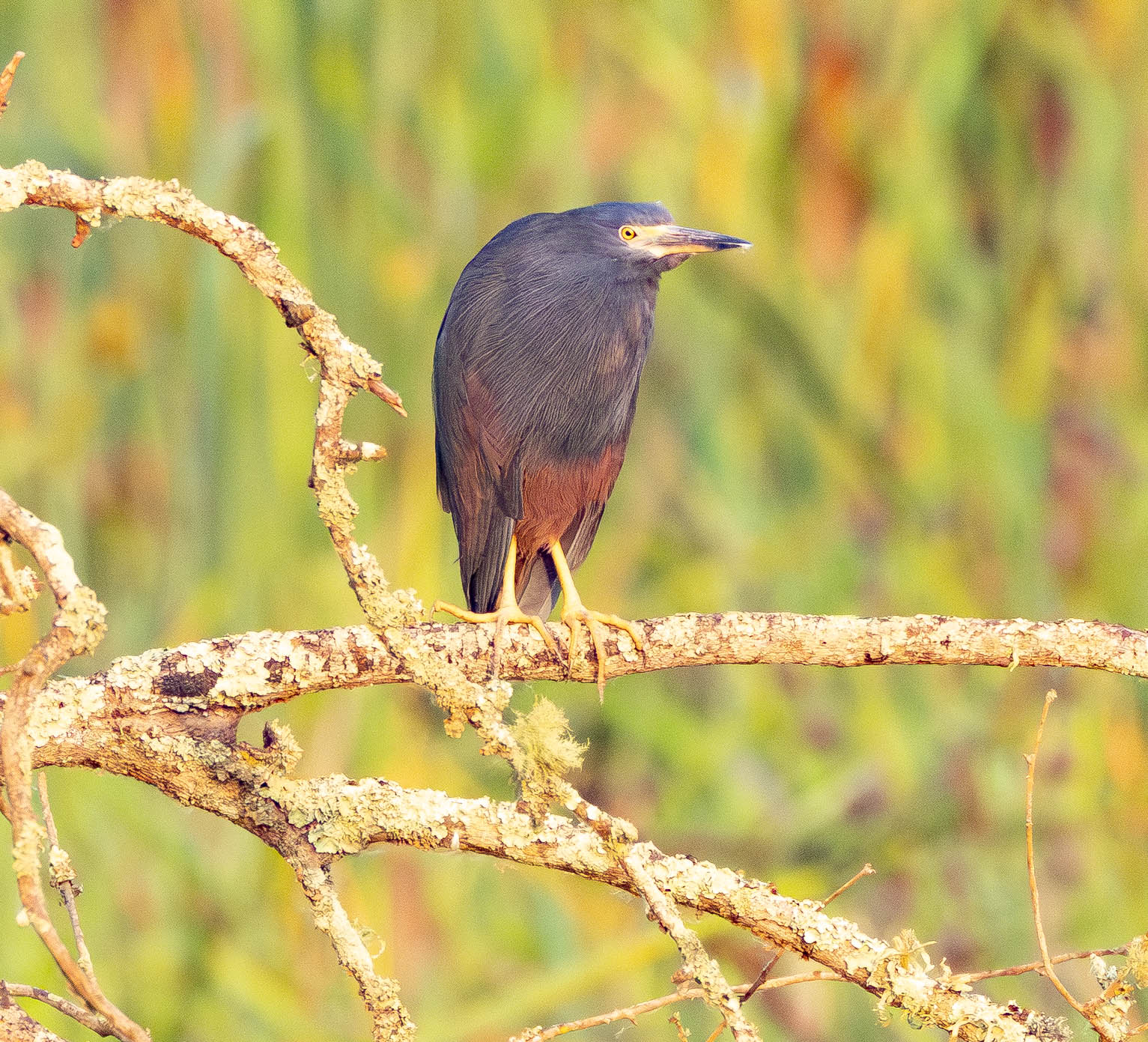
Rufous-breasted Heron
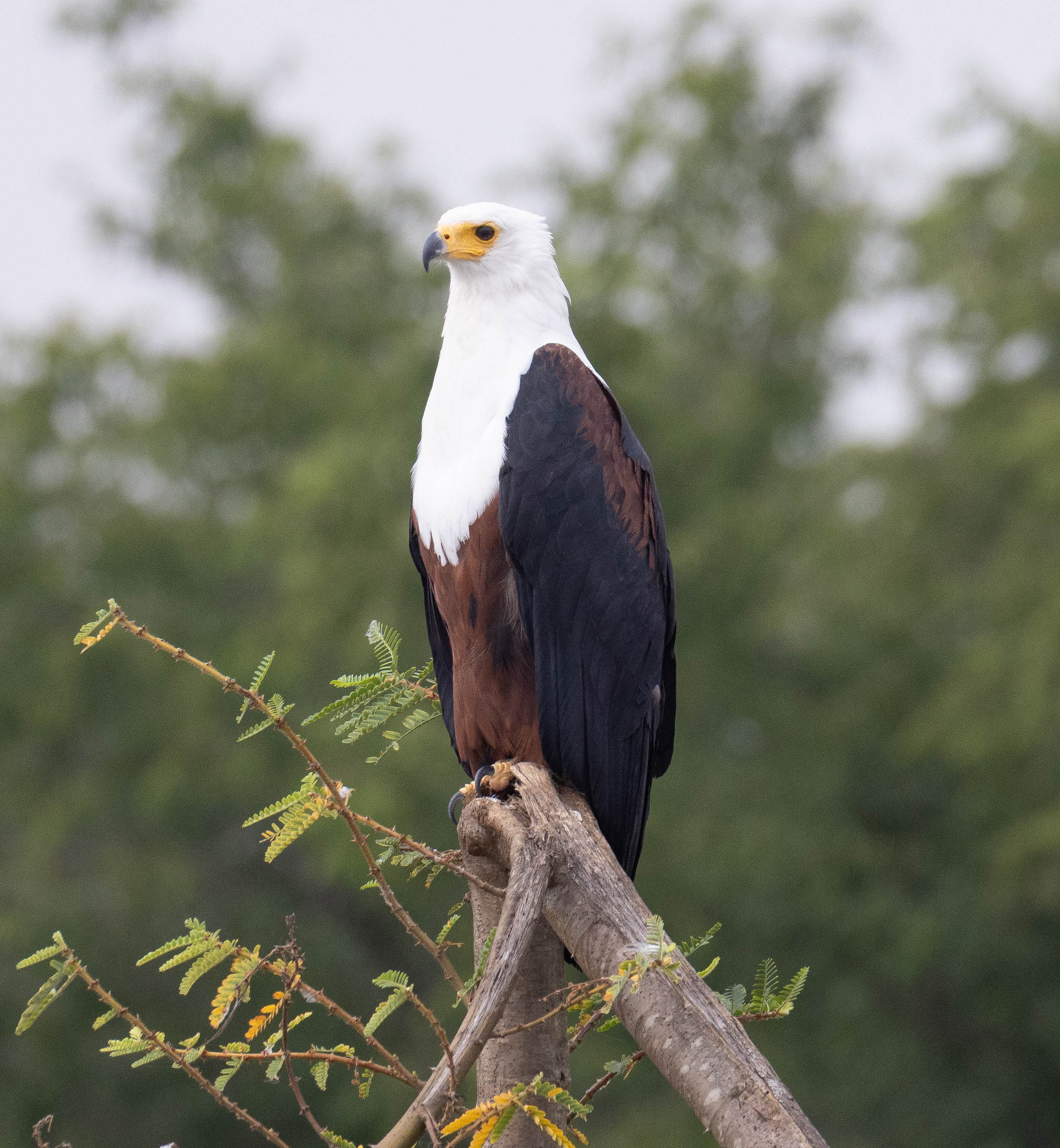
On the largest of several lakes in the park one can take a motorised boat trip, dodging the Hippos, and watching carefully for the Nile Crocodiles. This African Fish-Eagle was perched waiting for prey.
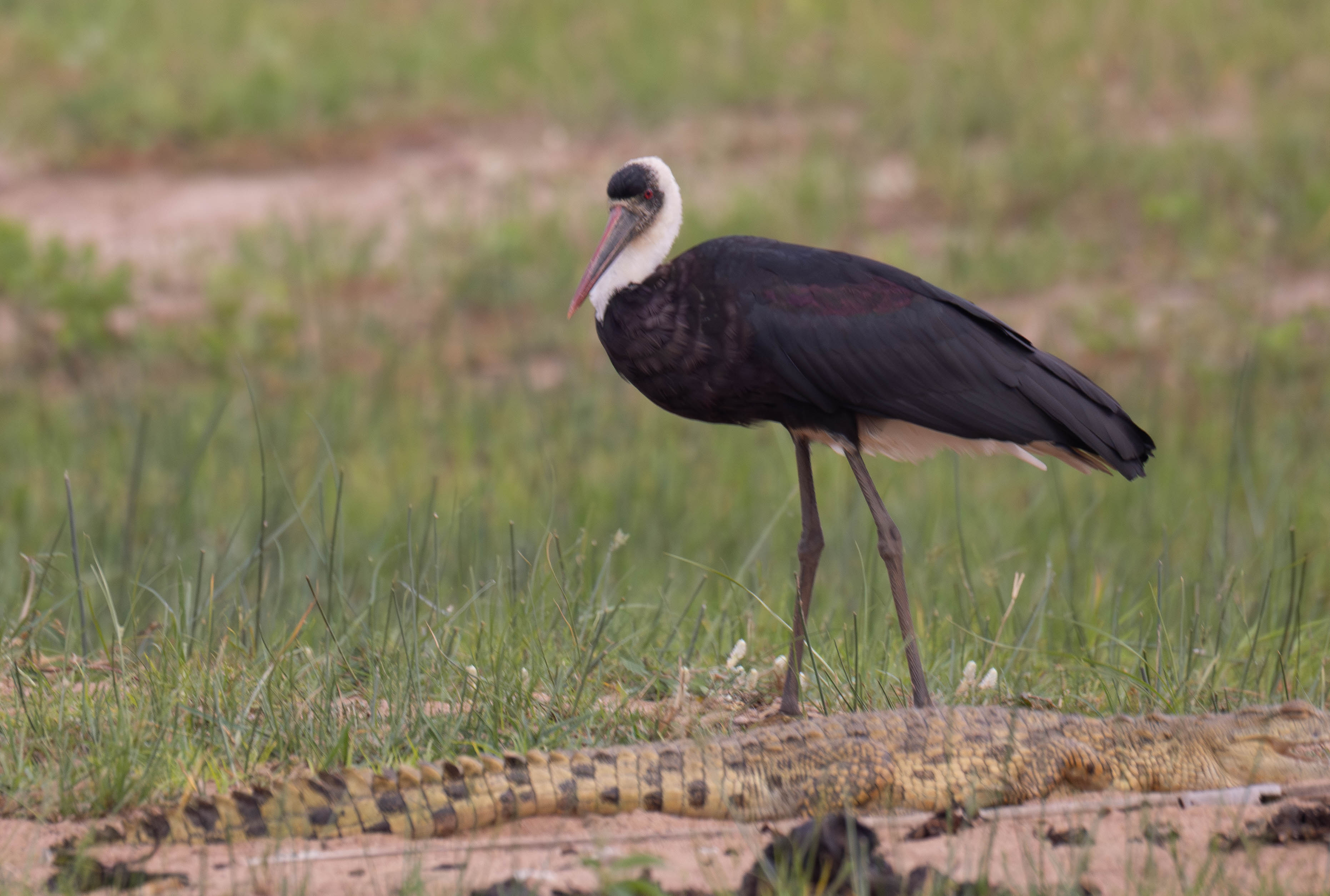
This is an African Woolly-necked Stork, with a Nile Crocodile in the foreground.
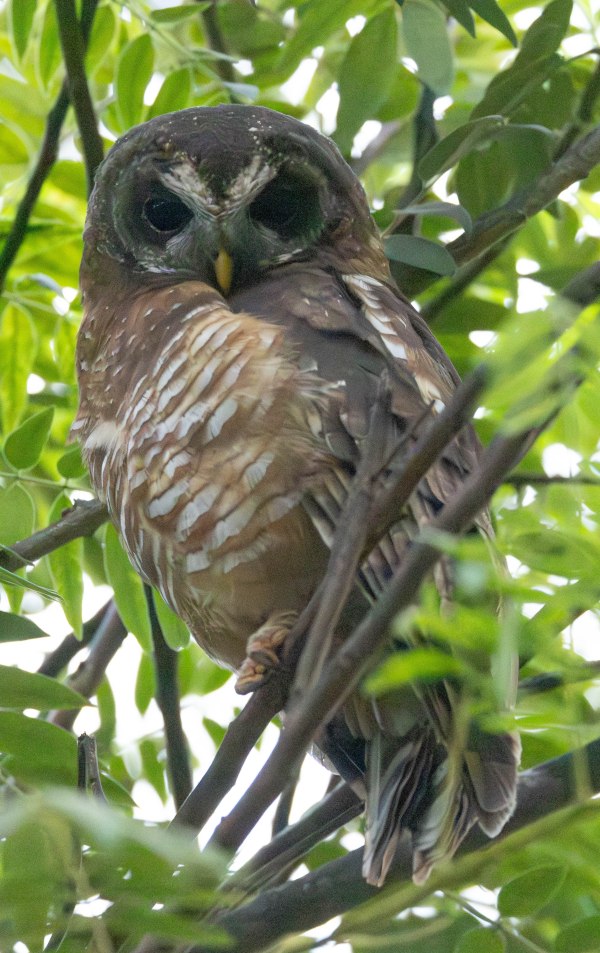
I checked into a lodge just outside the park when arriving, as it was getting dark. There was enough light to get a photo of the African Wood-Owl in the header image. In the morning, another early start, and a short drive to the park entrance. Between the lodge and the visitors centre there were already over 20 new species.
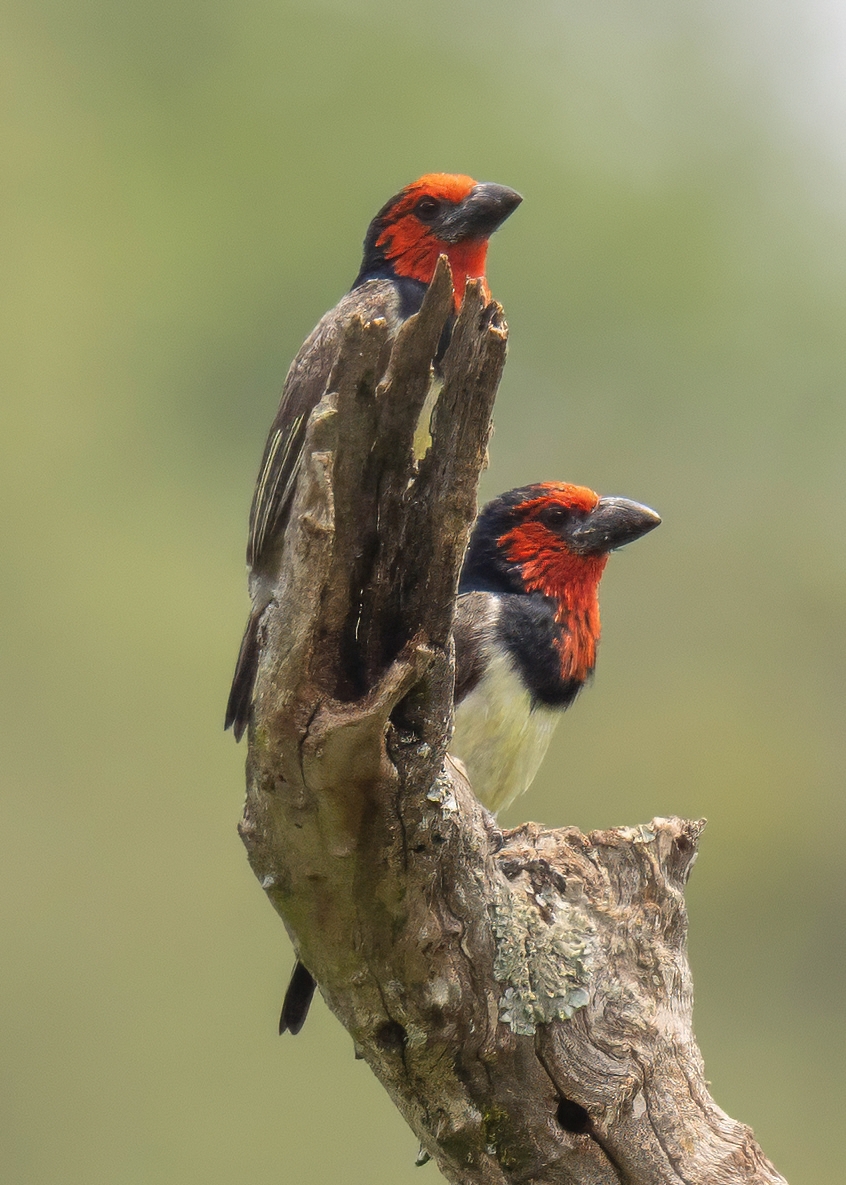
Black-collared Barbets
White-browed Coucal
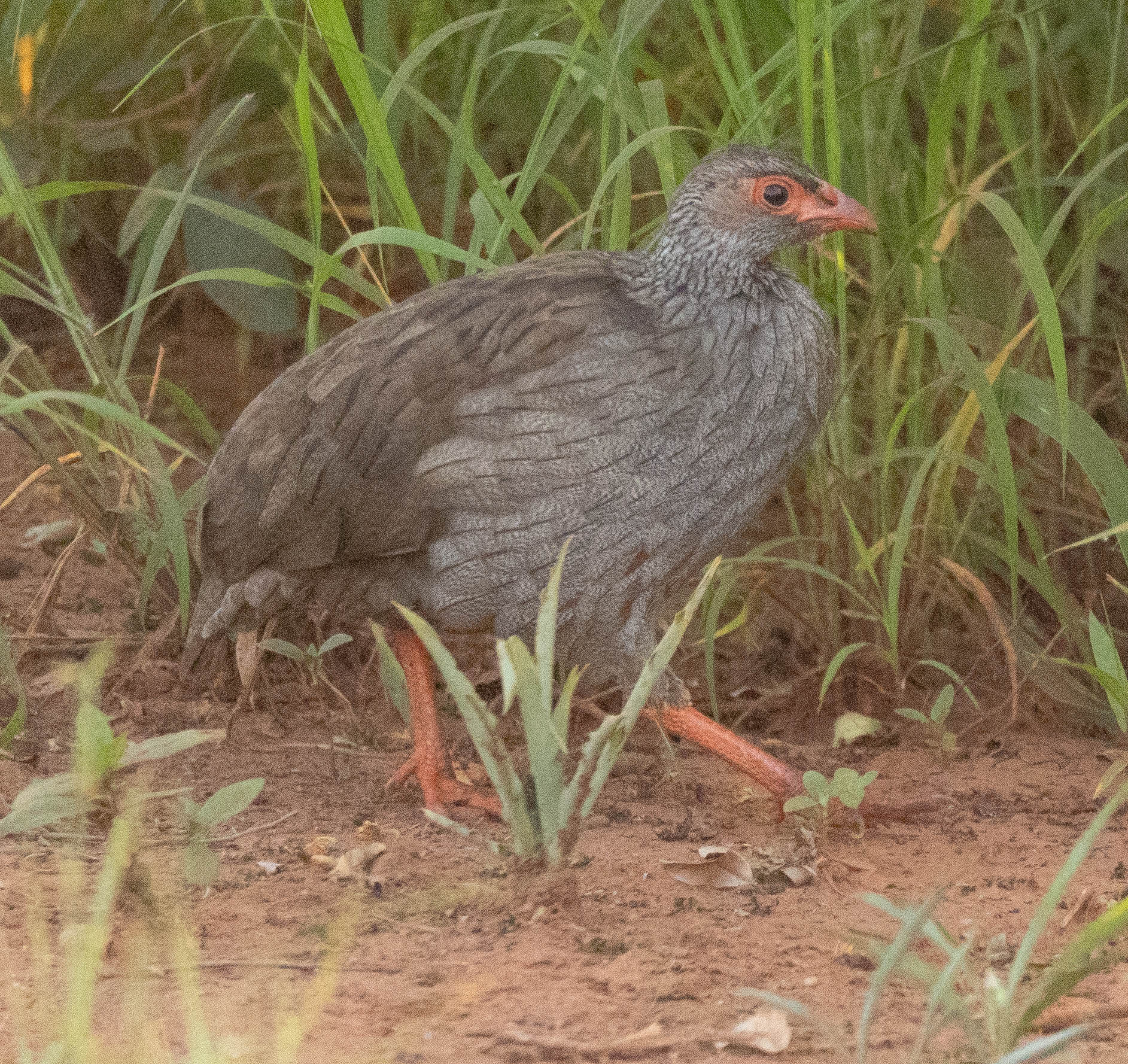
Red-necked Spurfowl
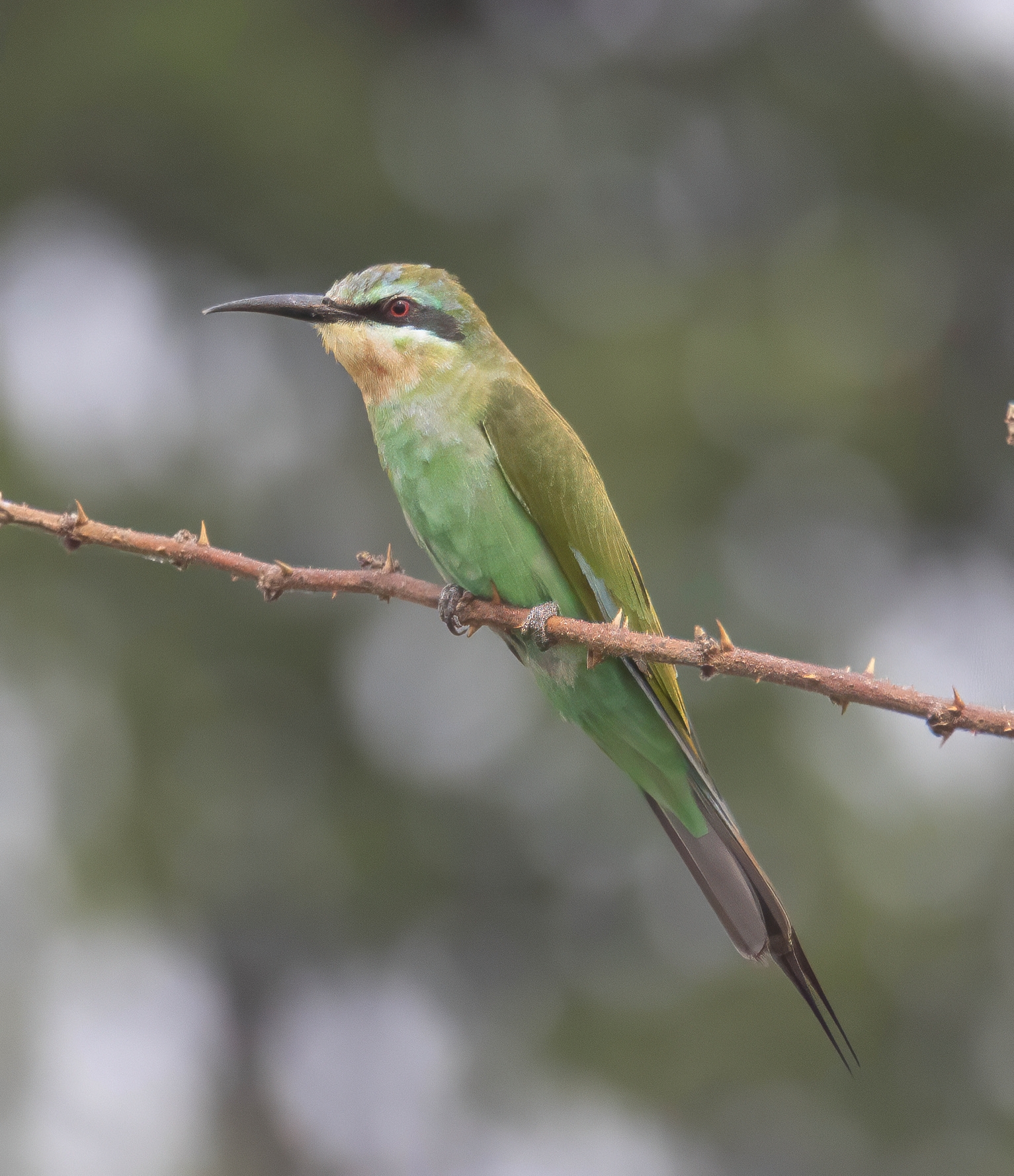
Blue-cheeked Bee-eater
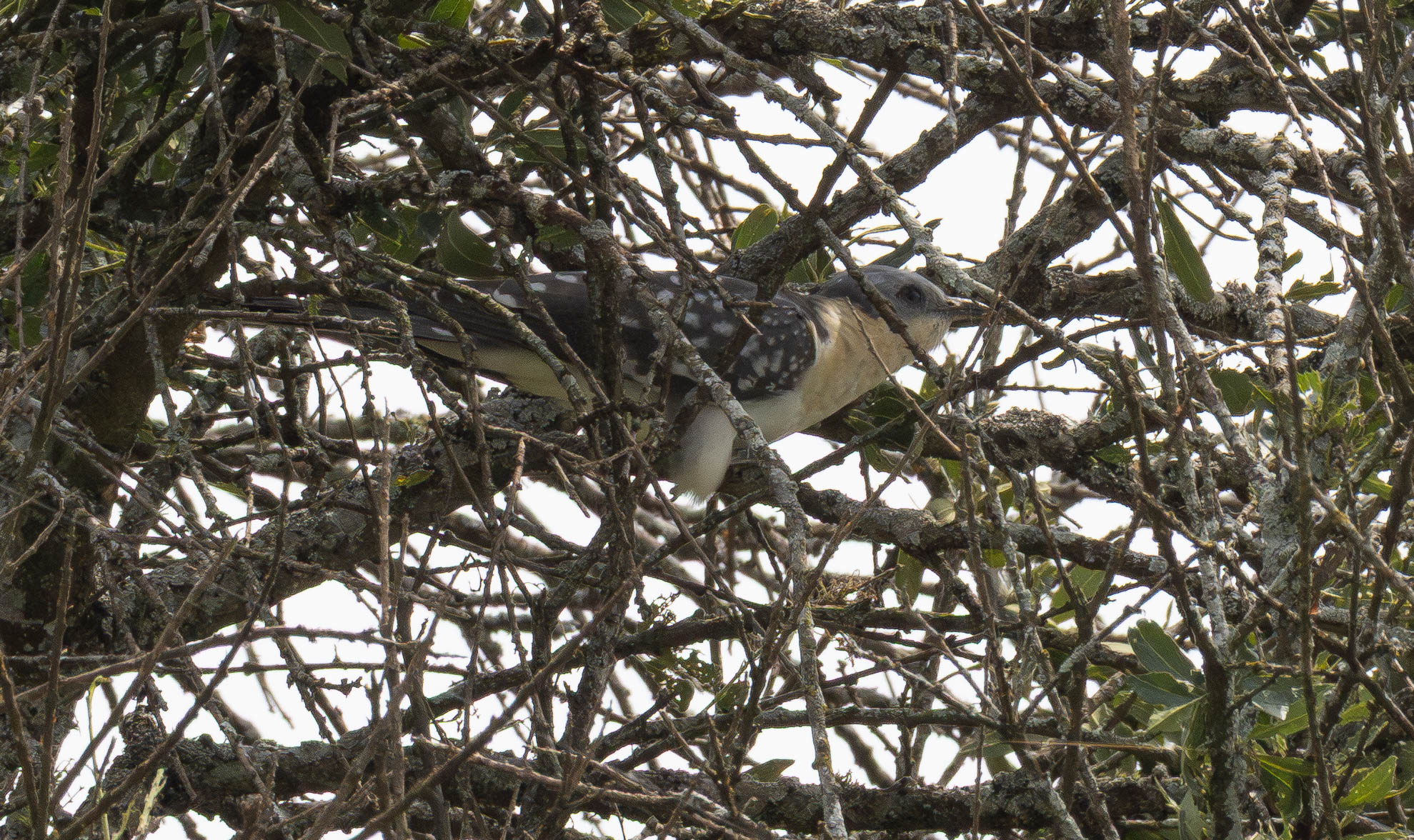
This Great Spotted Cuckoo was perched within the branches of the tree. It had never been reported in this park previously, so I decided to include the photo, even if it is not the best view of the bird.
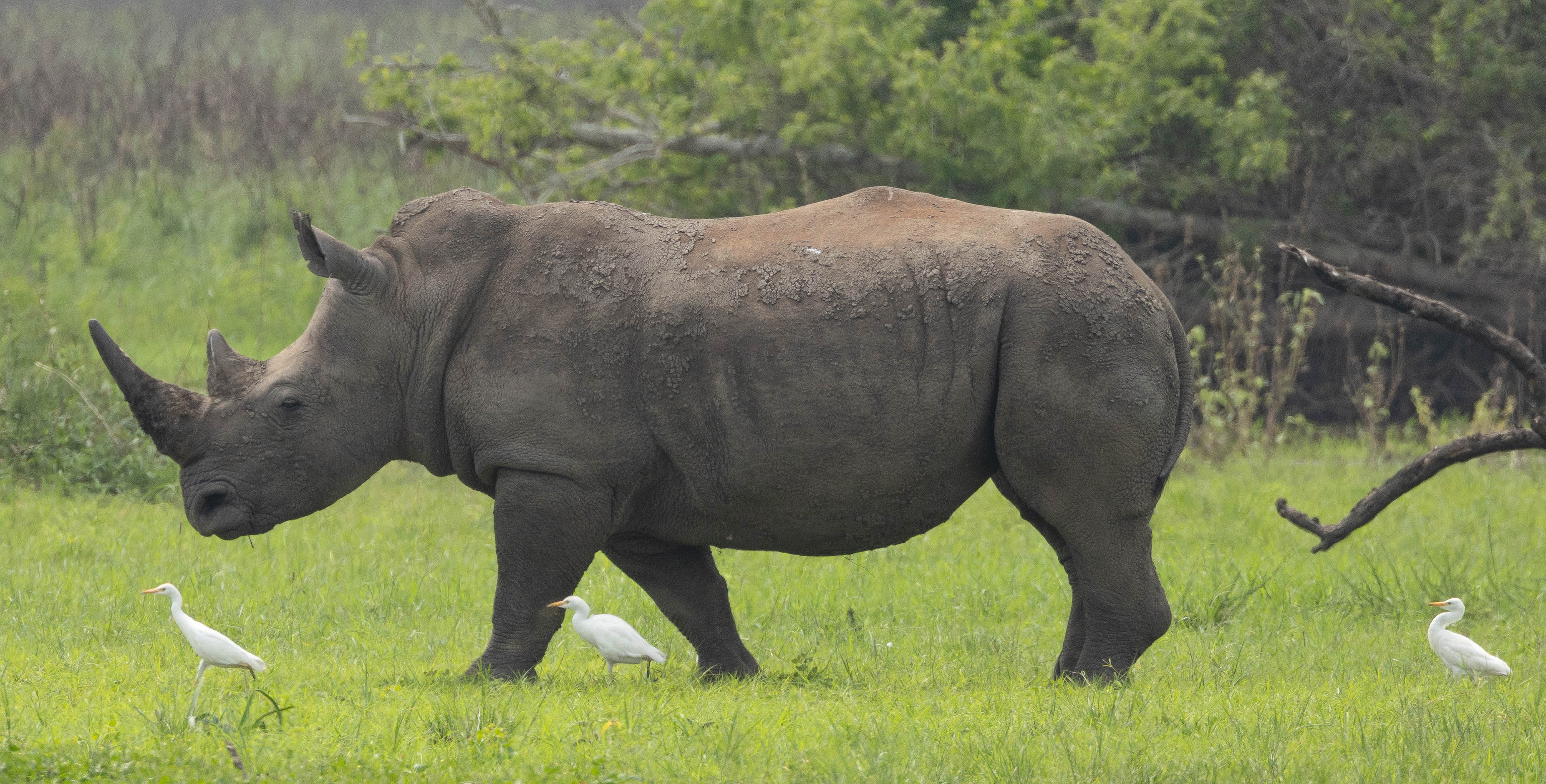
This was the first time I had seen a White Rhinoceros outside of a zoo, this one accompanied by Western Cattle Egrets.
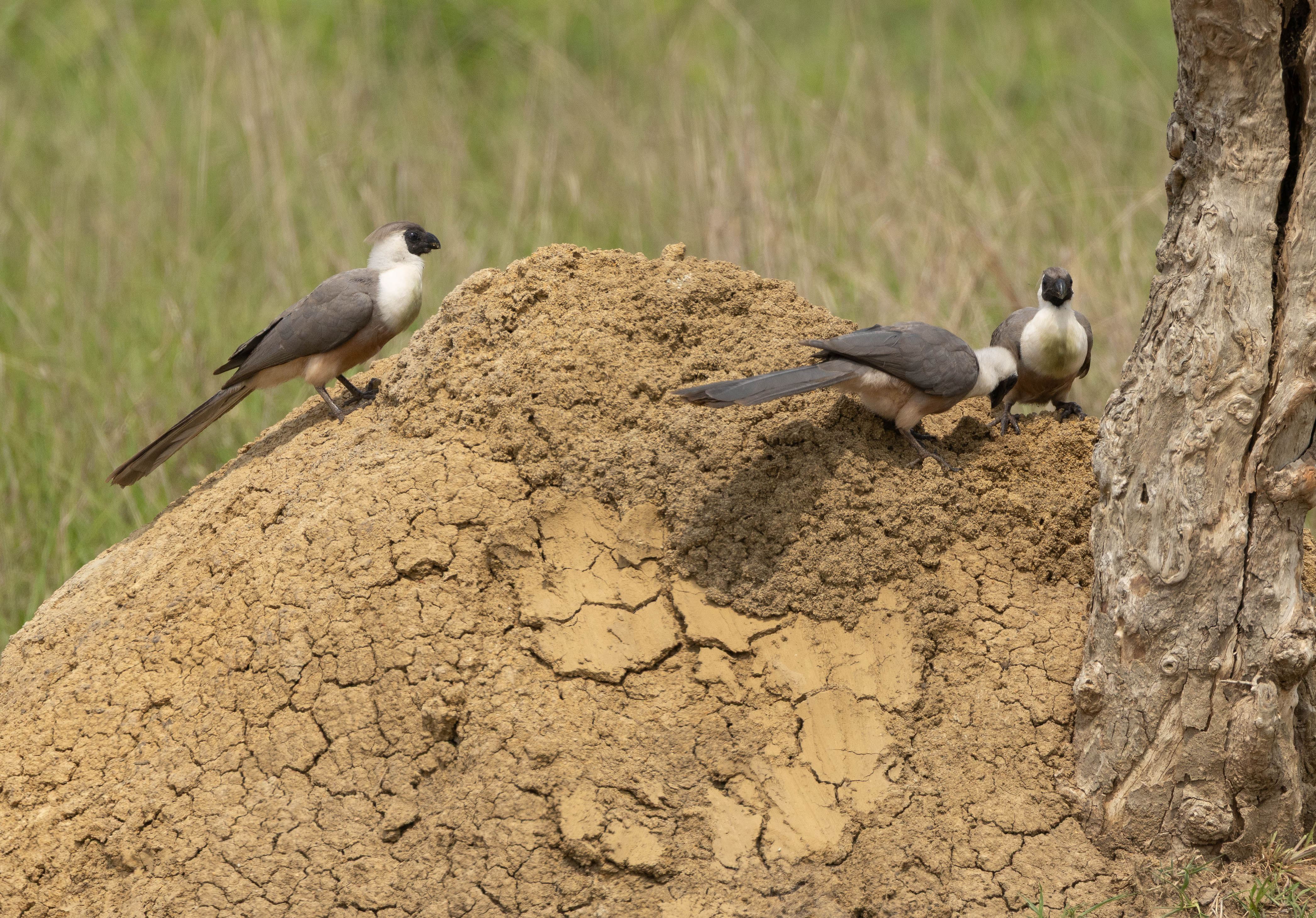
These 3 Bare-faced Go-away-birds were hunting termites. My guide thought they were called “Go-away-birds” because of their call, which sounds a bit like “Go”, they are quite noisy and travel in small groups.
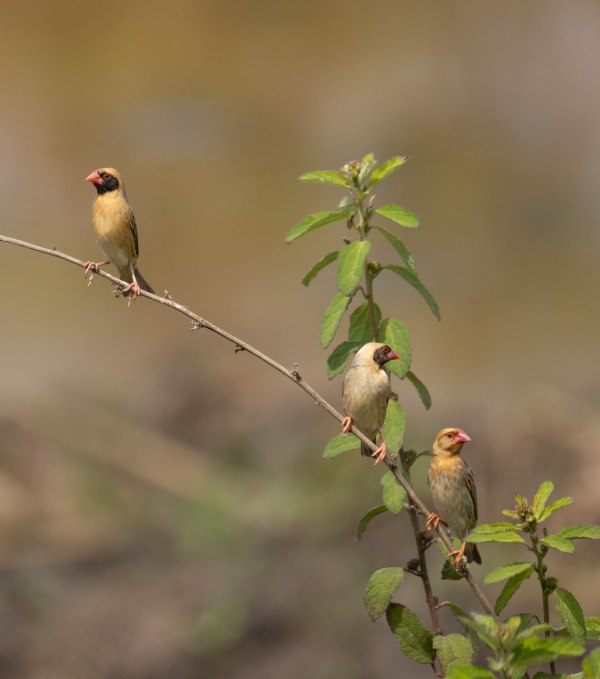
Day 4 we left Nyungwe early, heading for our 3rd national park, Akagera. Roads in Rwanda are narrow, speed limits are 30 to 80 km/h, and it is not infrequent to get stuck behind a truck, going slowly up, or down, hill. Very few Rwandans own a car outside the big cities, the most common means of transport are by foot, or bicycle. Average speeds end up being around 30 km/h, and even though it is a small country, some of the journeys were quite long. This trip we broke up with a couple of stops, including a few hours in a wetlands. With, again, many new birds, including the Red-billed Queleas in the header image.
The national parks in Rwanda are each very different, Volcanoes is at the highest elevation, about 2,500 metres, with, obviously, volcanic geology, and even snow on one of the peaks at times. Nyungwe is old-growth rainforest, at a somewhat lower elevation, about 2000m, with a huge variety of bird life. Akegeba is Savannah, with some hills around, a place where you can do the classic Safari type thing, with zebras, giraffes, rhinos (white and black) and hippos.
We arrived in Nyungwe on the evening of day 2, it was already dark, so checked into the lodge and prepared for a full day birding on day 3. After a brief drive to the reception centre we headed off for a walk, with a local guide.
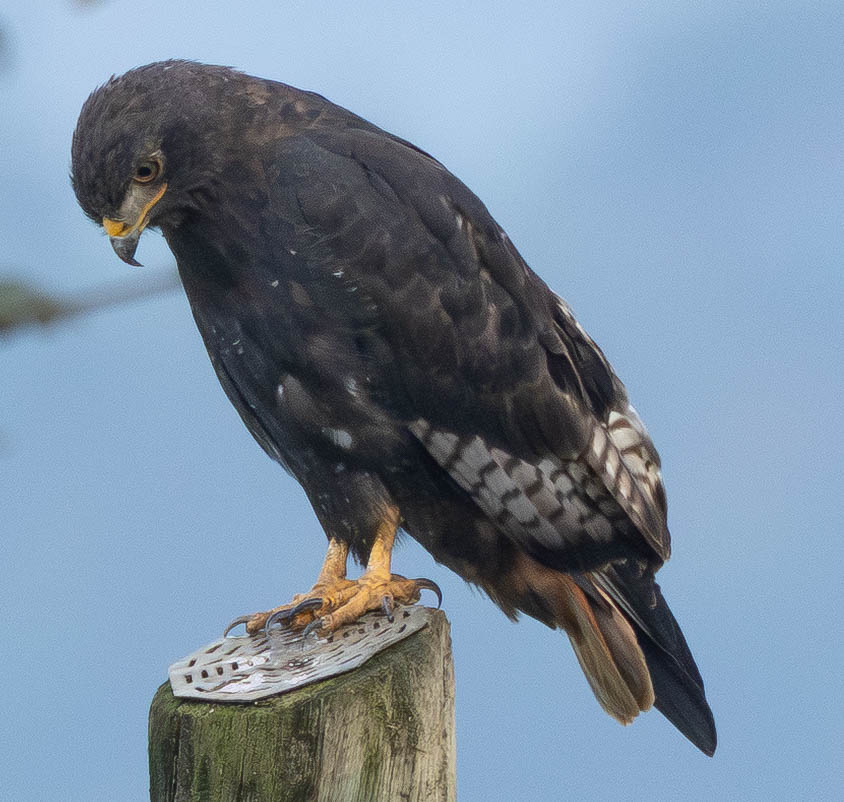
As we left the lodge, this Augur Buzzard was waiting
Chinspot Batis. This is the male, who does not have a chin-spot. This is one of the few birds named for a feature found only on the female! (I didn’t see a female)
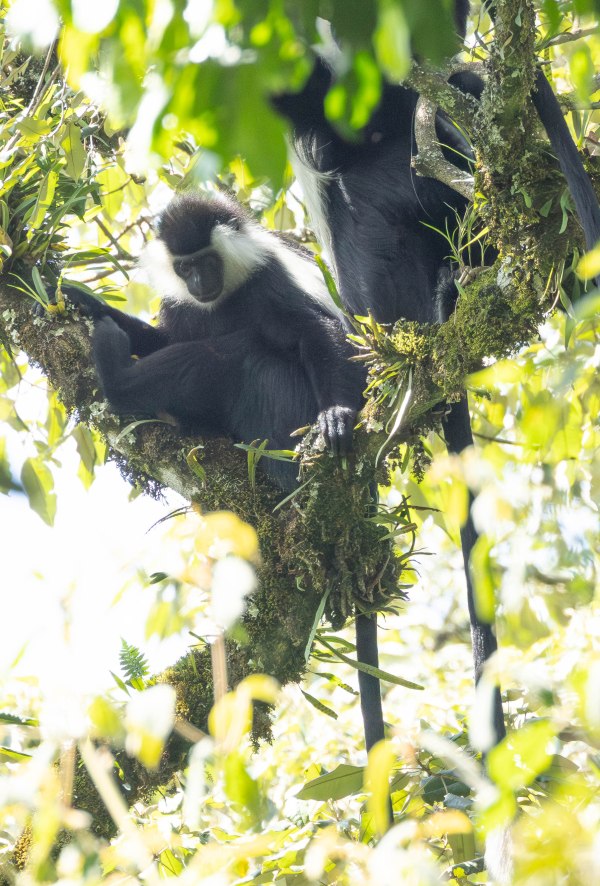
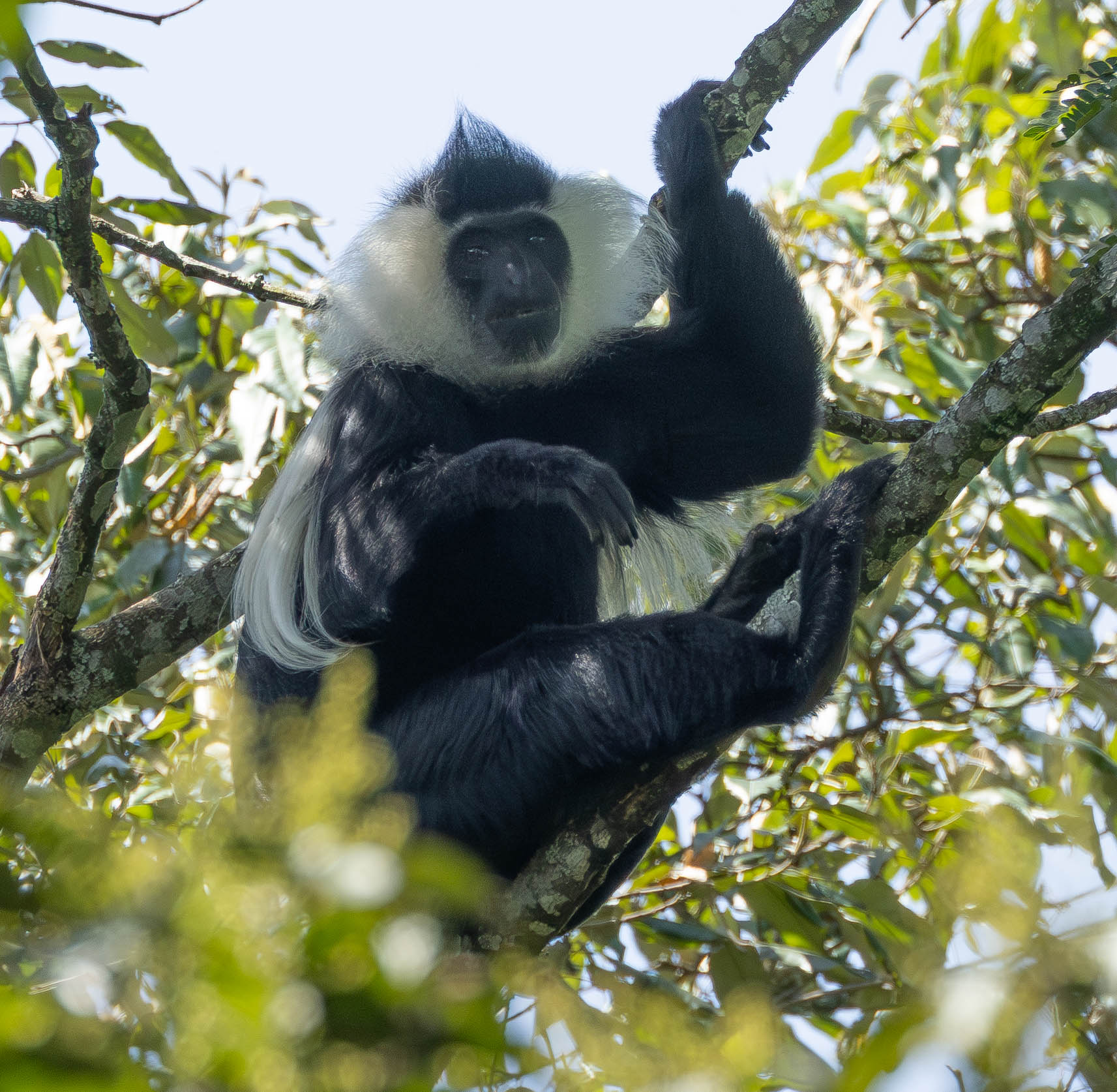
A family of Black and White Colobus watched us carefully.
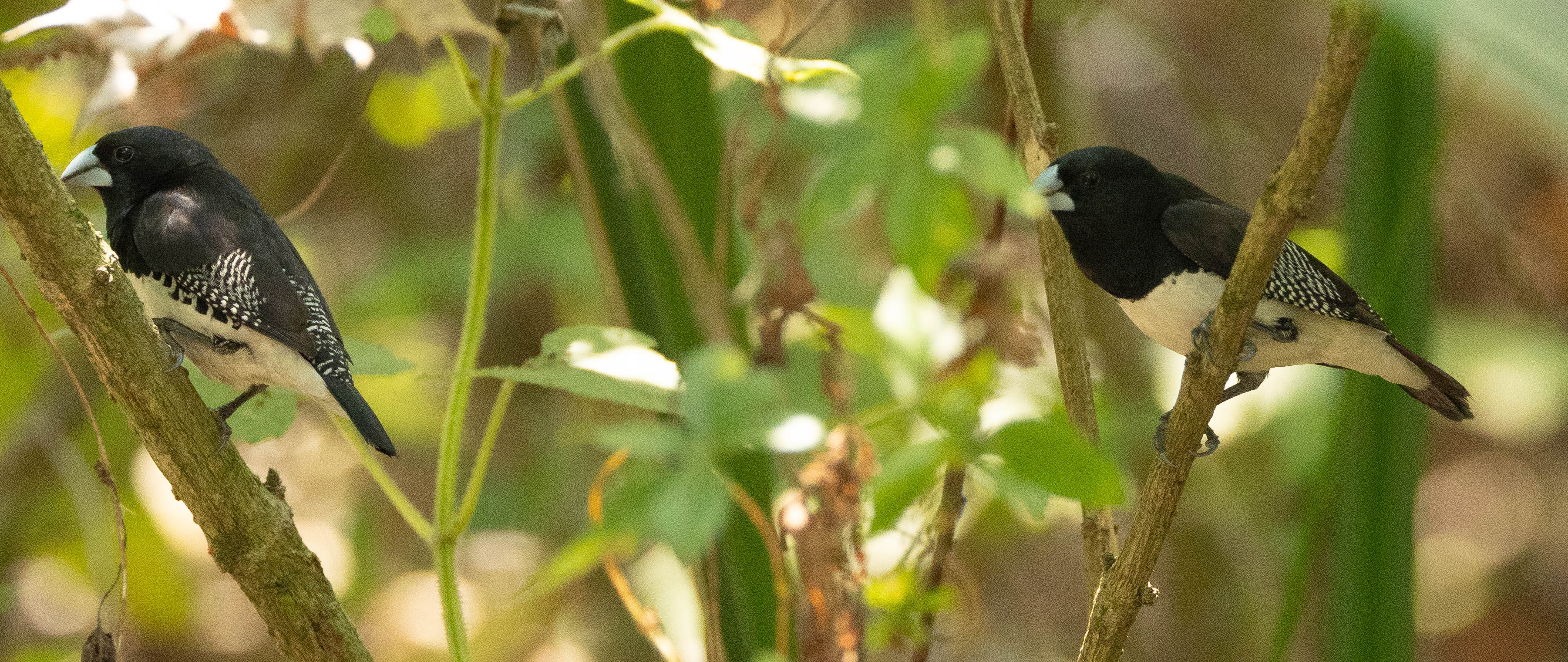
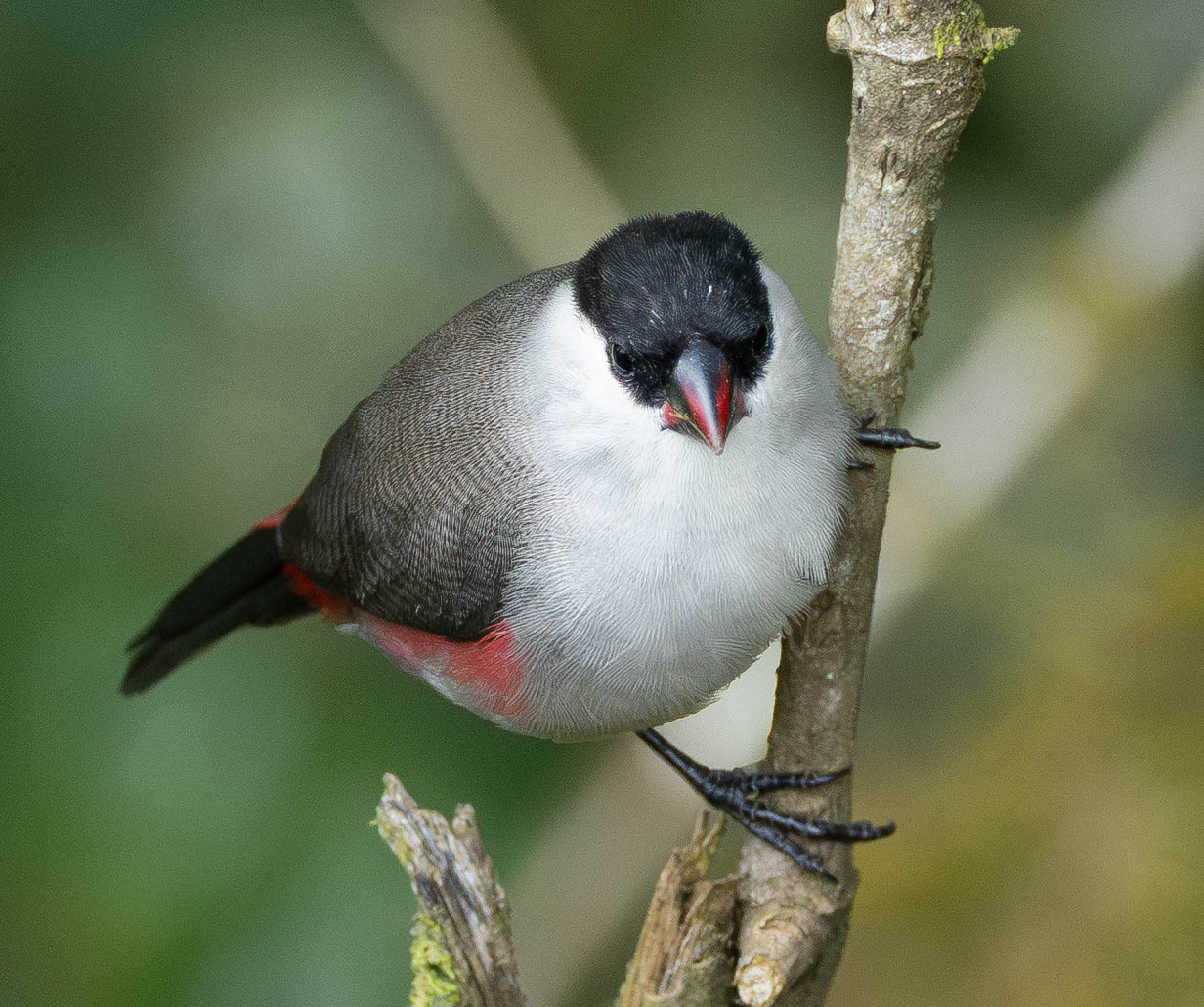
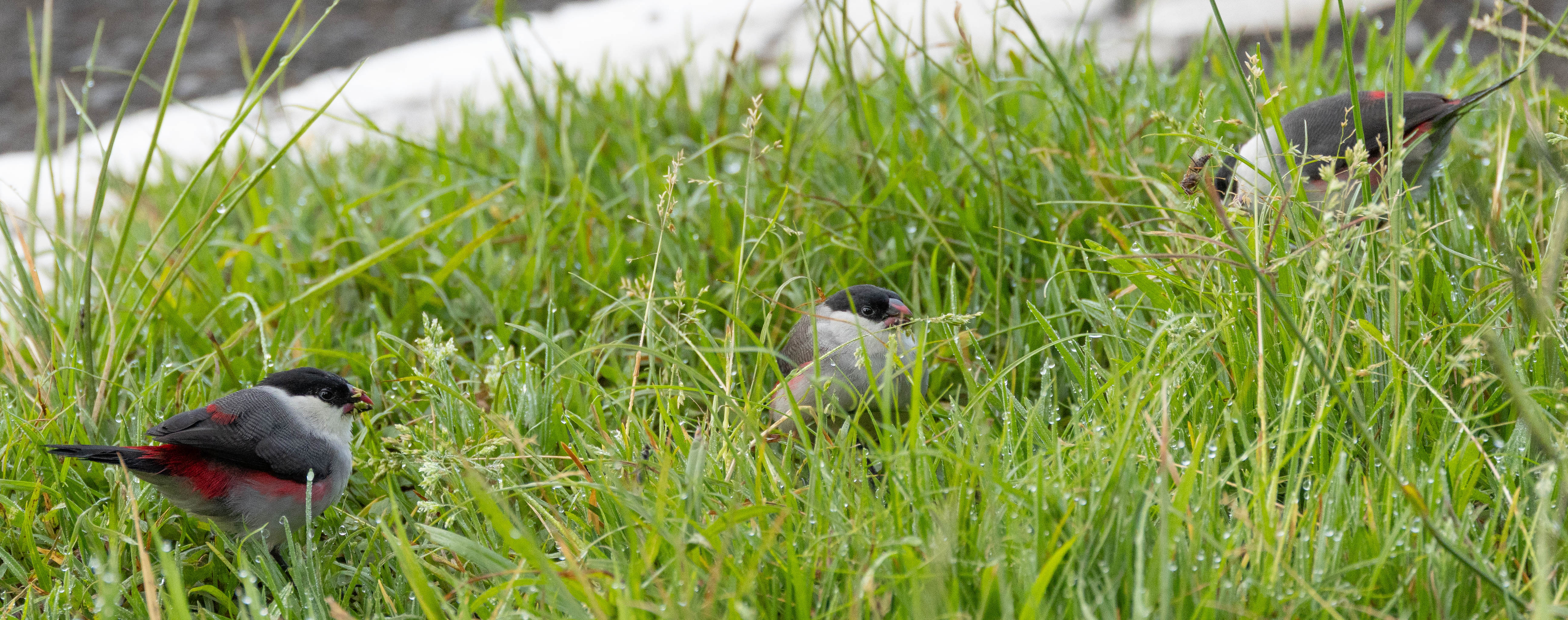
The Black-crowned Waxbills often travel in small flocks.
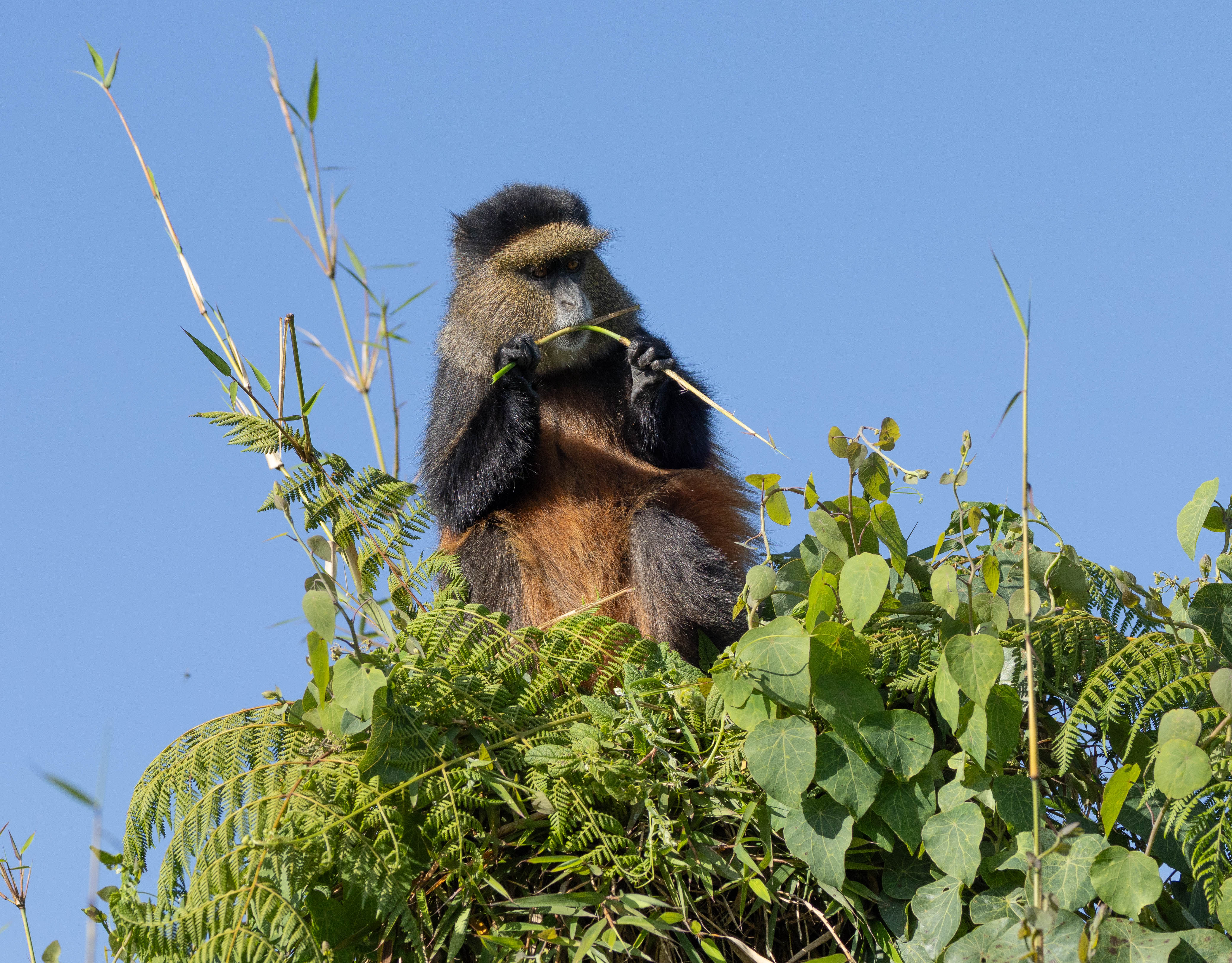
In the morning we went to Volcanoes national park, well known as a place to view the mountain gorillas. I decided not to do that but to have a walking, birding tour of the park. We did still get to see the Golden Monkeys, though.
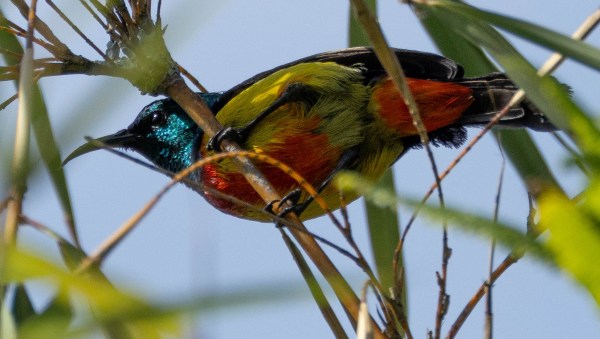
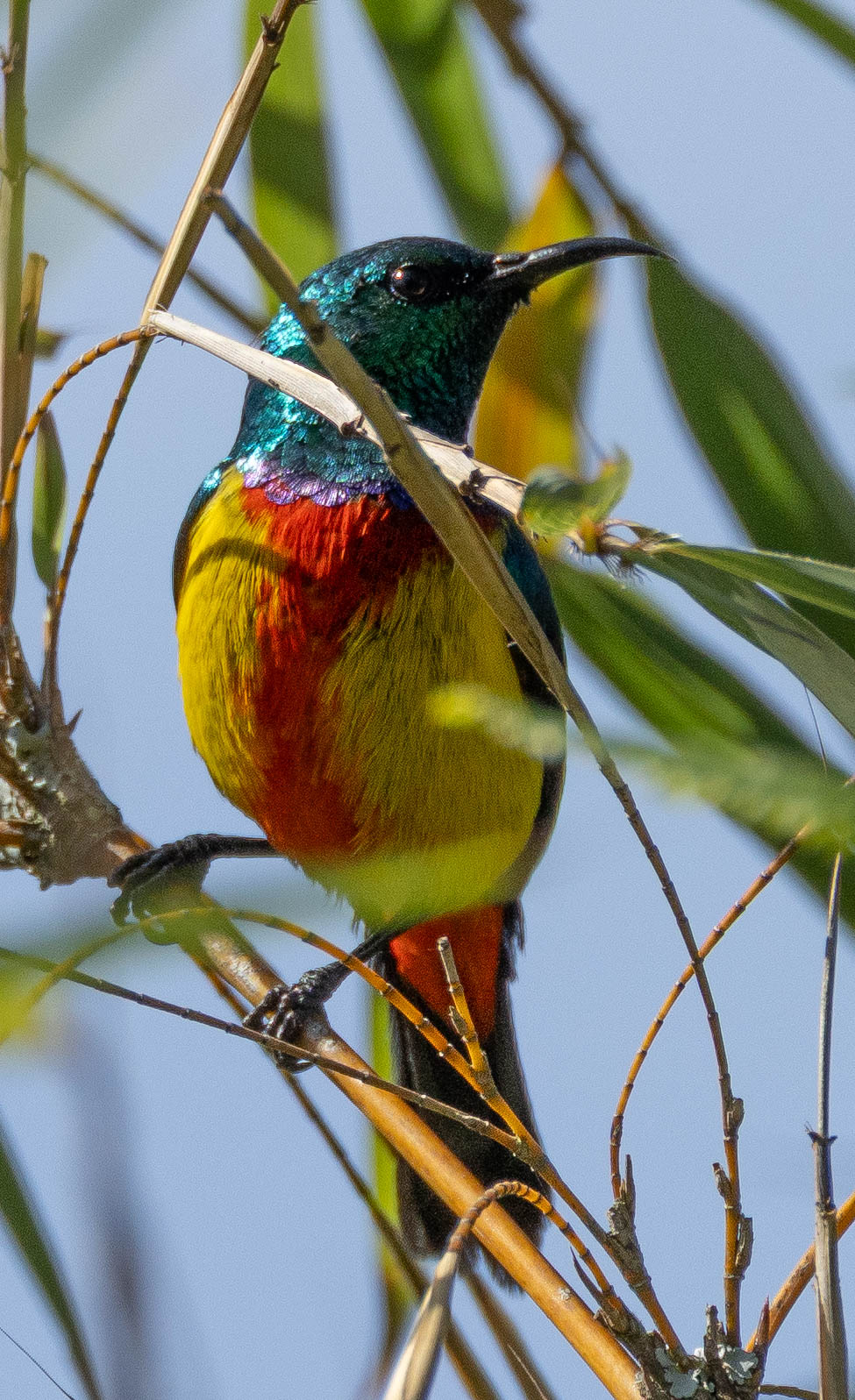
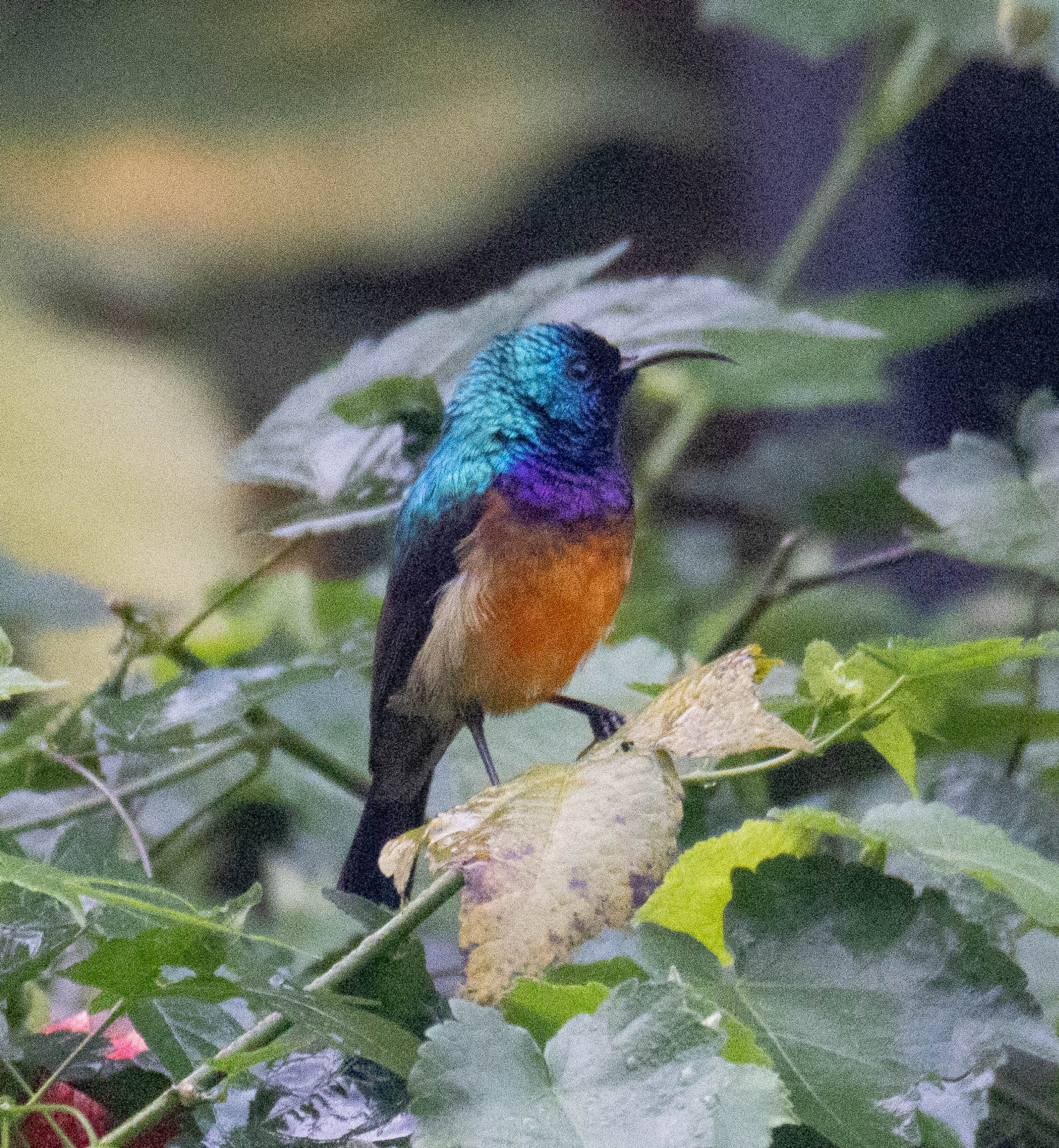
Also, many new bird species, the header image is a Regal Sunbird.
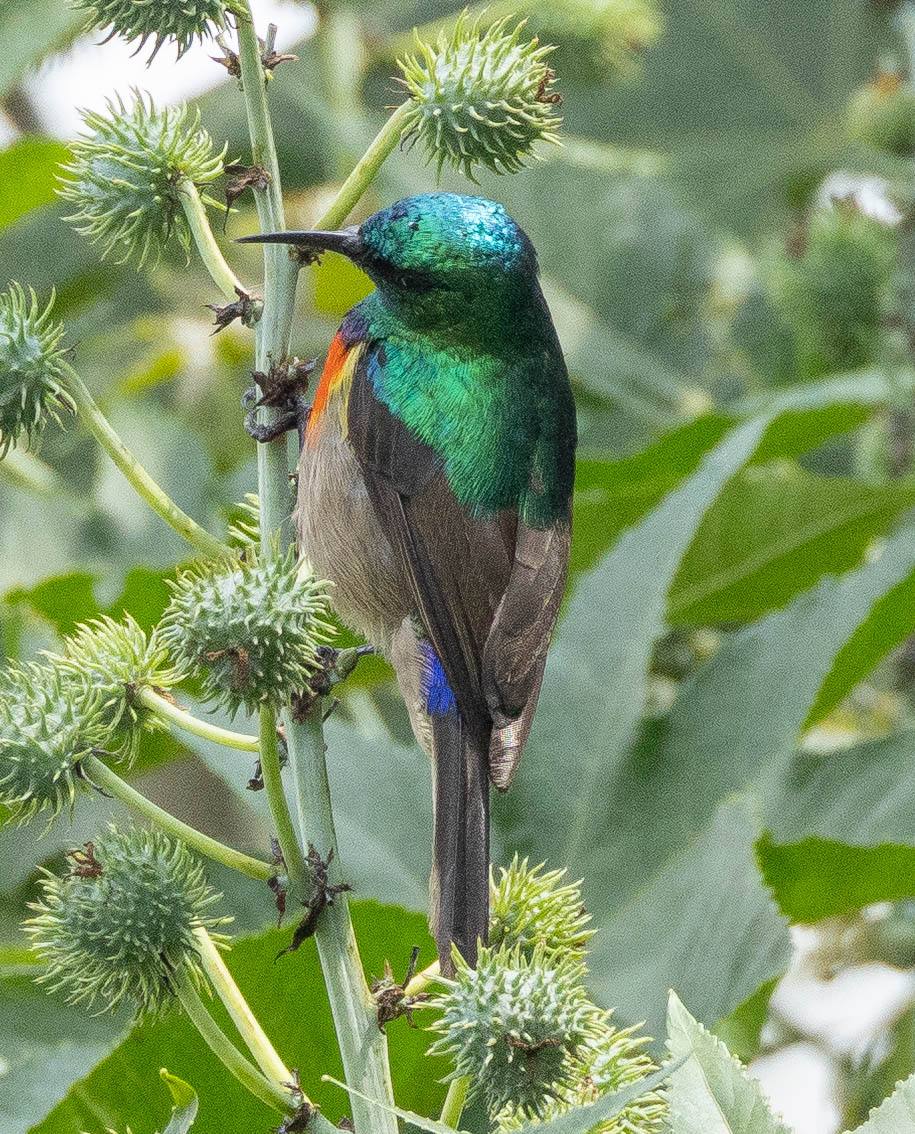
As mentioned on day 1, Sunbirds are a large group of birds, they feed on nectar, and the females are often drab and brown, but the males are spectacularly colourful. The one above is a Northern Double-collared Sunbird.
African Stonechat. Very similar to the European Stonechat.
The Regal Sunbird is one of my favourites, so incredibly colourful.
This Weaver is strange… really, the Strange Weaver.
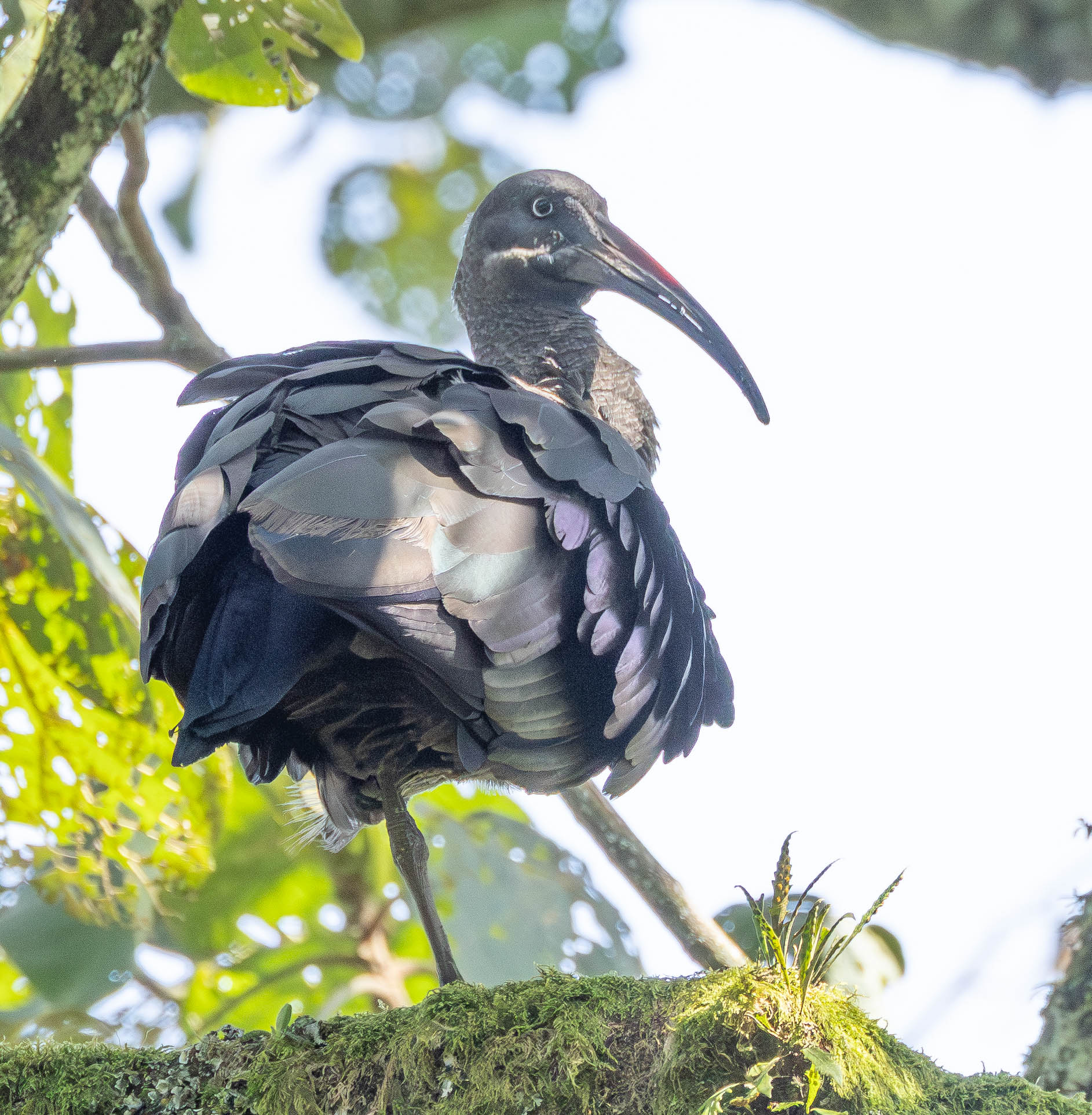
An Ibis, the Hadada Ibis, apparently named for the call, which ebird describes as the sound of Africa.
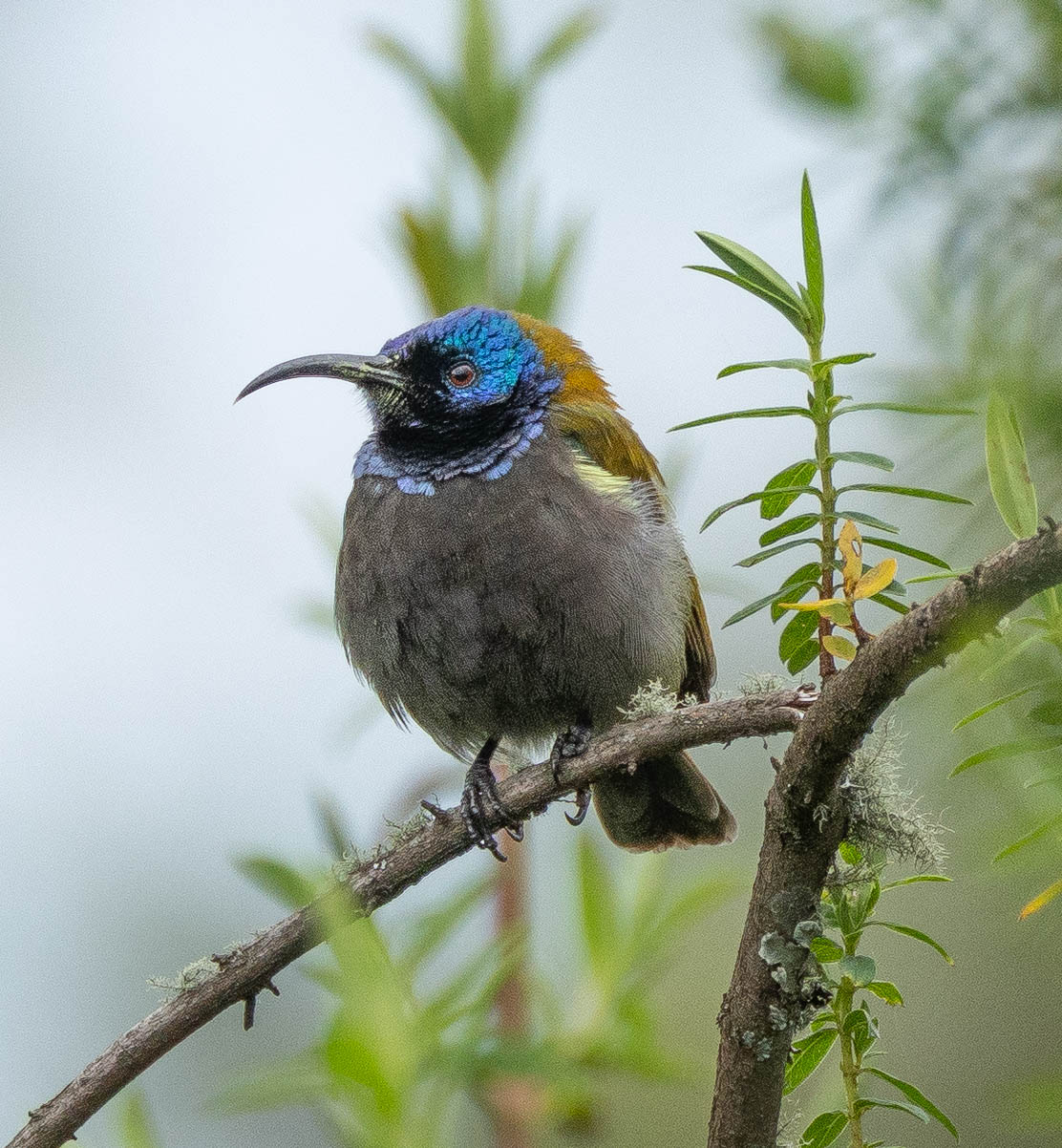
This Sunbird is the Green-headed Sunbird.
Leaving Volcanoes park behind we headed south and a little west, aiming for Nyungwe national park.
I was invited to Rwanda, to assist in teaching their fellows in their newly developed training program. I was delighted to try to help out, and in the days before my teaching commitments I decided to take a few days to tour Rwanda, to visit several national parks, and to do some serious birding.
On day 1 we left Kigali, went north west towards the Volcanoes national Park, stopping at a lake (lake Bihinga) on the way. After a couple of hours in various locations around the lake (over 55 species), we then set off for the lodge (Karisimbi Cave Resort) in a town called Musanze. I then settled into a lodge close to Volcanoes park, and looked around the grounds for some birds. I saw many birds on the way, and at the lake, almost all of which were entirely new to me, and then many more new species around the lodge.
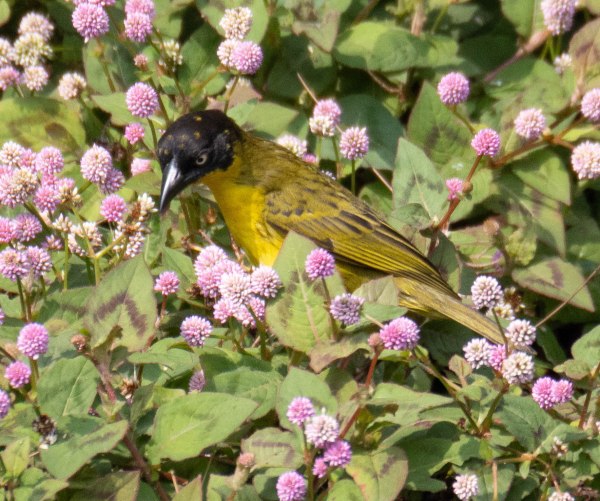
The header image is a Baglafecht Weaver, one of a large number of Weaver bird species, many of which are similar and difficult to separate for an amateur. I have no idea what “Baglafecht” means.
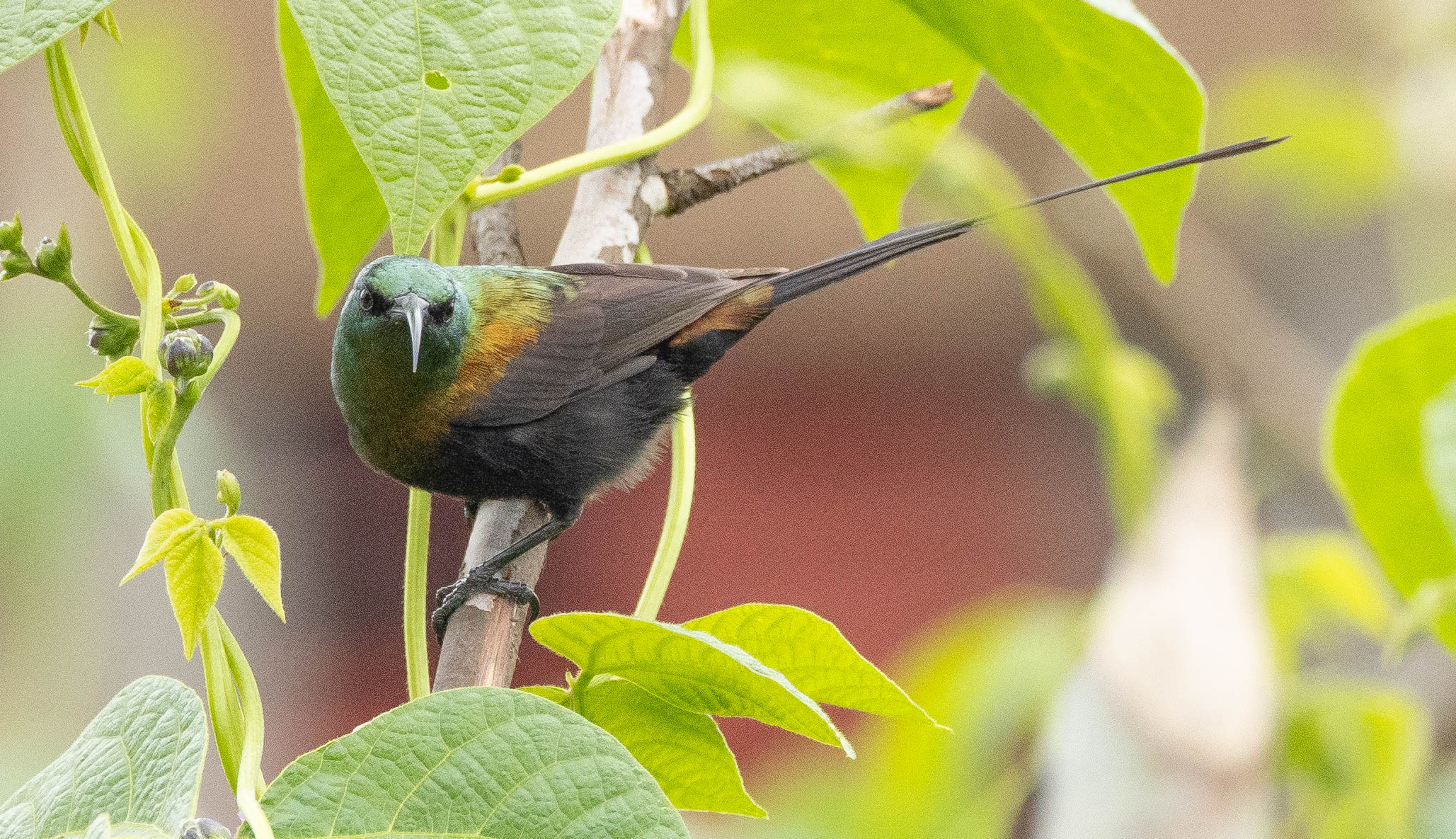
There are also a large variety of Sunbirds, which have long down-curved beaks, used to extract nectar from various flowers. This one is called the Variable Sunbird.
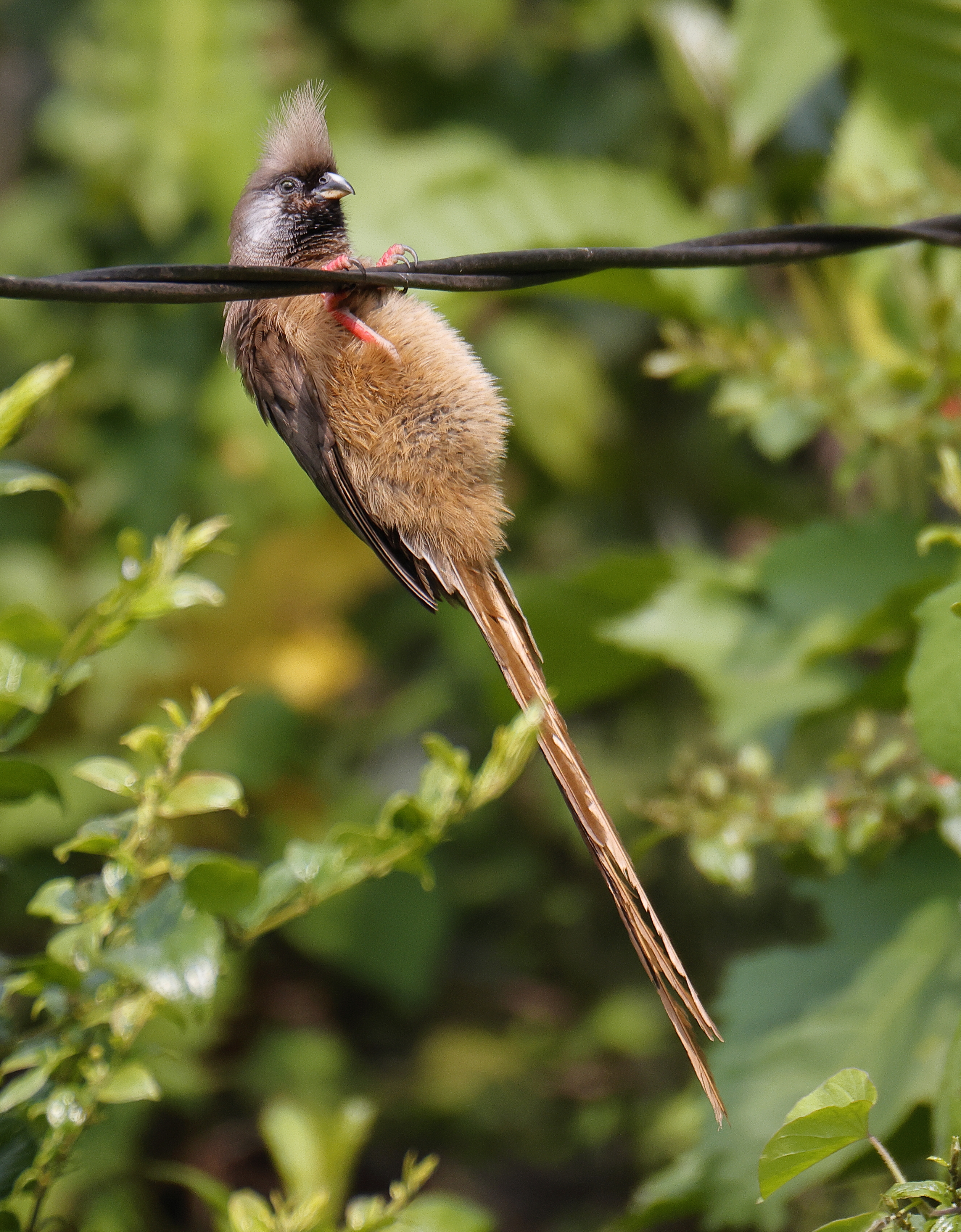
Speckled Mousebird.
According to some sources, they hang like this to get sunlight on their abdomens to increase intra-abdominal temperature and aid digestion. I think that is very suspect, and my guide did not think it was true. Indeed, if it were so, why wouldn’t many other birds (and other creatures) do this?
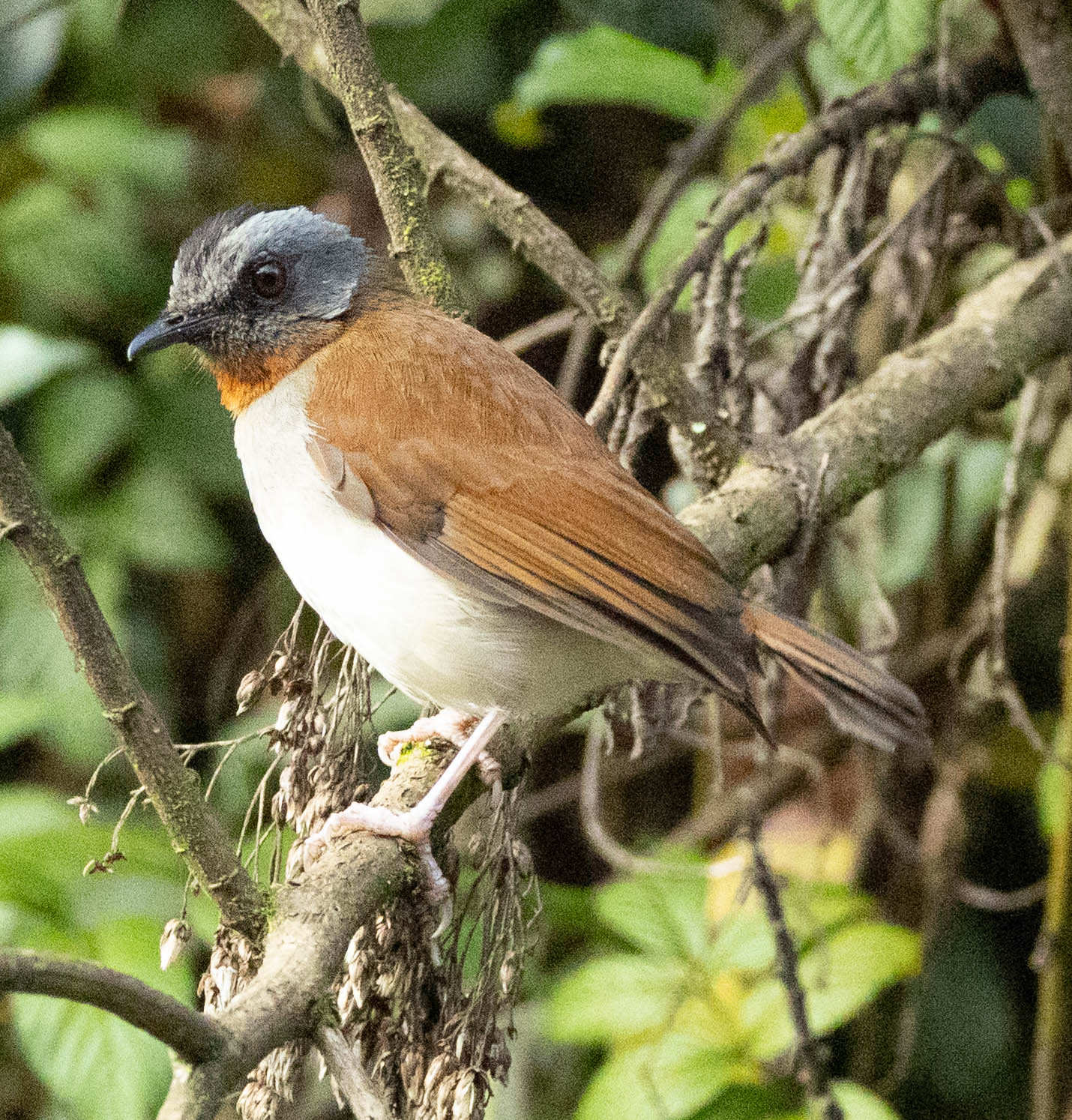
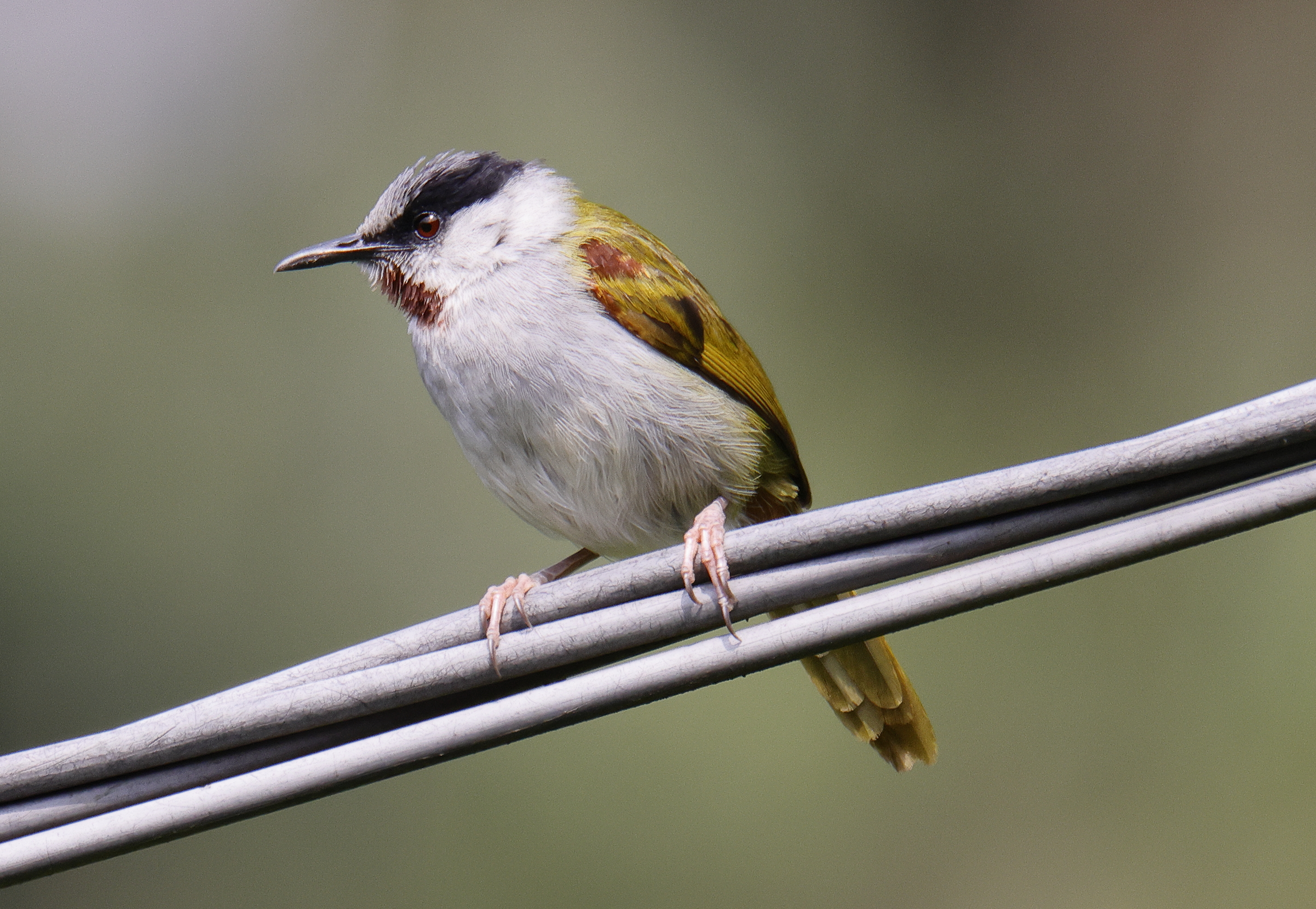
Gray-capped Warbler
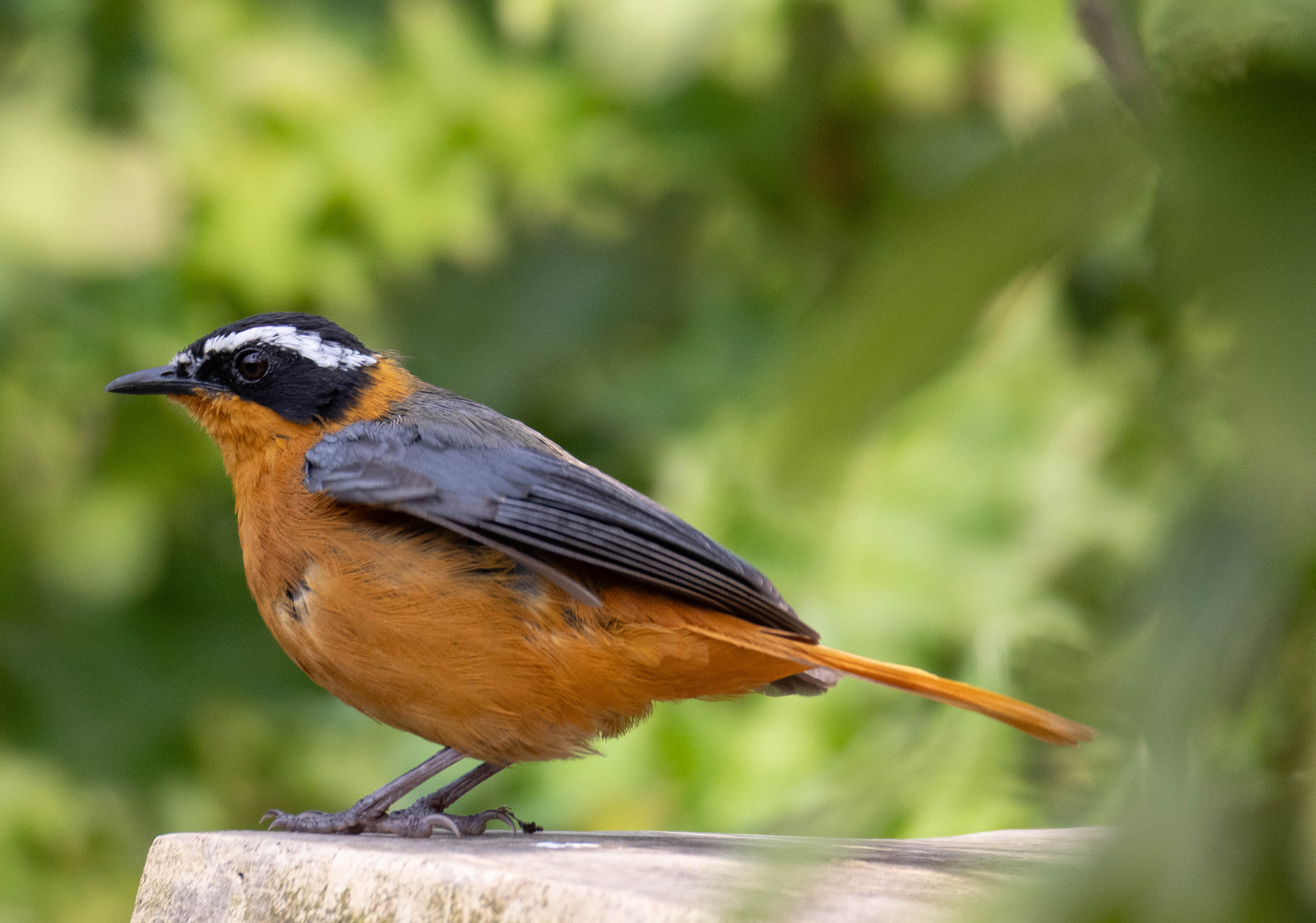
White-browed Robin-chat. This is a common bird, frequently seen around human habitations, it is quite noisy, sometimes even before dawn!
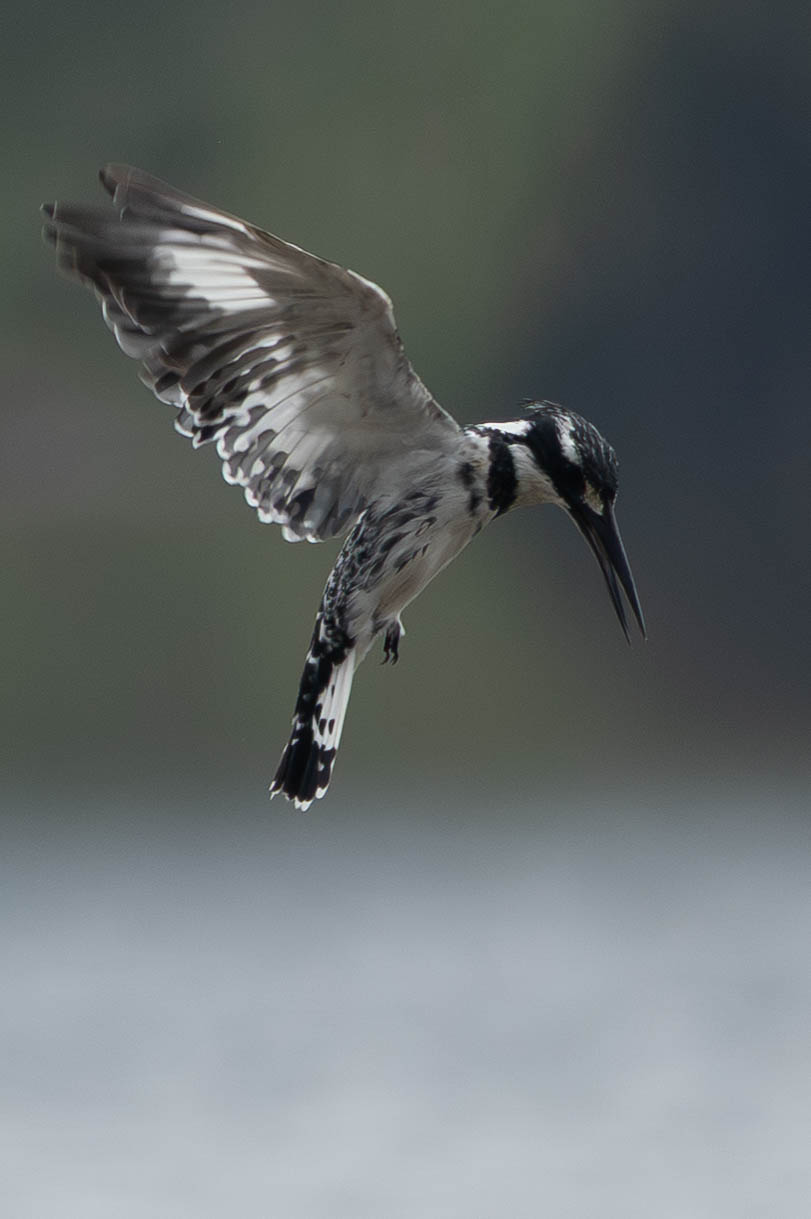
At the lake, there were several Pied Kingfishers, they can hover over the lake surface to detect prey, and then drop on their prey, usually small fish.
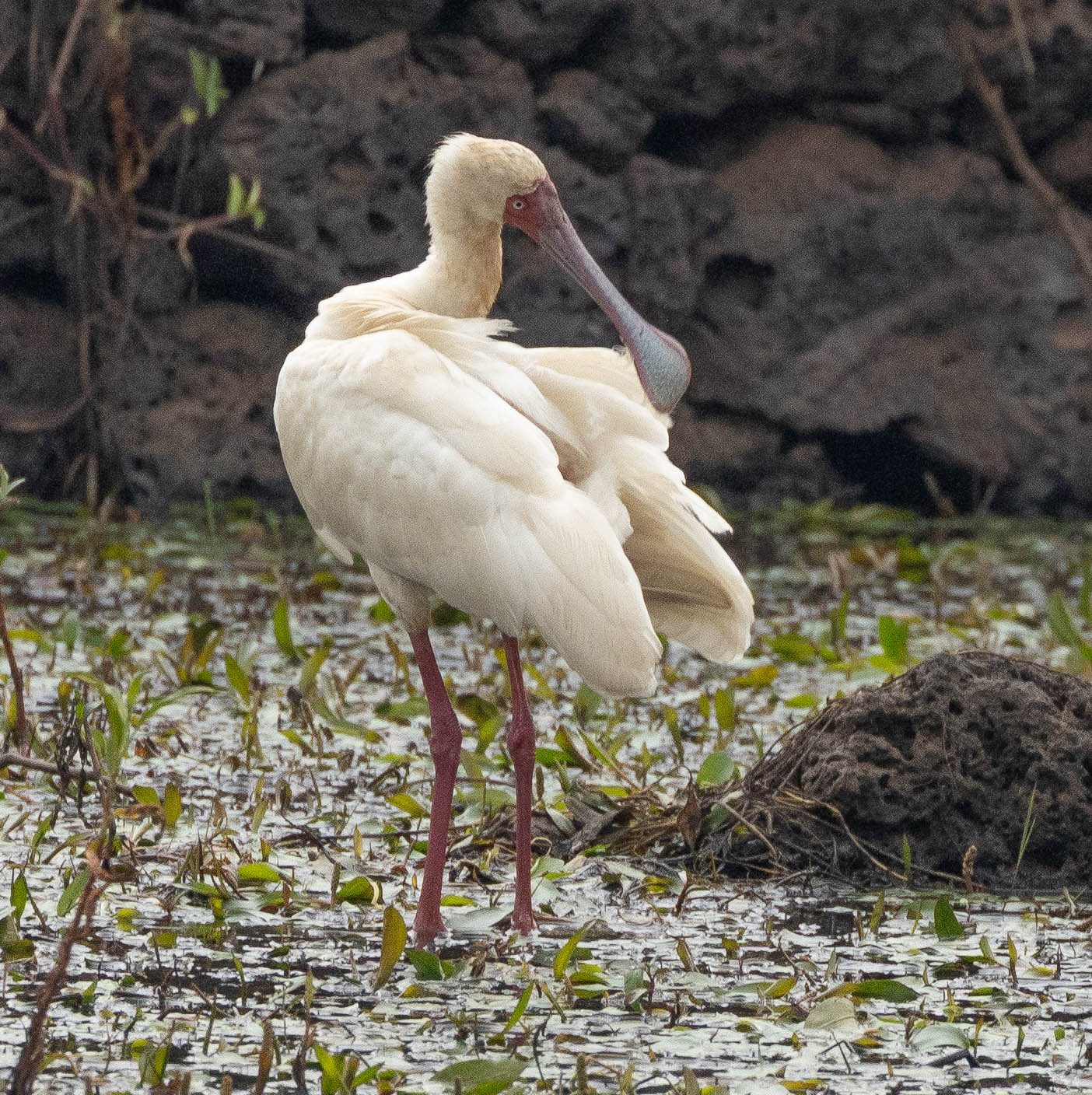
The African Spoonbill, is named for their most obvious feature.
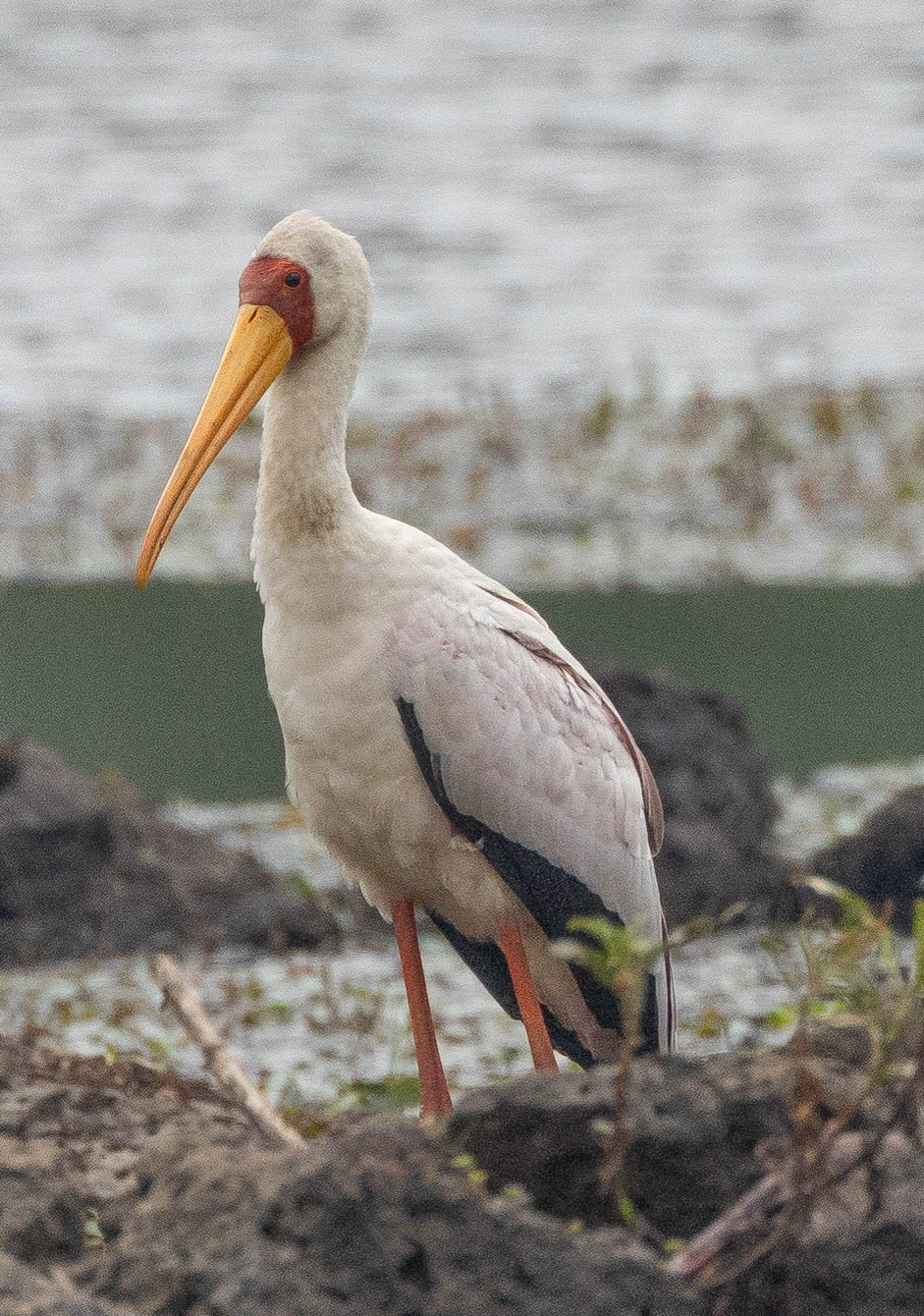
A similarly-sized, wading bird, is the Yellow-billed Stork.







 Keith Barrington's personal blog